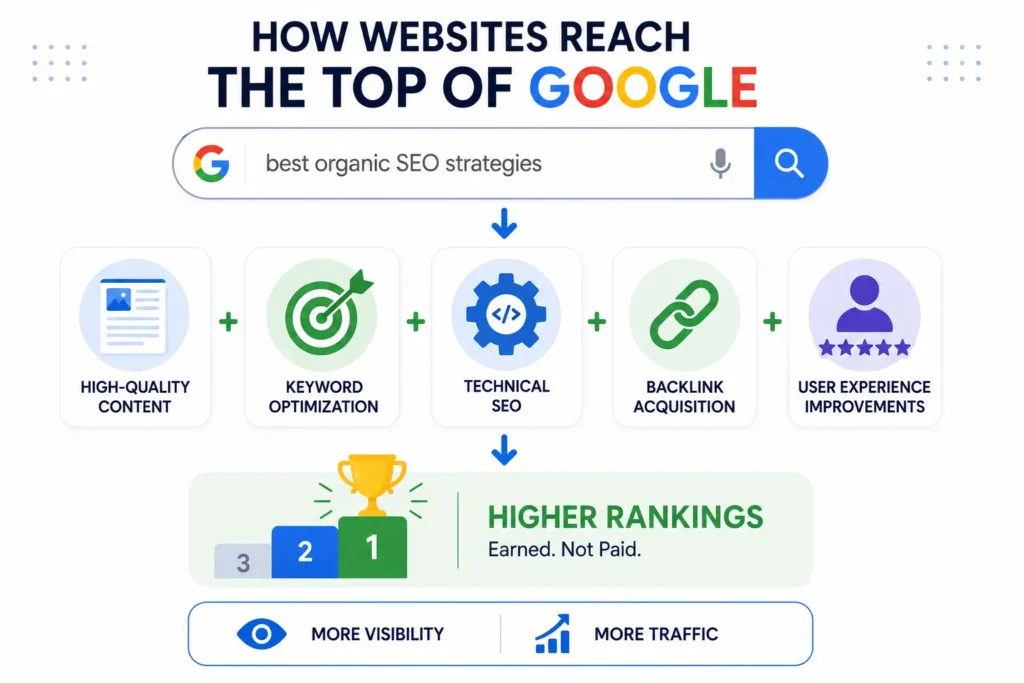
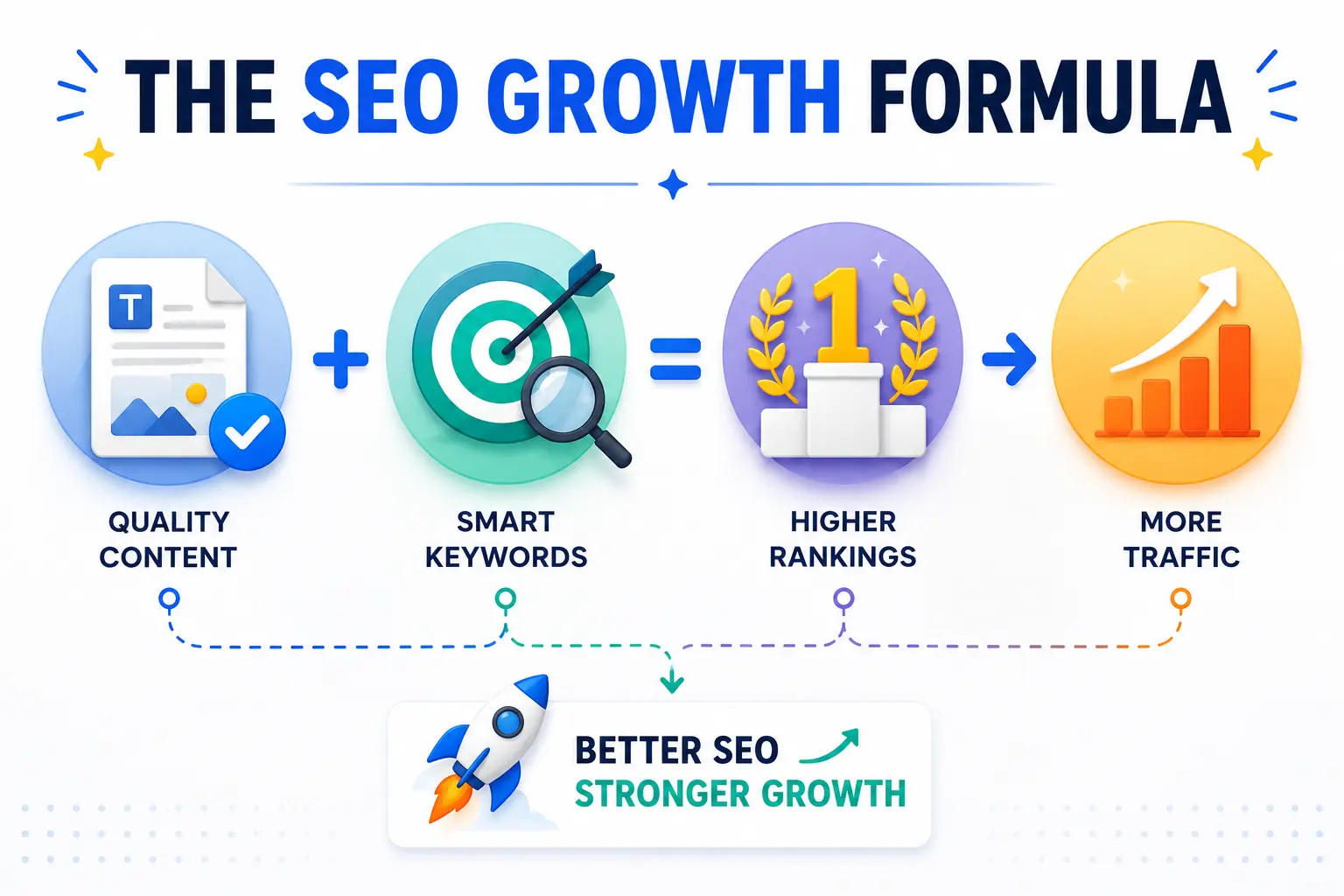
If you’ve ever asked an SEO agency what they actually do, you’ve probably heard the phrase “on-site and off-site SEO” thrown around like everyone already knows what it means. Most beginners assume SEO is just one thing: stuffing keywords into a page and hoping Google notices. In reality, seo on site off site work is split into two very different jobs that happen to share the same goal getting your website to rank higher. One happens on your own pages. The other happens everywhere else on the internet. In this guide, you’ll learn exactly what separates the two, why neither one works well alone, what specific factors fall under each category, and how to build a strategy that uses both the right way, no matter how big or small your website is.
There are well over 200 factors that go into how Google ranks a page, and trying to tackle all of them at once is overwhelming for most business owners and marketers. The good news is that almost every one of those factors falls neatly into one of these two buckets. Once you understand which bucket you’re working in, prioritizing your time becomes a lot easier.
Why This Distinction Actually Matters
A lot of people treat “SEO” as one big, vague task they hand off to an agency or a freelancer without really understanding what’s being done. But on-site and off-site SEO, including real estate SEO , require completely different skill sets, timelines, and ways of measuring success.. Knowing the difference helps you set realistic expectations, ask better questions when hiring help, and avoid wasting budget on the wrong priorities at the wrong stage of your website’s growth.
For example, a brand-new website with thin content has no business chasing hundreds of backlinks yet. There’s nothing strong enough on the site to justify that authority. On the other hand, a website that’s been publishing great content for years but has almost no backlinks is leaving rankings on the table simply because nobody outside the site knows it exists. Understanding seo on site off site as two separate phases helps you figure out exactly where your website stands right now.
What Is On-Site SEO?
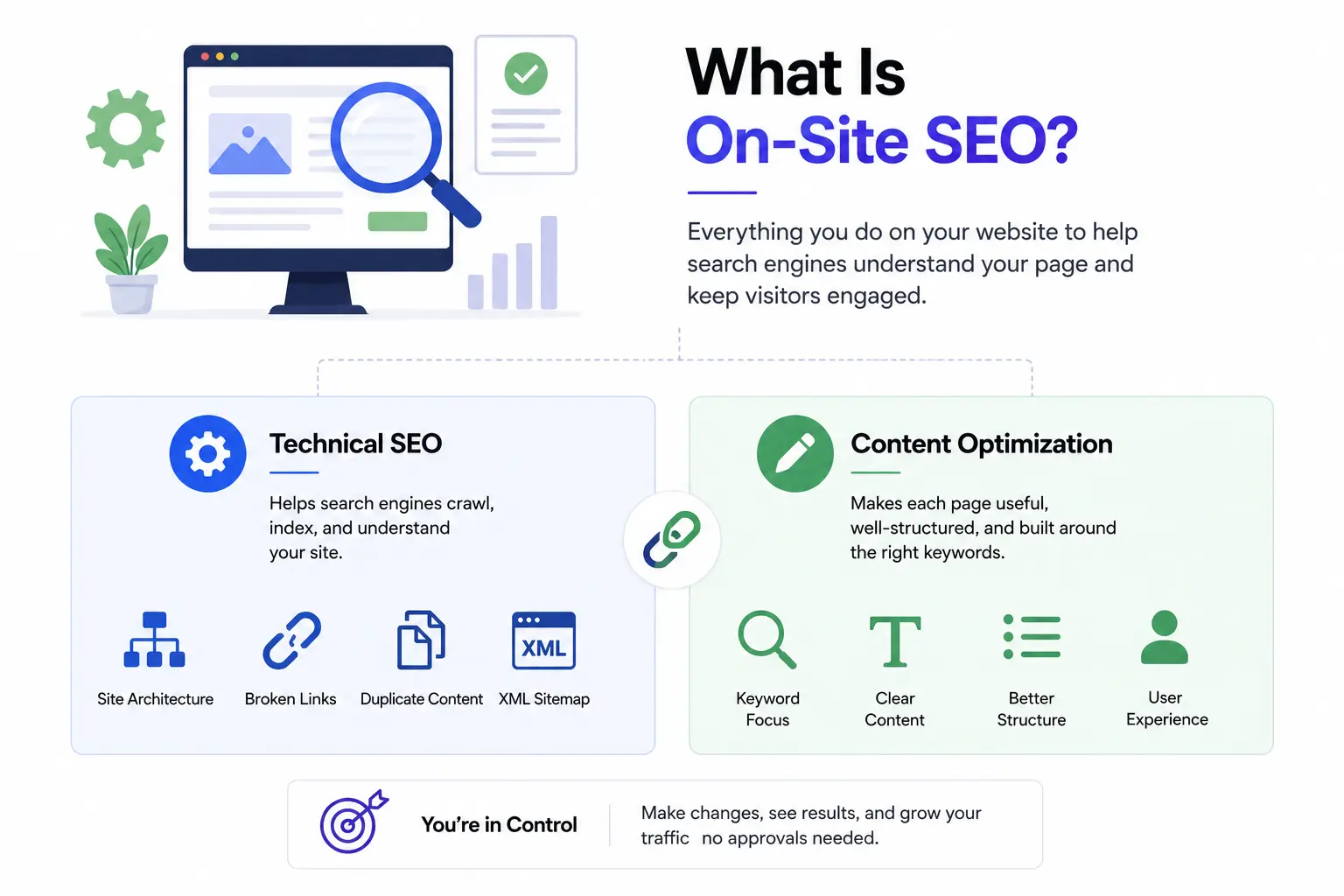
On-site SEO (sometimes called on-page SEO) covers everything you do directly on your own website to help search engines understand what a page is about and help readers actually want to stay on it. Think of it as cleaning your own house before inviting guests over. You’re in full control here nobody else needs to approve the changes you make.
On-site SEO splits into two main areas: technical SEO and content optimization. Technical SEO deals with how well search engines can crawl, index, and understand your site at a structural level things like site architecture, broken links, duplicate content, and XML sitemaps. Content optimization is about making sure each individual page is genuinely useful, well-organized, and built around the keywords your audience is actually typing into Google.
What On-Site SEO Covers
Content quality: Writing pages that genuinely answer what someone is searching for, not just pages stuffed with keywords.
Keyword placement: Using your target phrase naturally in the title, headings, intro, and body.
Internal linking: Connecting related pages so visitors (and search engines) can move through your site easily.
Page speed: Making sure pages load fast on both desktop and mobile.
Mobile-friendliness: Ensuring your site looks and works well on phones, since most searches now happen there.
Meta tags: Writing clear, keyword-aware title tags and meta descriptions that make people want to click.
Who’s in Charge of On-Site SEO?
You are. Every element listed above lives on your domain, which means you can test, tweak, and fix it whenever you want. That’s exactly why SEO experts recommend starting with enterprise SEO solutions before moving on to anything else.
What Is Off-Site SEO?
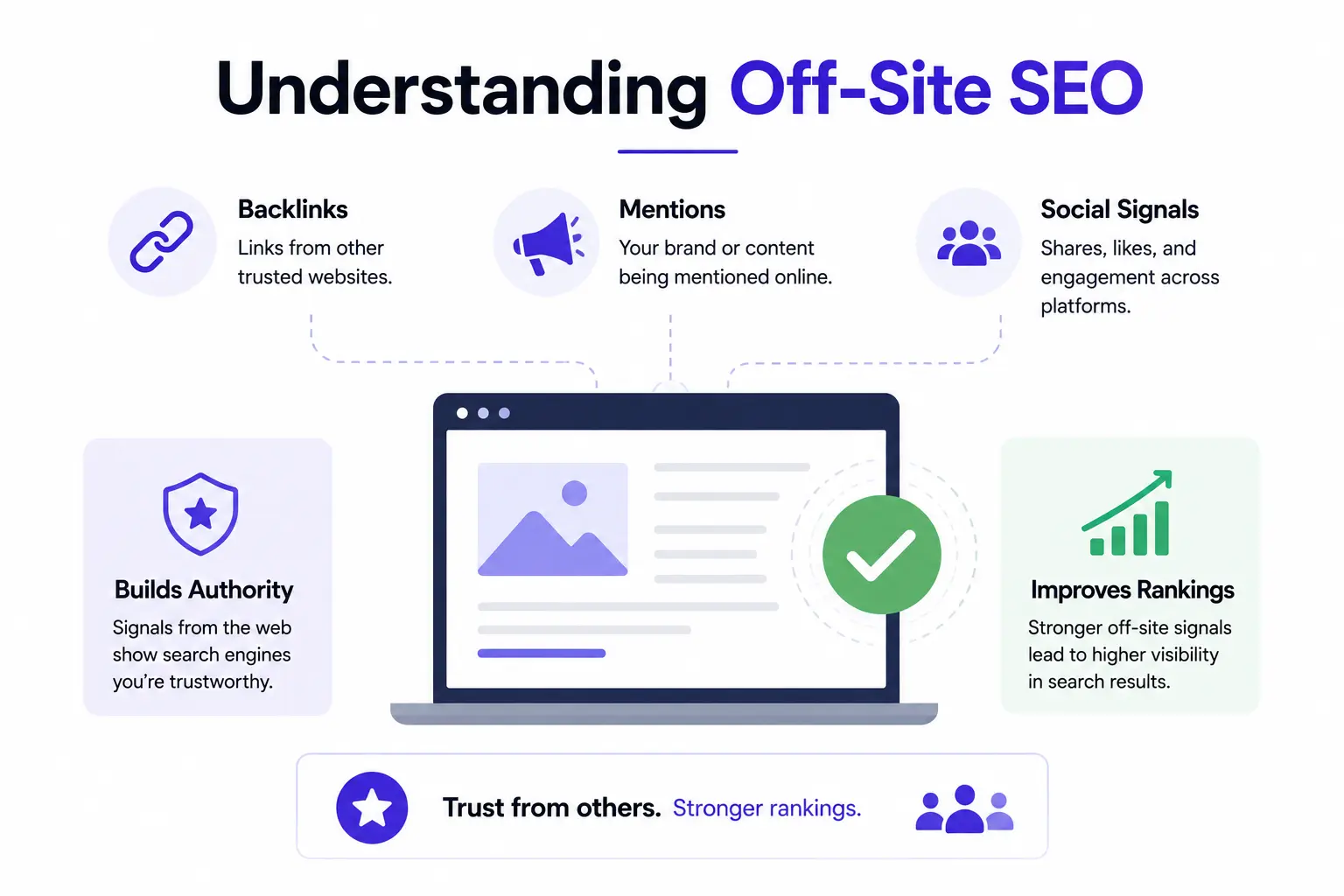
Off-site SEO (also called off-page SEO) is everything that happens away from your website but still influences how search engines view it. If on-site SEO is about cleaning your house, off-site SEO is about getting your neighbors to vouch for you. It’s less about what you say about yourself and more about what other people, sites, and platforms say about you.
Search engines can’t directly measure how trustworthy or authoritative your business is, so they rely on signals from the wider web as a proxy. A backlink from a respected industry publication tells Google that real people consider your content valuable enough to reference. Dozens of those signals stacked together start to paint a picture of authority that no amount of on-page tweaking can replicate on its own.
What Off-Site SEO Covers
Backlinks: Other websites linking back to your content, which search engines treat as a vote of confidence.
Guest blogging: Writing content for other sites in your niche in exchange for a link and exposure.
Social media promotion: Sharing content to build visibility and indirect traffic signals.
Brand mentions: Being talked about online, even without a direct link.
Online reviews: Positive reviews on Google, Trustpilot, or industry directories that build trust.
Influencer collaborations: Getting recognized voices in your industry to reference or recommend your brand.
Who’s in Charge of Off-Site SEO?
Nobody fully is, and that’s the tricky part. You can pitch a guest post or ask for a backlink, but ultimately someone else decides whether to publish it, link to it, or talk about you. That’s what makes off-site SEO and real estate SEO services feel slower and harder to predict than on-site work—you’re relying on other people’s decisions, not just your own
SEO On Site Off Site: Key Differences at a Glance
Here’s a simple side-by-side comparison so you can see exactly where these two strategies overlap and where they pull apart.
Factor
On-Site SEO
Off-Site SEO
Where it happens
On your own website
On other websites and platforms
Who controls it
You, completely
Mostly out of your hands
Main goal
Help search engines understand your content
Build trust and authority through others
Examples
Keywords, meta tags, headings, page speed
Backlinks, social shares, brand mentions, reviews
Ranking impact
Determines what you rank for
Determines how high you rank
Time to see results
Faster, since you control the changes
Slower, depends on outside validation
Why You Need Both On-Site and Off-Site SEO Together
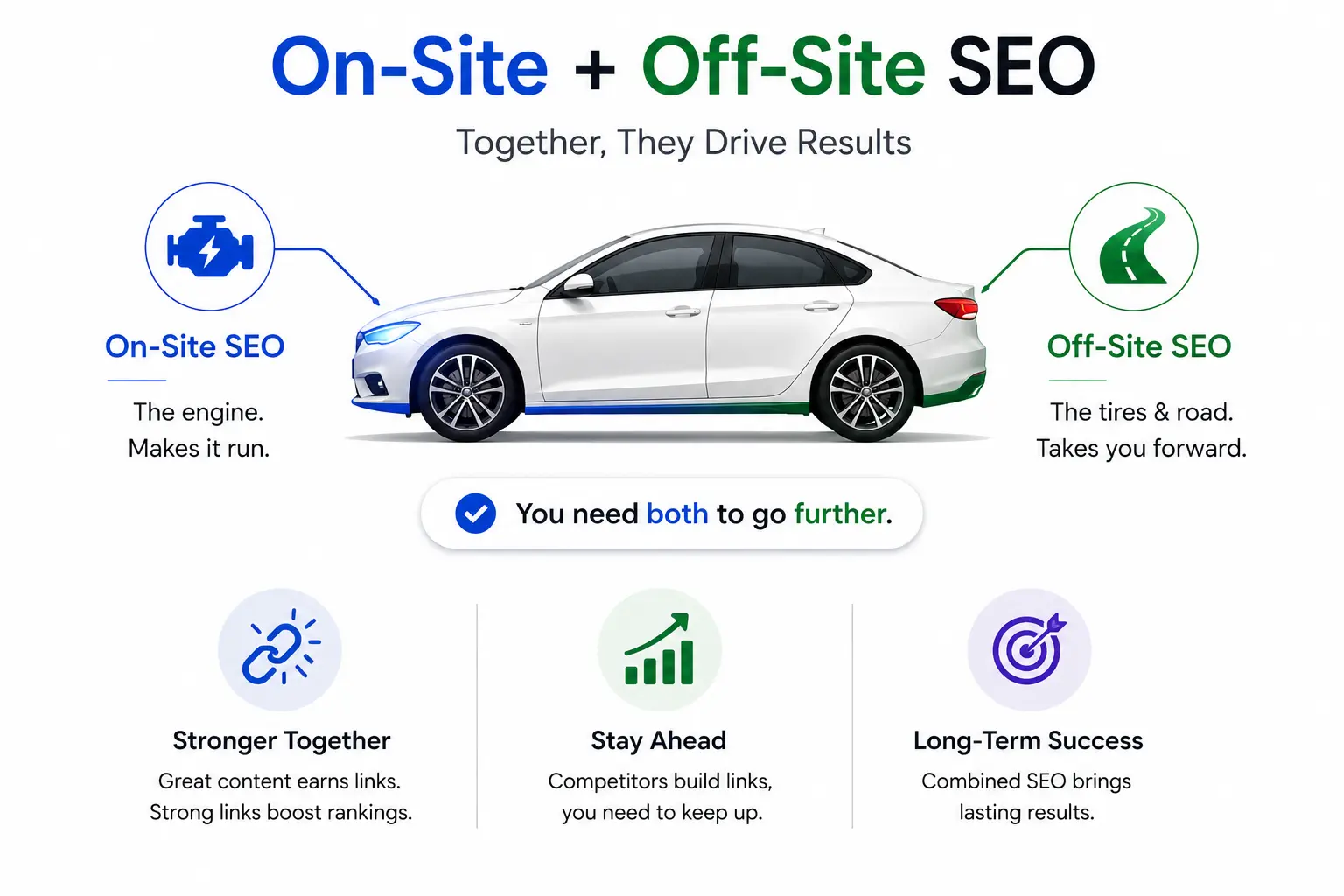
Think of your website like a car. On-site SEO is the engine it’s what actually makes the thing run. Off-site SEO is the tires and the road it’s what lets that engine’s power actually go somewhere. A powerful engine with flat tires goes nowhere. Great tires on a car with no engine don’t move either. You need both working in sync.
This isn’t just a metaphor, either. The two strategies actively feed each other. Strong on-site content gives people a reason to link to you, which builds your off-site authority. And as your off-site authority grows, search engines trust your on-site content more, which helps every page on your site rank better even ones you haven’t actively promoted.
There’s also a competitive angle worth mentioning. If you’re in a low-competition niche, you might be able to rank with on-site optimization alone for a while. But the moment a competitor starts actively building backlinks and brand awareness, your rankings will start slipping even if you haven’t changed a single thing on your own site. SEO isn’t graded on a fixed scale it’s graded relative to everyone else trying to rank for the same keyword.
How E-E-A-T Ties On-Site and Off-Site Work Together
Google evaluates content quality using a framework known as E-E-A-T: Experience, Expertise, Authoritativeness, and Trustworthiness. This concept is a perfect example of why seo on site off site can’t really be separated in practice. Experience and expertise are mostly demonstrated through your on-site content do you write like someone who’s actually done this, or like someone summarizing what they read elsewhere? Authoritativeness and trustworthiness, on the other hand, are largely built off-site, through citations, reviews, mentions, and links from sources Google already trusts.
A page can be packed with accurate, well-written information and still struggle to rank if nothing on the wider web backs up the idea that the author or business actually has authority in that space. This is especially true in industries Google classifies as YMYL Your Money or Your Life like health, finance, and legal content, where off-site trust signals carry even more weight.
On-Site SEO Checklist
Use this as a quick action list whenever you’re optimizing a page.
Research your target keyword and understand what searchers actually want from it
Place the keyword naturally in your title, H1, and first 100 words
Use one H1 and organize the rest of the page with H2s and H3s
Write a click-worthy meta title and meta description
Add internal links to relevant pages on your site
Compress images and check your Core Web Vitals scores
Make sure the page is fully responsive on mobile devices
Add schema markup where it applies, like FAQs or reviews
Off-Site SEO Checklist
Once your on-site foundation is solid, work through these off-site tactics.
Identify relevant sites in your niche for guest posting opportunities
Reach out for backlinks from sites that already rank for related topics
Share new content across your social channels consistently
Monitor and respond to brand mentions, linked or not
Encourage satisfied customers to leave reviews on Google and relevant directories
Keep your business name, address, and phone number consistent across listings
Build relationships with influencers or experts who can reference your work
Common Mistakes to Avoid in Your SEO On Site Off Site Strategy
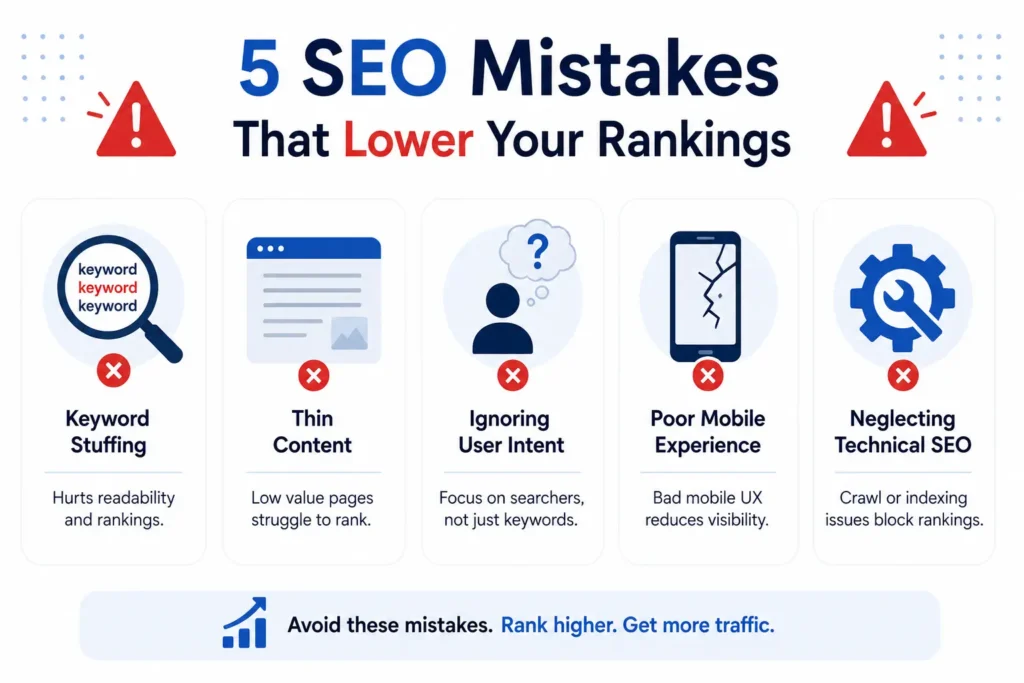
Focusing only on one side: Great content with zero backlinks struggles to rank. Tons of backlinks pointing to weak content won’t hold up either.
Chasing low-quality backlinks: A handful of links from trusted, relevant sites beats hundreds from spammy directories.
Ignoring page speed and mobile experience: Even the best-written article will lose rankings if it loads slowly or breaks on phones.
Keyword stuffing: Repeating your focus keyword unnaturally hurts readability and can actually hurt rankings.
Treating off-site SEO as a one-time task: Backlink building and reputation management need consistent, ongoing effort, not a single campaign and then silence.
How to Balance On-Site and Off-Site SEO for the Best Results
If you’re starting from scratch, fix your on-site foundation first. There’s little point chasing backlinks to a page that’s slow, poorly structured, or doesn’t actually answer the search query. Once your pages are genuinely useful and well-optimized, shift your attention to off-site work outreach, guest posts, and review generation to build the authority that pushes those pages higher.
From there, treat it as an ongoing cycle rather than a one-time project. Publish strong content, promote it, earn links, then use that authority to support your next piece of content. A reasonable rule of thumb many agencies use is roughly 60% of your time and budget on content and technical fixes early on, gradually shifting toward a 50/50 split as your site matures and your link-building pipeline gets going.
Tools That Help With Both Sides
You don’t need a dozen subscriptions to manage seo on site off site work effectively. A handful of tools cover most of what you need on each side.
Google Search Console: Free, and essential for tracking which on-site pages are indexed, how they’re performing, and where technical issues are surfacing.
Google PageSpeed Insights: Shows you exactly what’s slowing your pages down and how to fix it.
Ahrefs or Semrush: Useful for both keyword research on the on-site side and backlink tracking on the off-site side.
Moz Link Explorer: A solid way to monitor your domain authority and spot new or lost backlinks over time.
BrightLocal: Helpful for local businesses managing citations, reviews, and NAP consistency across directories.
FAQ
Is on-site or off-site SEO more important?
Neither one wins on its own. On-site SEO determines what you can rank for, while off-site SEO determines how high you actually rank against competitors. Most experts recommend nailing on-site basics first, then layering off-site efforts on top.
Can you rank with only one type of SEO?
It’s possible in low-competition niches, but it’s risky. If your competitors are working on both, relying on just one will eventually leave you behind, especially for competitive keywords.
How long does off-site SEO take to show results?
Off-site SEO is slower than on-site changes since it depends on other people linking to or mentioning you. Most sites start seeing meaningful movement after a few months of consistent outreach and content promotion.
What’s the difference between on-page and on-site SEO?
These terms are often used interchangeably. Technically, on-page SEO refers to individual page elements like headers and keywords, while on-site SEO is the broader term covering your entire website, including technical factors like site speed and structure.
Conclusion
At the end of the day, seo on site off site isn’t a choice between two competing strategies it’s one connected system. On-site work builds the foundation search engines and readers can trust, while off-site work proves to the rest of the internet that your content deserves attention. Start by auditing your own pages, fix what’s holding you back, and then put real effort into earning recognition beyond your website. Do both consistently, and ranking higher stops feeling like guesswork.
Search has changed dramatically in recent years. People are no longer relying only on traditional search engines and blue links. Instead, they ask AI tools like ChatGPT, Perplexity, and Claude for answers, recommendations, and comparisons. In these moments, a brand is either included in the AI-generated response or completely absent.
This shift has created the need for AI Strategic Visibility -the practice of ensuring your brand, content, and expertise appear in AI-generated answers and recommendations. While traditional SEO still plays an important role, rankings alone are no longer enough. Businesses must now optimize not only for search engines but also for the AI systems that people increasingly rely on for information and decisions.
What Is AI Strategic Visibility?
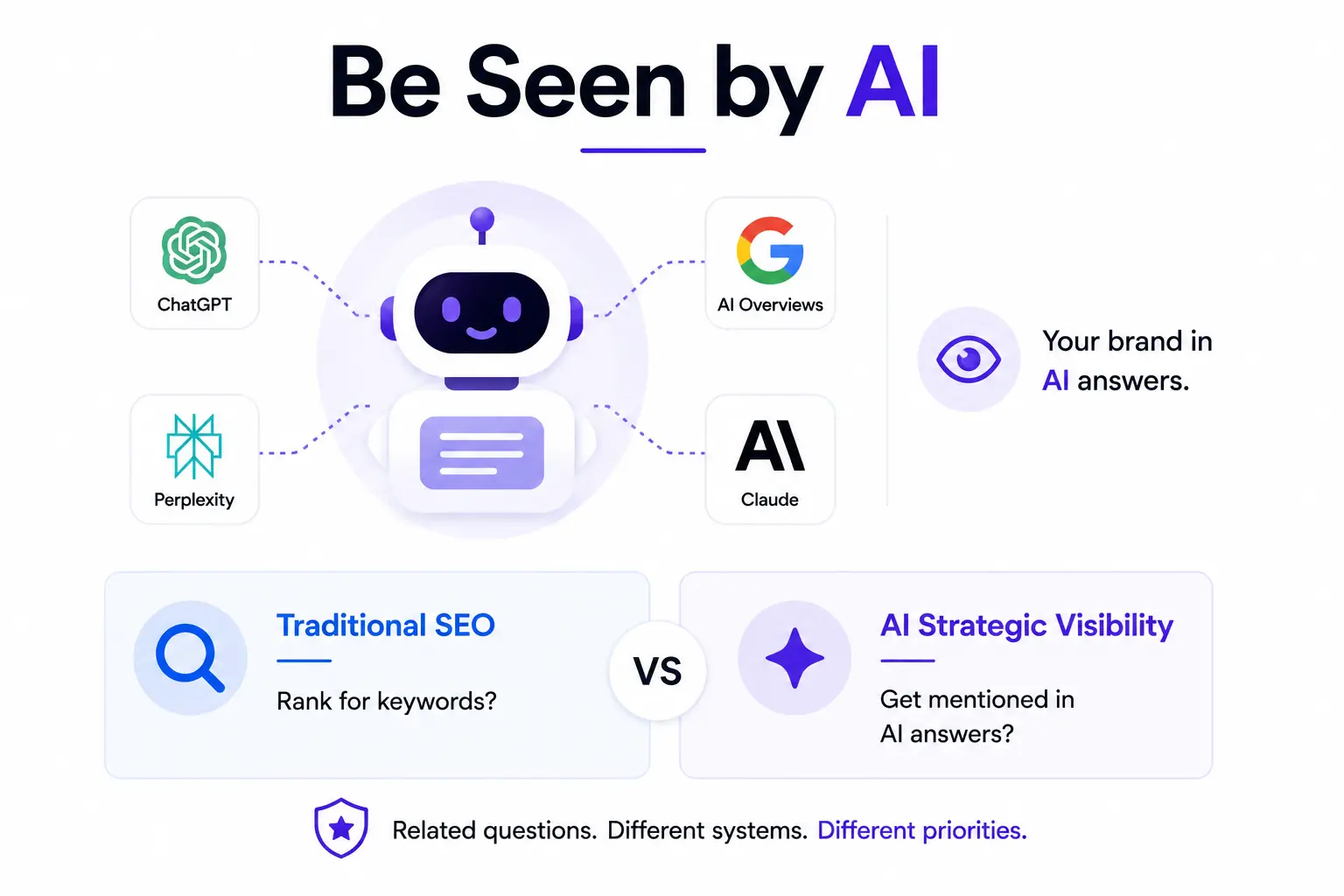
AI Strategic Visibility is the measurable presence a brand, person, or website has within AI-generated answers, summaries, and recommendations across platforms such as ChatGPT, Google AI Overviews, Perplexity, and Claude. It reflects how often, how accurately, and how favorably an AI system references your content when responding to questions in your industry.
Where traditional SEO asks, “Does my page rank for this keyword?”, AI Strategic Visibility asks, “Does my brand get mentioned when someone asks an AI this question?” Those are related questions, but they are answered by different systems with different priorities.
Why AI Strategic Visibility Matters
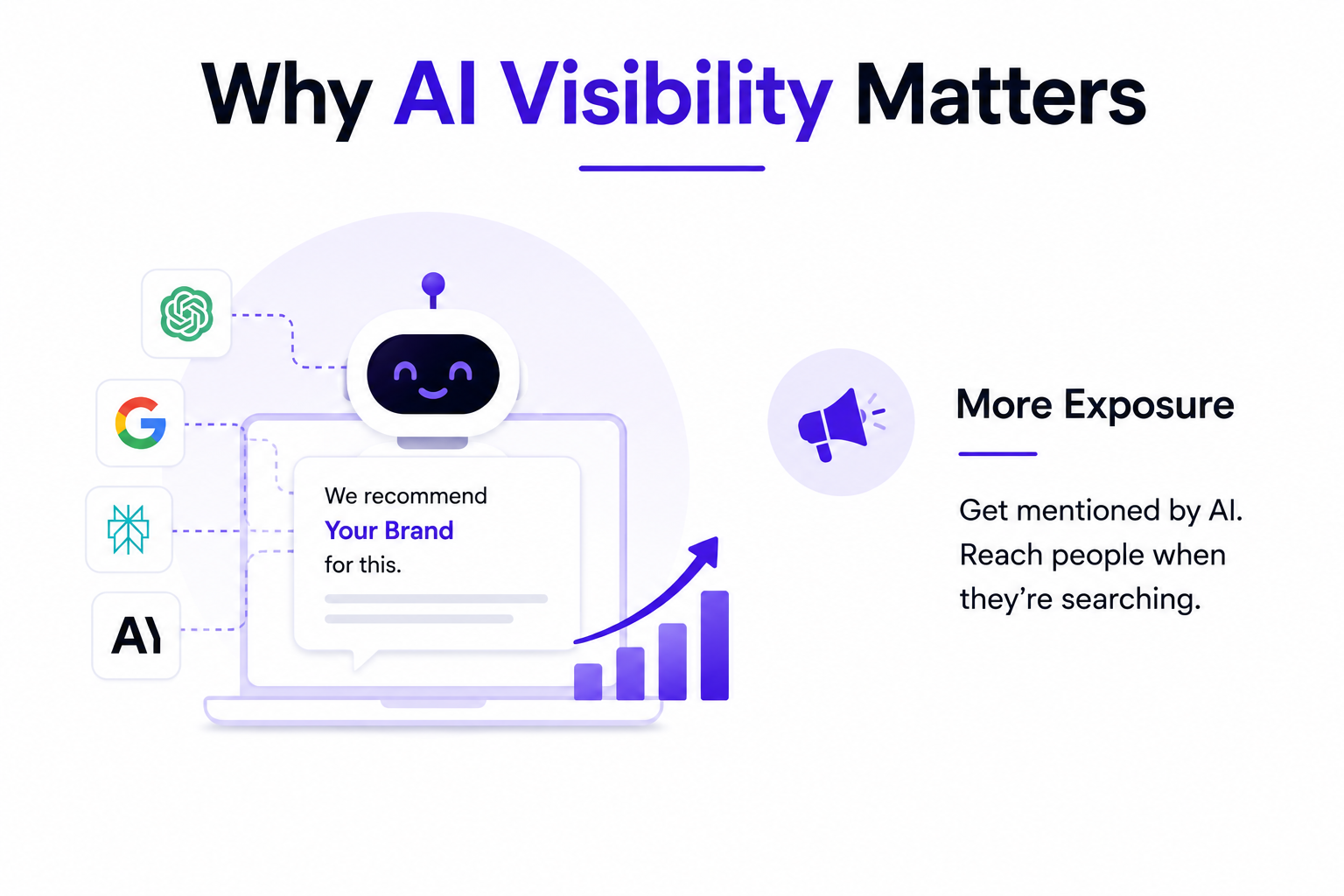
AI-generated answers are increasingly the first and sometimes only touchpoint a potential customer has with information about a topic. If an AI system answers a question without ever surfacing your brand, you lose the opportunity to be considered, regardless of how well you would have served that customer. Visibility inside AI answers has become a new top-of-funnel, and brands that ignore it are ceding that space to competitors who do not.
There is also a credibility effect. Being cited by an AI system carries an implicit endorsement. The AI model effectively says, “This source is trustworthy enough to base part of my answer on.” That endorsement can do more for brand trust than a standard search ranking, because it appears to the user as the AI’s own synthesized judgment rather than a paid or algorithmic placement.
How AI Search Has Changed Online Visibility
Search used to be a single channel with a single ranking algorithm to optimize for. Today, visibility is fragmented across multiple AI systems, each with its own retrieval method, training data, and citation logic. Google AI Overviews pulls from the live web index. ChatGPT blends training data with real-time browsing and plugin data. Perplexity is built around real-time citation by design. Claude draws on context, retrieved documents, and a strong preference for well-structured, verifiable information.
This fragmentation means a single-channel SEO strategy is no longer sufficient. A brand can be highly visible in Google’s traditional results and almost invisible in ChatGPT’s answers, or vice versa, depending on how its content is structured, how clearly it establishes entities, and how often other authoritative sources reference it. AEO tools for AI search help businesses measure and improve their visibility across these AI-driven platforms, ensuring their content is optimized for both traditional search engines and AI-generated answers.
Examples of AI Strategic Visibility in Action
Consider a SaaS development company that publishes an original benchmark study on customer churn rates by industry. That data point gets picked up by an industry blog, cited in a LinkedIn post by an analyst, and referenced in a roundup article.
Months later, when someone asks ChatGPT, “What is a typical SaaS churn rate?”, there is a meaningfully higher chance that company’s name appears in the answer, because the data point has propagated across multiple sources the AI model considers credible.
Compare that to a company that publishes the same statistic without sourcing, without a dedicated page explaining its methodology, and without any third party referencing it. Even if the number is accurate, the AI system has far less reason to trust it or attribute it to that brand. This is the practical difference AI Strategic Visibility describes: the same information, with different structural and authority signals, produces very different outcomes inside AI-generated answers. Organizations developing AI-powered products can also use AI development servicesto build systems that support data analysis, content generation, and other AI-driven workflows.
AI Strategic Visibility vs Traditional SEO
What Traditional SEO Focuses On
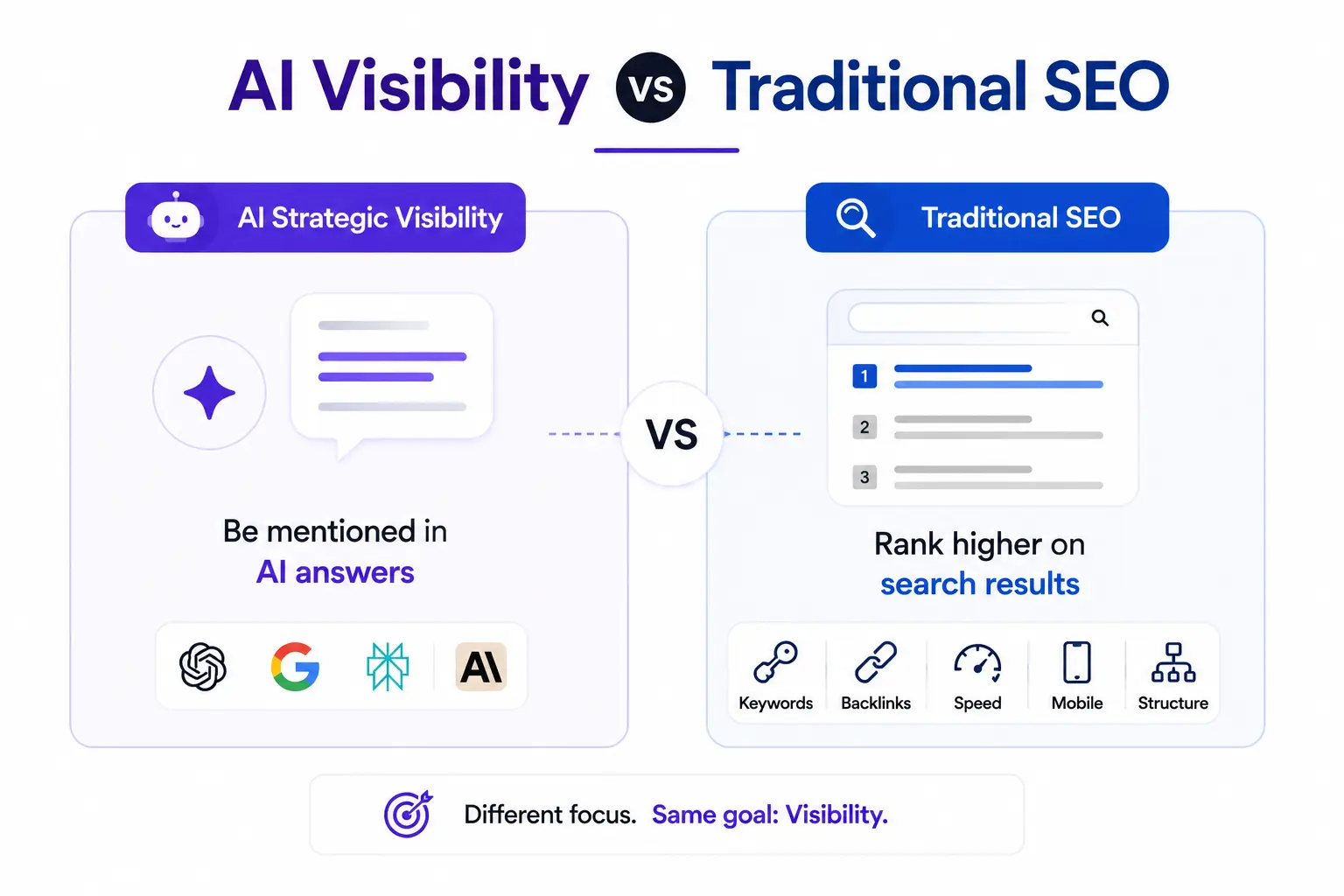
Traditional SEO is built around ranking signals: keyword targeting, backlink volume and quality, page speed, mobile usability, internal linking structure, and on-page optimization. The objective is to rank as high as possible on a search engine results page for a defined set of queries, with success measured primarily through rankings, organic traffic, and click-through rate.
What AI Strategic Visibility Focuses On
AI Strategic Visibility is built around trust and retrieval signals: topical authority, entity clarity, EEAT (Experience, Expertise, Authoritativeness, Trustworthiness), structured and citable content, and third-party validation. The objective is to be selected as a source within an AI-generated answer, with success measured through citation rate, mention frequency, and AI share of voice rather than rankings alone.
SEO vs GEO vs AEO vs LLMO
These four acronyms describe overlapping but distinct disciplines, and the terminology is still settling across the industry:
SEO (Search Engine Optimization): optimizing for rankings on traditional search engine results pages.
GEO (Generative Engine Optimization): optimizing content to be retrieved and cited by generative AI systems such as ChatGPT and Google AI Overviews.
AEO (Answer Engine Optimization): optimizing content to directly answer specific questions, often for voice assistants and featured snippets as well as AI answers.
LLMO (Large Language Model Optimization): optimizing a brand’s presence and accuracy within the training data and retrieval sources large language models draw from.
AI Strategic Visibility functions as the umbrella strategy that ties GEO, AEO, and LLMO together into a single, coordinated approach, rather than treating each as a separate, siloed effort.
Key Differences Explained
Rankings vs Citations
A ranking tells you where a page sits on a results page. A citation tells you whether an AI system chose to reference that page when constructing an answer. A page can rank on page one of Google and never be cited inside an AI Overview for the exact same query, because citation selection involves additional trust and clarity signals beyond ranking position.
Keywords vs Entities
Traditional SEO is organized around keywords and search intent. AI Strategic Visibility is organized around entities: clearly defined people, organizations, products, and concepts that an AI system can recognize, disambiguate, and connect to other entities in its knowledge graph. Strong entity definition helps an AI system understand exactly who you are and what you are an authority on, independent of which exact keywords you used.
Search Results vs AI Answers
A search result is a list of options the user evaluates themselves. An AI answer is a synthesized response the user often accepts directly, without clicking through to the source. This changes the incentive: AI Strategic Visibility is not just about earning a click, it is about earning a mention inside the answer itself, since many users may never visit the underlying website at all.
How AI Search Engines Discover and Recommend Content
How ChatGPT Finds Information
ChatGPT draws on a combination of its training data and, when browsing or plugin access is enabled, real-time web retrieval. For training data, the model’s familiarity with a brand depends on how frequently and how clearly that brand appeared across the web at the time of training. For live browsing, ChatGPT performs retrieval similar to a search engine, then synthesizes an answer from the pages it retrieves, favoring sources that are clear, well-structured, and directly responsive to the query.
How Google AI Overviews Select Sources
Google AI Overviews are generated using Google’s existing search index combined with generative summarization. Sources that already rank well and demonstrate strong EEAT signals are more likely to be pulled into an Overview, but ranking well is not a guarantee of inclusion. Google appears to favor content that directly and concisely answers the implied question, often pulling specific passages rather than entire pages.
How Perplexity AI Generates Answers
Perplexity is built around citation-first design. Every answer is constructed from a set of retrieved sources, each displayed as a numbered citation alongside the response. Perplexity tends to favor recent, authoritative, and topically focused content, and it is one of the more transparent platforms for understanding exactly which sources influenced a given answer.
How Claude Uses Information
Claude generates answers using a combination of its training data and, where available, retrieved documents or web search results provided in the context of a conversation. Claude places significant weight on internal consistency, clear sourcing, and verifiable claims, and is generally cautious about presenting unsourced or ambiguous information as fact.
Retrieval-Augmented Generation (RAG)
Retrieval-Augmented Generation is the technical process many AI systems use to pull relevant external documents into a model’s context before generating a response. Instead of relying solely on what the model learned during training, RAG allows the system to retrieve current, specific information and ground its answer in that retrieved content. This is the mechanism that makes well-structured, clearly written, and easily extractable content more likely to be surfaced, regardless of how memorable the brand is in the model’s training data alone.
Authority Signals
AI systems, like search engines, look for signals that a source can be trusted: consistent publishing history, clear authorship, citations from other reputable sources, accurate and verifiable claims, and alignment with established expertise in a subject area. These signals function similarly to backlinks in traditional SEO, but they are evaluated more holistically and are harder to manufacture artificially.
Citation Selection Process
When an AI system selects which sources to cite, it is generally balancing relevance to the query, clarity of the content, perceived authority of the source, and how directly the content answers the underlying question. Content that buries the answer under unnecessary preamble, or that mixes multiple unrelated topics, is less likely to be selected than content that states its answer clearly and supports it with specific, well-organized detail.
Why AI Strategic Visibility Is Important for Businesses
Increased Brand Exposure
Every time an AI system mentions your brand in response to a relevant question, you gain exposure to someone actively seeking information in your category. Because this exposure happens at the moment of inquiry, it tends to reach people earlier in their decision process than a traditional ad or even a standard search result might.
Higher Trust and Credibility
Users tend to treat AI-generated answers as relatively neutral and authoritative, more like a knowledgeable assistant than a list of paid placements. A brand mentioned inside that answer benefits from an implicit transfer of trust: the AI vouched for it, even indirectly, by choosing to include it.
More Qualified Traffic
When an AI system does drive a click through to your site, often through a citation link, that visitor arrives already primed with context from the AI’s answer. They understand roughly what your brand does and why it was mentioned, which tends to produce more qualified, higher-intent traffic than a cold search click.
Better Competitive Advantage
Most brands have not yet adapted their content and entity strategy for AI visibility. Investing in this discipline now, while competitors are still focused exclusively on traditional rankings, creates an advantage that compounds as AI search adoption grows.
Future-Proofing Your Marketing Strategy
As more consumer research and decision-making shifts toward conversational AI tools, brands that have already built strong entity clarity, authority signals, and citation-worthy content will be far better positioned than those starting from zero once the shift becomes impossible to ignore.
The A.I.M. Framework for AI Strategic Visibility
The A.I.M. Framework distills AI Strategic Visibility into three pillars that are easy to plan around and easy to audit against: Authority, Identity, and Mentions. Each pillar addresses a different question an AI system implicitly asks before it decides to cite a source.
A – Authority
Authority answers the question, “Does this source actually know what it is talking about?” It is built through depth of content, demonstrated expertise, and original contribution to a subject area.
Building Topical Authority
Topical authority is established by publishing comprehensive, interconnected content across an entire subject area rather than isolated articles targeting individual keywords. A site with twenty thin pages on loosely related topics will generally carry less topical authority than a site with eight thorough, well-linked pages that fully cover a single subject from multiple angles.
Demonstrating EEAT
EEAT stands for Experience, Expertise, Authoritativeness, and Trustworthiness, a framework Google uses to evaluate content quality that has become equally relevant to AI citation decisions. Demonstrating EEAT means showing real, first-hand experience with a topic, clear author credentials, recognition from other authoritative sources, and accurate, well-maintained information.
Publishing Original Research
Original data, surveys, and proprietary research are some of the strongest authority signals available, because they cannot be copied from a competitor and they give other sites and AI systems a specific, citable reason to reference your brand by name.
I – Identity
Identity answers the question, “Does the AI system clearly understand who or what this source is?” It is built through entity clarity and consistency, not just keyword targeting.
Entity SEO
Entity SEO is the practice of clearly defining your brand, products, and key personnel as distinct entities that can be recognized, disambiguated, and connected to related concepts. This includes consistent naming, clear “about” information, and structured data that explicitly tells search engines and AI systems who you are.
Knowledge Graph Optimization
Knowledge graphs are the structured databases search engines and AI systems use to understand relationships between entities. Optimizing for the knowledge graph means ensuring your brand has a presence on platforms that feed these graphs, such as Wikipedia, Wikidata, and major business directories, with accurate and consistent information.
Brand Consistency Across Platforms
Inconsistent brand names, descriptions, or details across your website, social profiles, and third-party listings make it harder for an AI system to confidently identify your brand as a single, coherent entity. Consistency across every platform where your brand appears strengthens identity signals significantly.
M – Mentions
Mentions answer the question, “Do other credible sources talk about this brand?” It is built through earned visibility on other websites, not just your own.
Digital PR
Digital PR campaigns that earn coverage on industry publications, news sites, and respected blogs create exactly the kind of third-party validation AI systems look for when assessing whether a brand is a credible source worth citing.
Third-Party Citations
Every time another website references your brand, your data, or your expertise, it strengthens the signal that your brand is a recognized authority in its space, which in turn increases the likelihood that an AI system will treat your brand the same way.
Industry References and Reviews
Being referenced in “best of” lists, comparison articles, and review platforms adds another layer of third-party validation, particularly for AI systems that weigh aggregated sentiment and consensus when deciding which brands to recommend.
The Core Pillars of AI Strategic Visibility
Beyond the A.I.M. Framework, it helps to think of AI Strategic Visibility as resting on five interconnected pillars. Strength in one pillar can partially offset a weakness in another, but the strongest AI visibility profiles tend to perform reasonably well across all five.
Content Authority
The depth, accuracy, and comprehensiveness of the content itself. This is the foundation every other pillar builds on, since an AI system has nothing to cite if the underlying content does not exist or does not adequately answer the question.
Entity Authority
How clearly and consistently your brand, products, and key people are defined as recognizable entities across the web and within structured data.
Brand Authority
The overall reputation and recognition your brand carries, shaped by customer sentiment, review consistency, and general market presence.
Technical Authority
The technical foundation that allows AI systems and crawlers to access, parse, and understand your content efficiently, including site structure, schema markup, and crawlability.
Citation Authority
The volume and quality of third-party references to your brand and content, which compounds over time and is one of the hardest pillars for competitors to quickly replicate.
12 Proven Strategies to Improve AI Strategic Visibility
1. Build Topical Authority Around Core Subjects
Choose a small number of core subject areas that align with your business, then build out comprehensive content clusters covering every meaningful subtopic, question, and angle within those subjects. Depth and interconnection matter more than sheer volume.
2. Create Comprehensive Answer-Focused Content
Structure content so the direct answer to a likely question appears clearly and early, ideally within the first few sentences of a section, before expanding into supporting detail. AI systems consistently favor content that answers efficiently over content that makes the reader work to find the point.
3. Optimize for Entity SEO
Use consistent naming for your brand, products, and key personnel across your site and all external profiles. Add clear “about” and “author” information, and use structured data to explicitly define these entities for search engines and AI systems.
4. Strengthen EEAT Signals
Showcase real experience and credentials throughout your content. Include author bios, cite credible sources for claims, keep information current, and be transparent about methodology when presenting data or recommendations.
5. Use Structured Data and Schema Markup
Implement schema types such as Organization, Person, Article, FAQ, and Product where relevant. Structured data gives AI systems an explicit, machine-readable layer of meaning that reduces ambiguity about what your content represents.
6. Publish Original Data and Research
Original surveys, benchmark studies, and proprietary datasets are highly citable because they cannot be found anywhere else. Even a modest, well-documented internal dataset can become a meaningful visibility asset if no one else has published similar numbers.
7. Earn Mentions From Authoritative Websites
Pursue digital PR, guest contributions, and expert commentary opportunities on respected industry sites. Each earned mention adds to the web of third-party validation that AI systems use to assess credibility.
8. Improve Internal Linking
Strong internal linking helps both crawlers and AI retrieval systems understand the relationships between your content and reinforces topical authority by clearly connecting related subtopics back to pillar content.
9. Create AI-Friendly Content Structures
Use clear headings, short paragraphs, well-labeled lists, and direct language. Avoid burying key facts inside dense paragraphs or requiring multiple steps of inference to extract a simple answer.
10. Build a Strong Brand Presence Across the Web
Maintain active, consistent, and accurate profiles across relevant directories, review platforms, and social channels. A fragmented or outdated presence makes it harder for AI systems to confirm who you are and what you do.
11. Optimize for AI Citations
Make your most citable facts, statistics, and definitions easy to extract in isolation. A clearly stated, self-contained sentence is far more likely to be lifted into an AI answer than a fact that only makes sense in the context of surrounding paragraphs.
12. Monitor AI Visibility Performance
Regularly check how your brand appears across AI platforms for your core topics, track changes over time, and adjust your content and entity strategy based on what you observe. AI visibility is not a one-time project; it requires ongoing measurement.
Entity SEO and Knowledge Graph Optimization
What Is Entity SEO?
Entity SEO is the practice of helping search engines and AI systems understand your brand, products, and key people as distinct, well-defined entities, rather than just a collection of keywords and pages. An entity has a clear name, a clear set of attributes, and clear relationships to other entities.
Why Entities Matter for AI Search
AI systems reason in terms of entities and their relationships far more than they reason in terms of exact keyword matches. A clearly defined entity is easier for an AI model to recognize, disambiguate from similarly named competitors, and confidently reference by name in a generated answer.
Building Entity Relationships
Strengthen entity relationships by consistently linking your brand to the categories, products, and concepts it is associated with, both within your own site structure and through how other sites describe and reference you.
Improving Knowledge Graph Presence
A presence in major structured knowledge sources, paired with consistent structured data on your own site, significantly improves how confidently AI systems can place your brand within their internal understanding of your industry.
Organization Schema
Organization schema explicitly defines your company name, logo, contact information, and social profiles in a machine-readable format, reducing ambiguity about your brand’s basic identity.
Author Schema
Author schema connects specific pieces of content to named individuals with defined credentials, reinforcing the experience and expertise components of EEAT at the content level.
SameAs Properties
The sameAs schema property links your entity to its profiles on other platforms, such as LinkedIn, Wikipedia, or Crunchbase, helping search engines and AI systems confirm that all of these profiles refer to the same real-world entity.
Structured Entity Signals
Beyond formal schema, structured entity signals include consistent business descriptions, consistent categorization, and clear disambiguation language anywhere your brand name could be confused with a similarly named entity.
How to Get Cited by AI Systems
What Makes AI Systems Cite a Source?
AI systems tend to cite sources that directly and clearly answer the underlying question, demonstrate credible authority on the topic, and present information in a structure that is easy to extract and attribute accurately.
Content Characteristics That Increase Citations
Clear, direct answers stated early in a section
Specific data points, statistics, and dates rather than vague generalizations
Well-organized headings that map closely to likely user questions
Transparent sourcing and methodology for any claims or data
Regularly updated content that reflects current information
Authority Signals AI Models Trust
Consistent publishing history on a clearly defined subject area
Recognizable author credentials and expertise
Citations and mentions from other authoritative sources
Accurate, verifiable claims with no history of correction or controversy
Common Reasons AI Ignores Content
The content is too thin or generic to add meaningful value over other sources
Key facts are buried in dense paragraphs rather than stated clearly
The brand or author entity is ambiguous or inconsistently represented
The content is outdated and contradicted by more recent sources
There is no third-party validation supporting the claims made
AI Strategic Visibility Audit: Step-by-Step Process
Evaluate Current AI Visibility
Start by asking the major AI platforms, ChatGPT, Google AI Overviews, Perplexity, and Claude, a representative set of questions your target customers would realistically ask. Record whether your brand appears, how it is described, and whether the information is accurate.
Analyze Competitor Presence
Run the same set of questions and note which competitors appear, how frequently, and what sources the AI systems appear to be drawing from. This reveals which competitors have already built strong AI visibility and which content or entity gaps they are exploiting.
Test Brand Mentions Across AI Platforms
Beyond product or category questions, directly ask AI systems what they know about your brand specifically. Look for inaccuracies, outdated information, or missing context that could be undermining your visibility.
Identify Content and Entity Gaps
Compare the questions where your brand is absent against your existing content library. In most cases, you will find clear gaps: questions with no corresponding page, or pages that exist but fail to clearly and directly answer the question.
Create an Optimization Roadmap
Prioritize gaps based on business impact and feasibility, then build a content and entity optimization plan that addresses the highest-impact gaps first, rather than attempting to fix everything simultaneously.
AI Visibility Audit Checklist
List of core topics and representative questions tested across each AI platform
Documented brand mention frequency and accuracy for each platform
Competitor presence and source analysis for the same question set
Identified content gaps mapped to specific questions or topics
Entity consistency review across website, schema, and third-party profiles
Prioritized roadmap of content and technical fixes
Measuring AI Strategic Visibility
Measuring AI Strategic Visibility requires a different set of metrics than traditional SEO reporting. The following five metrics provide a practical starting framework.
AI Citation Rate
The percentage of relevant test questions where an AI system directly cites or links to your content as a source. This is the most direct measure of whether your content is being selected as a reference.
AI Mention Frequency
How often your brand name appears in AI-generated answers across a representative set of questions, regardless of whether a direct citation link is included. A brand can be mentioned by name without a formal citation, particularly on platforms like ChatGPT that do not always display source links.
AI Share of Voice
The proportion of AI answers in your category that mention your brand compared to how often competitors are mentioned for the same set of questions. This metric contextualizes your visibility relative to the competitive landscape rather than in isolation.
Brand Visibility Score
A composite score, often calculated by dedicated AI visibility tools, that combines citation rate, mention frequency, and sentiment into a single trackable number over time.
Prompt Coverage Analysis
An assessment of how many of the realistic questions your target customers would ask are actually being answered with your brand present, revealing where coverage gaps remain even if overall visibility looks strong on paper.
Best Tools for AI Strategic Visibility
The tools below span traditional SEO platforms that remain foundational, and newer, purpose-built tools designed specifically for tracking AI visibility.
Tool
Best For
Notes
Google Search Console
Tracking impressions and queries, including some AI Overview visibility data
Free, first-party data direct from Google
Ahrefs
Backlink analysis, content gap research, topical authority mapping
Strong for identifying citation and mention opportunities
Useful for combining traditional SEO and AI visibility workflows
Profound
Dedicated AI search visibility tracking across major AI platforms
Purpose-built for monitoring brand mentions in AI answers
Peec AI
Monitoring brand and competitor presence in generative AI answers
Focused specifically on generative engine optimization tracking
Rankller (AI Visibility & SEO Audits)
End-to-end AI visibility and SEO auditing for brands and agencies
Combines traditional SEO audits with AI Strategic Visibility analysis
Common AI Strategic Visibility Mistakes
Focusing Only on Rankings
Treating traditional search rankings as the only success metric leads brands to overlook the separate, and increasingly important, discipline of AI citation and mention tracking.
Ignoring Entity SEO
Without clear entity definition, an AI system may struggle to disambiguate your brand from similarly named competitors, or may simply default to more clearly defined sources even when your content is equally relevant.
Weak EEAT Signals
Content without clear authorship, sourcing, or demonstrated experience is easy for AI systems to deprioritize in favor of sources that more clearly establish trustworthiness.
Publishing Thin Content
Short, generic content that does not meaningfully add to what is already available online gives an AI system little reason to select it over a more comprehensive competing source.
Lack of Brand Mentions
A brand with no third-party validation, no press coverage, and no industry references is starting from a significant disadvantage relative to competitors who have built that validation over time.
Not Tracking AI Visibility Metrics
Without regular measurement, it is impossible to know whether AI visibility efforts are working, declining, or being outpaced by competitors who are actively monitoring their own presence.
AI Strategic Visibility Best Practices
Prioritize Expertise and Authority
Invest in content created or reviewed by genuine subject matter experts, and make that expertise visible through clear author credentials and demonstrated experience.
Maintain Consistent Brand Information
Audit your brand name, description, and key details across your website, schema markup, and every third-party platform where your brand appears, and correct any inconsistencies you find.
Regularly Update Content
Revisit and refresh core content on a consistent schedule, since outdated information is one of the clearest reasons an AI system will favor a more recently updated competing source.
Invest in Digital PR
Build relationships with industry publications and pursue earned coverage consistently, rather than treating PR as a one-time campaign tied to a single launch.
Create Content for Humans First
Content written primarily to satisfy an algorithm, rather than to genuinely help a human reader, tends to perform poorly on both traditional rankings and AI citation over time. Writing for genuine usefulness remains the most durable strategy.
The Future of AI Strategic Visibility
AI Agents and Agentic Search
As AI agentsincreasingly take actions on behalf of users, such as comparing products, booking services, or completing purchases, brand visibility will extend beyond being mentioned in an answer to being selected as the actual choice an agent makes. Optimizing for agentic decision-making is likely to become an extension of today’s AI Strategic Visibility practices.
Personalized AI Recommendations
AI systems are likely to become more personalized over time, weighing a user’s history and preferences alongside general authority signals. Brands that serve clearly defined audience segments well may find this shift favors specificity and relevance over broad, generic appeal.
The Evolution of GEO
Generative Engine Optimization is still a young and rapidly evolving discipline. Expect best practices, measurement tools, and platform behaviors to continue shifting meaningfully over the next several years as adoption deepens.
What Marketers Should Prepare for Next
Marketers should expect AI visibility to become a standard line item in marketing strategy and reporting, similar to how SEO became standard over the past two decades. Building the foundational entity clarity, authority, and content infrastructure now will make that transition significantly easier.
Frequently Asked Questions About AI Strategic Visibility
What is AI Strategic Visibility?
AI Strategic Visibility is the practice of making a brand’s content, expertise, and entity presence discoverable and citable by AI systems such as ChatGPT, Google AI Overviews, Perplexity, and Claude, so that the brand appears within AI-generated answers and recommendations.
How is AI Strategic Visibility different from SEO?
Traditional SEO optimizes primarily for rankings on search engine results pages, while AI Strategic Visibility optimizes for being selected as a trusted source within AI-generated answers, which depends more heavily on entity clarity, authority signals, and content structure than on keyword targeting alone.
What is GEO in AI search?
GEO, or Generative Engine Optimization, refers specifically to optimizing content so that generative AI systems are more likely to retrieve and cite it when constructing answers. It is one component of the broader AI Strategic Visibility discipline.
How can brands appear in ChatGPT answers?
Brands improve their odds of appearing in ChatGPT answers by building strong topical authority, maintaining clear and consistent entity information, publishing well-structured and directly responsive content, and earning third-party mentions and citations across the web.
Does schema markup improve AI visibility?
Schema markup helps by explicitly defining entities, authors, and content types in a machine-readable format, which reduces ambiguity for both search engines and AI systems. It supports AI visibility but is most effective when paired with genuinely strong, authoritative content.
How do AI systems choose sources?
AI systems generally weigh relevance to the query, clarity and directness of the content’s answer, demonstrated authority and trustworthiness of the source, and how well the content’s structure allows for accurate extraction and attribution.
How do you measure AI visibility?
AI visibility is commonly measured using metrics such as AI citation rate, AI mention frequency, AI share of voice relative to competitors, a composite brand visibility score, and prompt coverage analysis across a representative set of customer questions.
What tools help improve AI Strategic Visibility?
Useful tools include traditional SEO platforms such as Google Search Console, Ahrefs, and Semrush, alongside purpose-built AI visibility tools such as Profound, Peec AI, and Rankller’s AI Visibility and SEO Audits.
What is AI Share of Voice?
AI Share of Voice is the proportion of AI-generated answers in a given category that mention your brand, compared to how often competitors are mentioned for the same set of representative questions.
Is AI Strategic Visibility important for small businesses?
Yes. Small businesses often have an opportunity to build strong topical authority within a narrow niche faster than larger competitors with broader, less focused content libraries, making AI Strategic Visibility a particularly accessible growth lever for smaller, specialized brands.
Conclusion
AI Strategic Visibility is not a replacement for SEO, it’s the next layer built on top of it. For years, success online meant ranking higher than the competition, but that’s no longer enough on its own, because the brands winning attention today are the ones AI systems trust enough to mention by name when someone asks a question in their industry. Treating AI citation and traditional rankings as two sides of the same visibility strategy, rather than choosing one over the other, is what will separate the brands that stay visible as AI search adoption grows from the ones who get left out of the conversation entirely.
If you’ve spent any time browsing AI art communities lately, you’ve probably come across Krea AI the browser-based creative suite that lets you generate images, video, and even 3D assets without juggling a dozen separate tools. It’s grown fast, and for good reason: instead of picking one AI model and living with its limits, Krea AI bundles dozens of the best image and video generators into a single workspace.
In this review, we’ll walk through exactly what Krea AI does well, where it falls short, how the pricing actually works, and whether it’s the right fit for your workflow. Everything here is based on hands-on testing and real user feedback, not marketing copy so you can decide if it earns a spot in your toolkit.
What Is Krea AI?
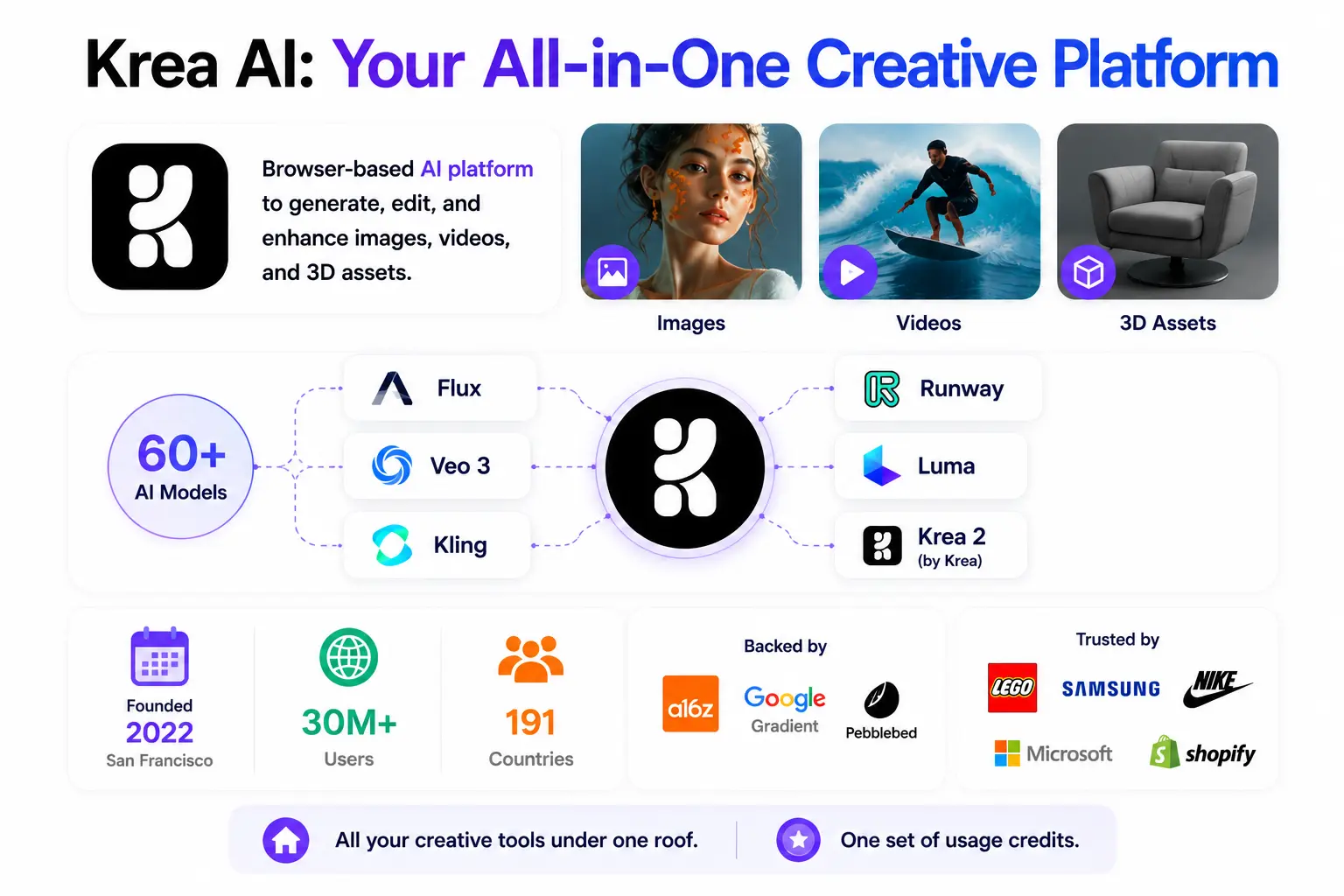
Krea AI is a browser-based AI creative platform for generating, editing, and enhancing images, videos, and 3D assets. Rather than building a single closed model, Krea takes more of an “all-in-one control room” approach: it gives you access to over 60 third-party and proprietary AI models – including Flux, Veo 3, Kling, Runway, Luma, and Krea’s own Krea 2 model – all inside one interface.
The company was founded in San Francisco in 2022 and has grown quickly. It now serves more than 30 million users across 191 countries, with backing from investors like a16z, Google Gradient, and Pebblebed. Enterprise clients reportedly include Lego, Samsung, Nike, Microsoft, and Shopify, which says a lot about how production-ready the platform has become.
In short: instead of subscribing separately to an image generator, a video tool, and an upscaler, Krea AI tries to put all of it under one roof and one set of usage credits.
Key Features of Krea AI
Here’s a closer look at the tools that make up the Krea AI experience, and how each one actually performs in practice.
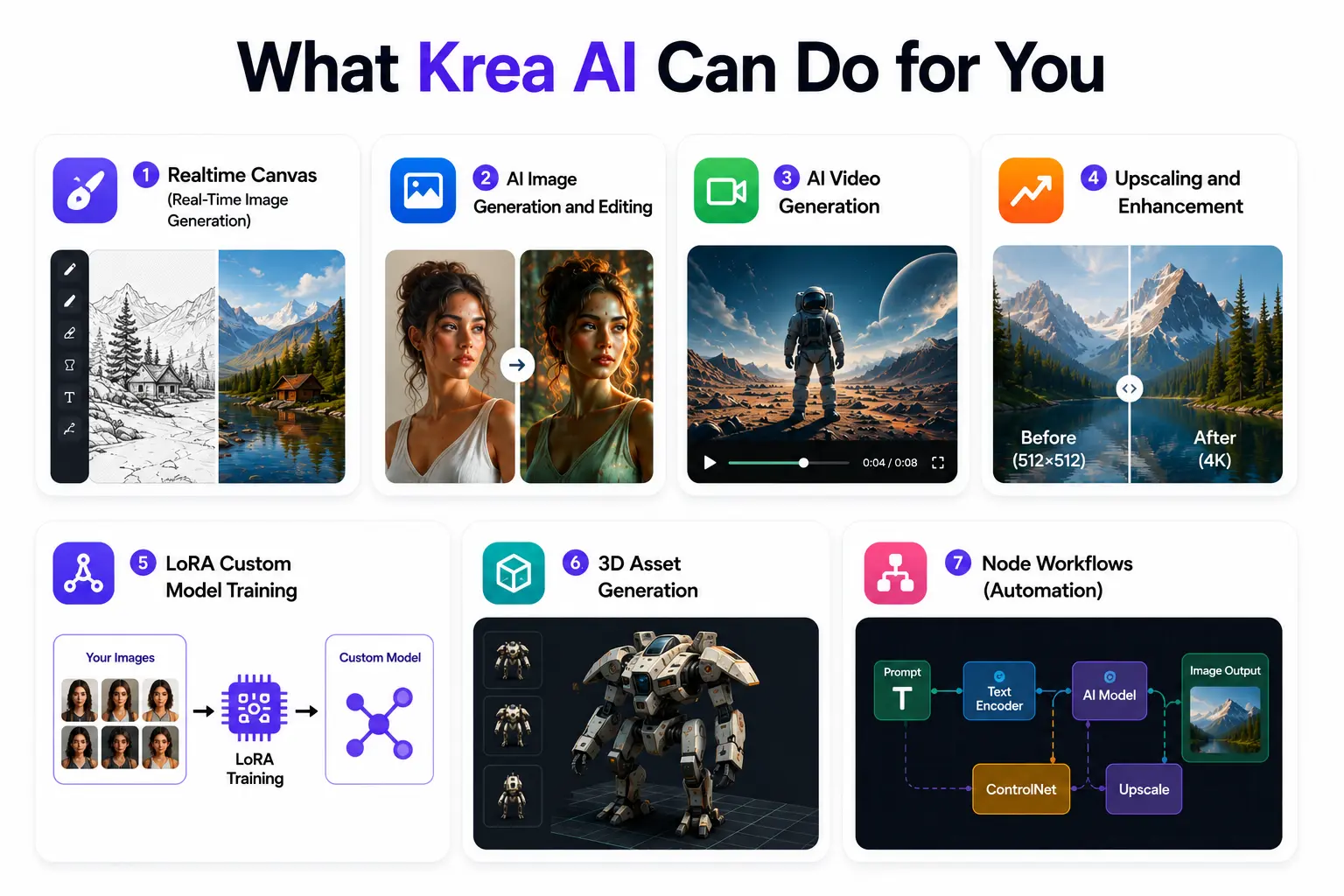
Realtime Canvas (Real-Time Image Generation)
This is Krea’s signature feature, and it’s genuinely different from how most AI image tools work. Instead of typing a prompt and waiting for a result, you sketch rough shapes or type prompt words on one side of the canvas, and the AI renders a photorealistic image on the other side in well under a second. As of early 2026, a voice mode was added too, letting you speak instructions while you draw.
For concept artists, architects, and product designers who think visually and iterate quickly, this tight feedback loop is hard to beat it removes the usual “prompt, wait, repeat” cycle entirely.
AI Image Generation and Editing
Krea’s own image model, Krea 2, ships in two versions: a RAW model built for flexibility and fine-tuning, and a Turbo model optimized for fast, high-quality results. Alongside that, you can generate with popular third-party models like Flux, Nano Banana, and Qwen, all from the same prompt box.
Editing is where opinions get more mixed. Krea’s image editor handles simple instructions- color changes, background swaps -reliably. But more complex, multi-part edit requests (matching faces across several figures, repositioning multiple elements at once) tend to get only partially applied, and sometimes introduce new errors elsewhere in the image. If your edits are simple, you’ll likely be happy. If you need precise, multi-step edits, expect to redo a few attempts.
AI Video Generation
Krea pulls in most of the major video models in one place – Veo 3.1, Kling, Hailuo, Wan, and Runway – wrapped in an interface that’s noticeably simpler than most dedicated video tools. There’s no intimidating timeline or multi-step setup: you describe what you want, choose a model, and generate.
One standout feature is Motion Transfer, which lets you apply movement from a reference video clip onto a static image. It’s a great way to add believable motion to product shots or portraits without filming anything new. Worth noting: because Krea doesn’t own these video models, output quality is ultimately capped by whatever Veo, Kling, or Runway can deliver Krea controls the experience, not the underlying model performance.
Upscaling and Enhancement
Krea’s enhancer can upscale images up to 22K resolution on higher-tier plans, and video up to 8K with 120fps frame interpolation useful for turning old footage or low-res phone shots into something more usable. In testing, results were a mix: strong on detail recovery, but enhancement settings can sometimes drift the original composition or introduce a slight color shift, so a bit of trial and error is normal before you land on settings that work for your image.
LoRA Custom Model Training
On Pro plans and above, you can train a custom model on your own images – uploading a handful of photos of a face, product, or visual style and teaching Krea to reproduce it on demand. This is especially useful for brand asset generation, consistent character art for comics or webtoons, and product photography at scale. The Max plan supports fine-tuning with up to 2,000 images, which opens the door to more serious commercial use cases.
3D Asset Generation
Krea can generate 3D objects directly from text prompts, or convert a 2D image into a 3D mesh. It’s available starting on the Basic plan, making it accessible even for solo creators who want to dip into 3D without a separate, specialized tool.
Node Workflows (Automation)
For repeatable creative pipelines, Krea’s Node system lets you chain steps together – generate, edit, upscale – without writing code. A newer Node Agent feature can even build and refine these workflows for you based on a plain-language description, which is a meaningful time-saver if you’re producing the same type of asset over and over.
How to Use Krea AI: Step-by-Step
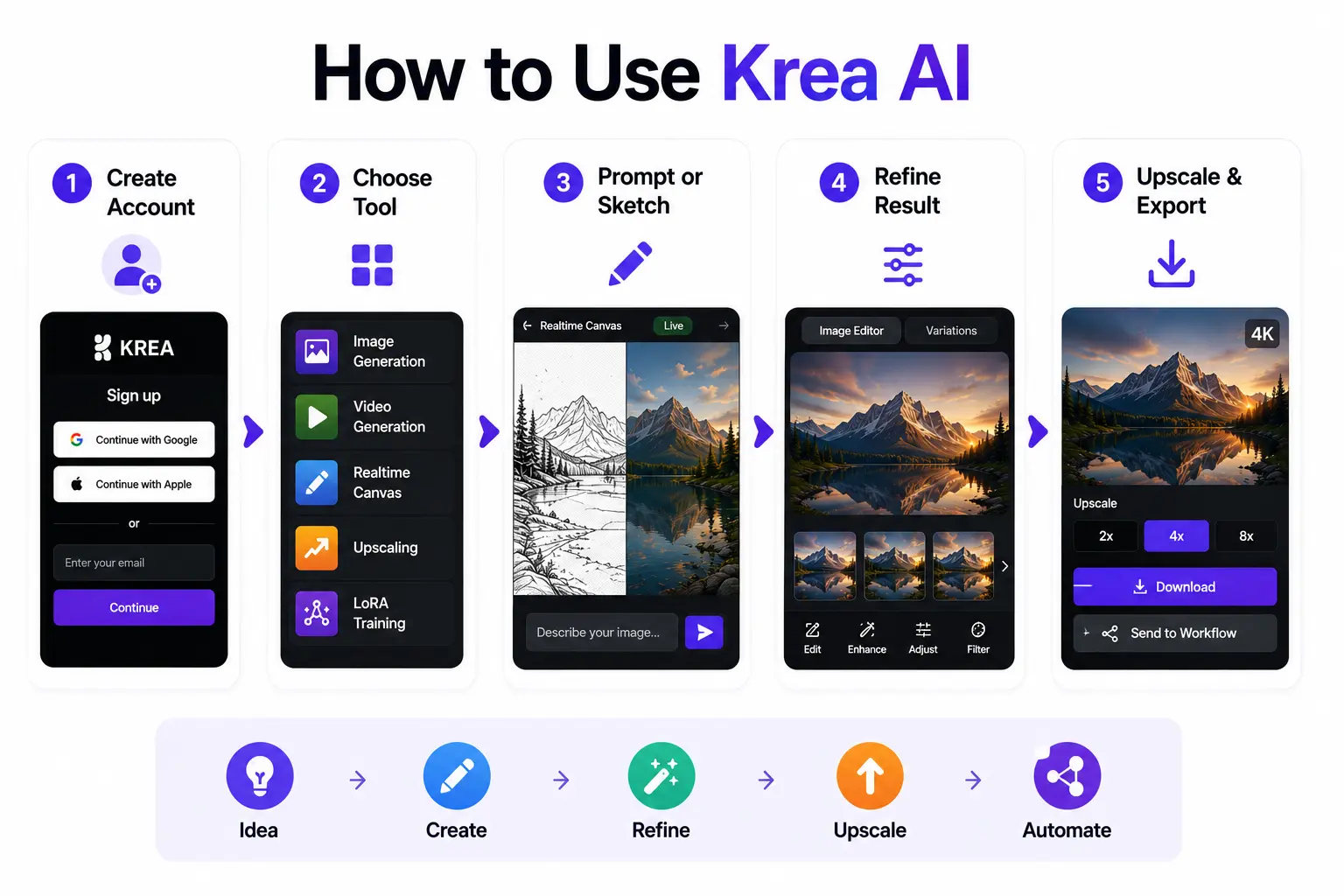
Getting started with Krea AI takes only a few minutes. Here’s the basic workflow:
Create a free account at krea.ai no credit card required.
Choose the tool that matches your goal: image generation, video generation, the Realtime Canvas, upscaling, or LoRA training.
Type a prompt or start sketching. With the Realtime Canvas, the image updates as you draw or type.
Refine your result using the Image Editor, or generate a few variations to compare.
Upscale the final output if needed, then download it or send it straight into a Node workflow.
Krea AI Pricing Explained
Krea AI doesn’t use the simple “credits” system you’ll see on most AI tools. Instead, it runs on compute units — a currency that different actions draw from at different rates depending on the model and task complexity. A quick sketch-to-image generation might cost very little; a high-resolution video render will cost considerably more.
Here’s how the current plans break down:
Plan
Price/mo
Compute Units
Best For
Free
$0
100/day
Testing the platform before committing
Basic
$9
5,000/mo
Freelancers and hobbyists who need commercial rights
Pro
$35
20,000/mo
Active creators who need video models and 8K upscaling
Max
$105
60,000/mo
Heavy daily use and commercial production
Business
$200
80,000/mo
Growing teams (up to 50 seats)
Enterprise
Custom
Custom
Large organizations needing SLAs and audit logs
Annual billing saves roughly 20–40% across all paid plans.
Is Krea AI Free?
Yes – Krea AI offers a genuinely usable free tier with 100 compute units per day and no credit card required. That’s enough to explore the Realtime Canvas and basic image tools. The catch: the free plan doesn’t include a commercial license, so anything you generate is for personal or testing use only, and video, 3D, and lipsync tools are locked behind paid plans. If you need to use your outputs commercially, you’ll need at least the Basic plan.
Compute unit costs for edits and enhancements aren’t shown upfront
Access to 60+ models (Flux, Veo 3, Kling, Runway, and more) in one place
Complex, multi-part image edits are often only partially applied
Easy to learn — no steep setup curve even for beginners
Enhancement results can be inconsistent depending on settings
Useful free tier with no credit card required
Free tier has no commercial license and limited tool access
LoRA training makes brand- or character-consistent output possible
Some users report slow or limited customer support response
Is Krea AI Safe and Trustworthy?
Yes, Krea AI is a legitimate, well-funded company rather than a fly-by-night tool. It’s backed by recognized investors including a16z, Google Gradient, and Pebblebed, and serves a large, active global user base. Its privacy policy outlines standard practices around encryption and data handling, and business-tier accounts get explicit no-training clauses, meaning your proprietary uploads aren’t used to train Krea’s general models.
As with any cloud-based AI tool, it’s worth avoiding uploading highly sensitive personal data, and reviewing the privacy policy if you plan to use it for client or brand work. But from a legitimacy standpoint, there’s no indication Krea AI is unsafe to use.
Krea AI vs. Top Alternatives
No single AI creative tool wins on every front. Here’s how Krea AI stacks up against the platforms people compare it to most.
Krea AI vs. Midjourney
Midjourney is known for producing some of the most aesthetically refined, stylized images available, and it’s now accessible through both its website and Discord. It generally has a higher image-quality ceiling than Krea for editorial and artistic output. Krea, on the other hand, wins on range — bundling image, video, 3D, and upscaling tools in one subscription, and it offers a free tier, while Midjourney does not.
Krea AI vs. Leonardo AI
Leonardo AI is built around deep model customization and fine-tuning, with a strong community of shared assets – making it a favorite among game designers and concept artists. Choose Leonardo if fine-tuning depth for character and game art is your priority. Choose Krea if you want one platform that also covers video and 3D.
Krea AI vs. Freepik AI (Magnific)
Freepik, now expanded under the Magnific AI brand, combines a massive stock asset library with AI generation across 40+ models. It’s a strong pick for teams who need both stock content and generated visuals in one place. Krea doesn’t offer a stock library, but its Realtime Canvas and model variety give it an edge for from-scratch creative work.
Krea AI vs. Adobe Firefly
Adobe Firefly is tightly integrated into the Adobe ecosystem (Photoshop, Illustrator, Premiere), which makes it the more natural choice if your workflow already lives inside Creative Cloud. Krea is platform-agnostic and arguably faster to start with for creators who don’t already pay for Adobe tools.
Who Is Krea AI Best For?
Krea AI fits naturally into a few specific workflows:
Concept artists and illustrators who want to iterate visually in real time instead of waiting on prompt queues
Architects and product designers turning 3D renders into photorealistic visuals for client presentations
Marketers and social content creators who need both image and video generation without separate subscriptions
Indie brands and small teams who want LoRA-trained models for consistent product or character visuals
It’s less suited to e-commerce teams that need specialized virtual try-on or ghost-mannequin tools, or to anyone who needs guaranteed, predictable costs for every single edit — the compute unit system takes some getting used to.
FAQ
Is Krea AI free to use?
Yes. Krea AI’s free plan includes 100 compute units per day with no credit card required, though it doesn’t include a commercial license or access to video, 3D, and lipsync tools.
Is Krea AI safe and trustworthy?
Yes. Krea AI is backed by investors including a16z, Google Gradient, and Pebblebed, serves over 30 million users globally, and offers no-training data policies on business-tier accounts.
Is Krea AI better than Midjourney?
It depends on your priority. Krea AI wins on range, offering image, video, 3D, and upscaling in one subscription plus a free tier. Midjourney generally wins on raw image quality for stylized, artistic output.
What is the best alternative to Krea AI?
Midjourney is the top pick for image quality, Leonardo AI for deep model fine-tuning, and Adobe Firefly for teams already working inside Creative Cloud.
Does Krea AI offer a commercial license?
Yes, but only on paid plans. The Basic plan ($9/month) and above include a commercial license for generated content; the free tier does not.
How much does Krea AI cost per month?
Paid plans start at $9/month for Basic and scale up to $200/month for Business, with custom Enterprise pricing available. A free plan is also available with daily usage limits.
Conclusion
Krea AI earns its growing user base. The Realtime Canvas genuinely changes how fast you can move from idea to finished visual, and having 60+ image and video models under one subscription is a real convenience most competitors can’t match. The trade-offs are real too — editing precision and enhancement consistency don’t always match the speed, and compute costs aren’t always clear until after you’ve run a task.
For creators, designers, and marketers who value speed and variety over pixel-perfect editing control, Krea AI is one of the strongest all-in-one AI creative platforms available in 2026. If your work depends on precise, repeatable edits every time, it’s worth pairing Krea with a more specialized tool for that specific step.
London is a tough place to get noticed on the internet. There are thousands of businesses in London trying to get the same people to visit their websites. They all want to be on the page of Google. If your website is not set up to work well with search engines you will not be able to compete with the businesses in London.
This guide will tell you everything you need to know about making your website work well with search engines in London. It will explain what this is, why it is important what you need to do and how to make it work for you in 2026.
What Is On-Page SEO?
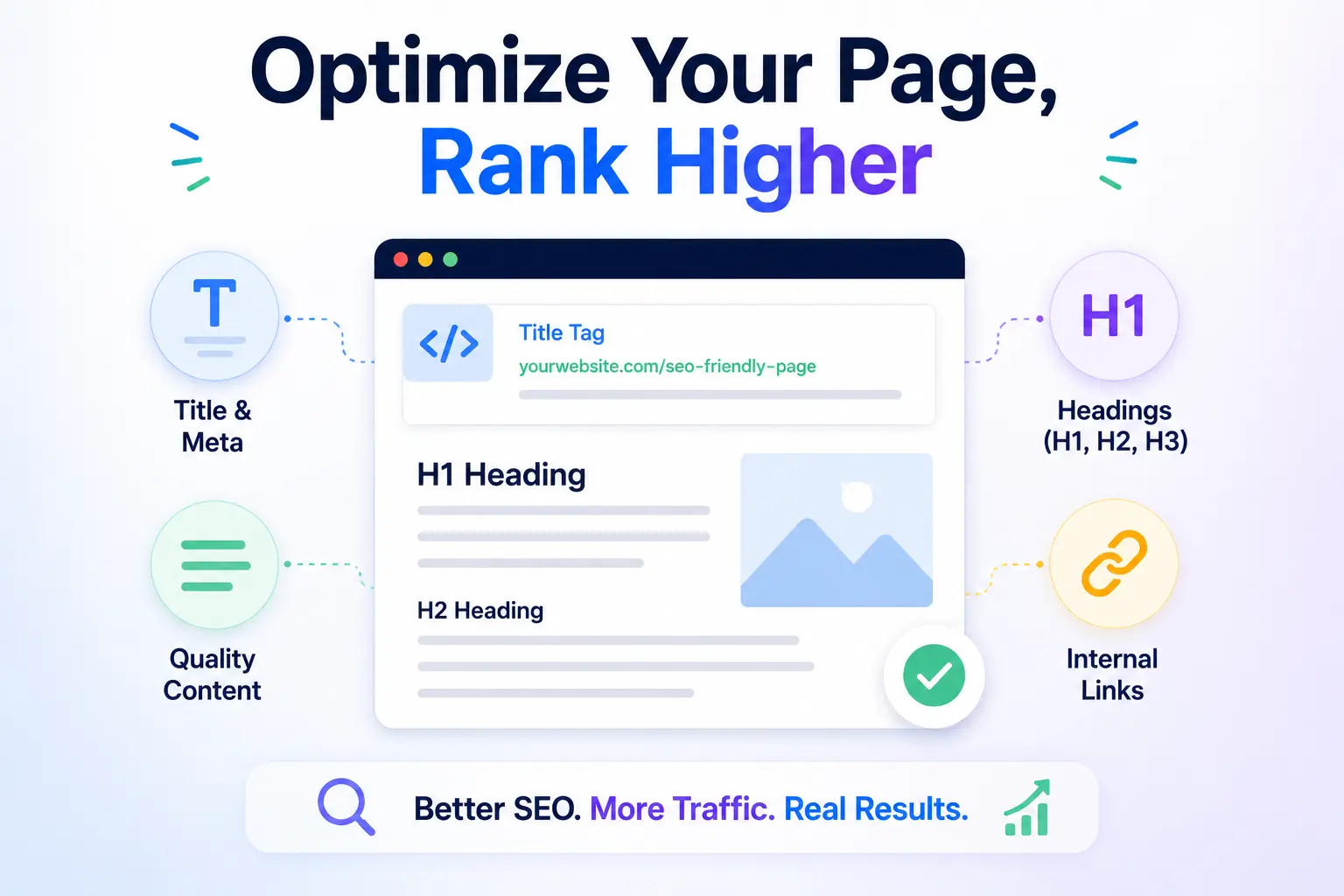
On-page SEO is the practice of optimizing the content and HTML elements of a webpage so itranks higher in search results and attracts the right visitors. It covers everything you can control directly on your site: words, titles, headings, links, and structure.
How On-Page SEO Works
Search engines read your page, then try to match it to what a person is searching for. On-page SEO makes that match easier. You’re giving Google clear signals about your topic, your relevance, and your trustworthiness through the words you write, the tags you use, and the way your content is organized.
Why It Matters for London Businesses
A bakery in Camden and a bakery in Croydon are both “bakeries near me” to different searchers. Without proper on-page optimization, Google has no reliable way to know which business is the better answer for which person. Good on-page SEO closes that gap and puts your business in front of the people actually looking for it.
Why On-Page SEO Is Essential in London’s Competitive Market
Local Competition Challenges
London has one of the highest densities of small and mid-sized businesses competing for the same search terms anywhere in the UK. A generic, unoptimized website simply doesn’t stand a chance against competitors who’ve invested in their on-page strategy.
Search Visibility Benefits
Pages that are properly optimized tend to rank for a wider range of related searches, not just the exact phrase you targeted. This is because search engines understand context, synonyms, and related topics far better than they used to.
Lead Generation Benefits
Ranking is only useful if it brings in business. On-page SEO improves the quality of traffic landing on your site, because it targets pages toward the actual intent behind a search, not just the keyword itself.
ROI of On-Page SEO
Compared to paid advertising, on-page SEO delivers compounding value. A page optimized today can keep generating traffic and leads for years with only periodic updates, making it one of the most cost-effective long-term marketing investments a London business can make.
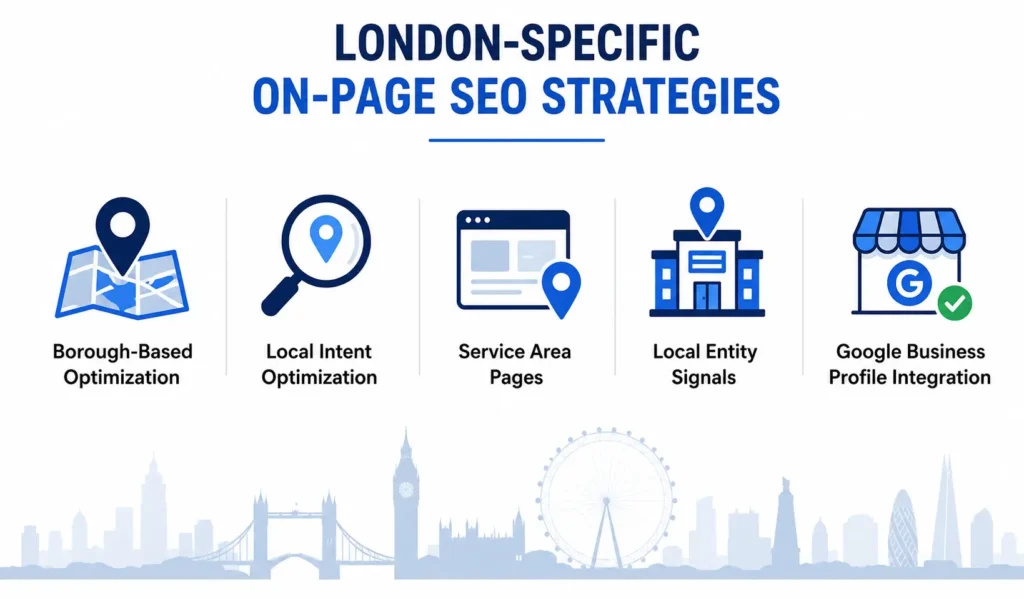
London-Specific On-Page SEO Strategies
Borough-Based Optimization
London isn’t one market, it’s dozens. Optimizing separate pages or content sections for boroughs like Camden, Hackney, or Croydon helps you capture hyperlocal searches that a single generic “London” page would miss.
Local Intent Optimization
Phrases like “near me,” “in London,” or a specific postcode signal local intent. Content should be written to directly address these patterns.
Service Area Pages
Dedicated pages for each area you serve, written with unique content rather than duplicated templates, help you rank across a wider spread of local searches.
Local Entity Signals
Consistent business name, address, and phone number details across your site and external listings reinforce your local relevance to search engines.
Google Business Profile Integration
Your website and Google Business Profile should work together, with matching information and links that reinforce your local presence.
How Much Does On-Page SEO Cost in London?
Pricing Models
London agencies typically charge either a monthly retainer, a one-off project fee for a full site optimization, or an hourly consulting rate, depending on the scope of work involved.
Factors Affecting Cost
Pricing depends on the size of your website, the competitiveness of your industry, how much content needs to be created or rewritten, and whether technical fixes are required alongside on-page work.
Expected ROI
Because on-page SEO continues delivering traffic long after the initial work is done, the return on investment tends to grow over time, unlike paid advertising which stops the moment you stop paying.
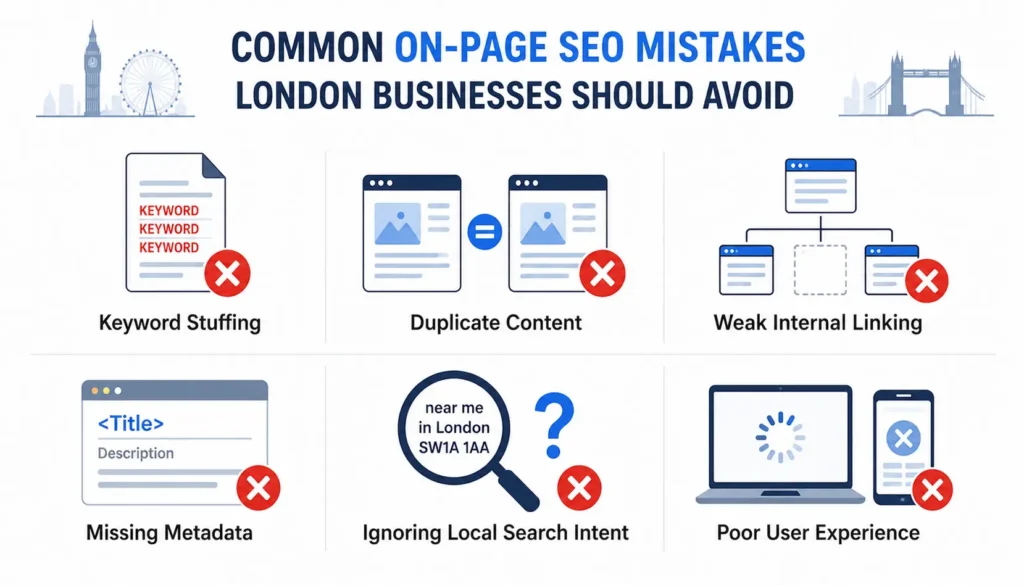
Common On-Page SEO Mistakes London Businesses Should Avoid
Keyword Stuffing
Overusing keywords like “On-Page SEO London” throughout a page can make content difficult to read and may harm rankings. Focus on natural, user-friendly content that addresses local search intent.
Duplicate Content
Using the same content across multiple London location pages can confuse search engines and reduce visibility. Each page should offer unique, locally relevant information.
Weak Internal Linking
Poor internal linking makes it harder for search engines to understand your website structure and can limit the visibility of important service pages.
Missing Metadata
Missing or poorly optimized title tags and meta descriptions can reduce click-through rates and make it harder to compete in London’s crowded search results.
Ignoring Local Search Intent
Creating content without considering what London users are actually searching for can lead to poor rankings and low-quality traffic.
Poor User Experience
Slow-loading pages, confusing navigation, and mobile usability issues can frustrate visitors and reduce engagement, making it harder to compete in London’s highly competitive online market.
Case Studies and Results
Traffic Growth Examples
London businesses that overhaul their on-page SEO commonly see organic traffic increase substantially within three to six months, particularly when content gaps and technical issues are addressed together.
Ranking Improvements
Targeted on-page optimization often moves pages from page two or three of search results into the top five positions for their core keywords, especially when paired with internal linking improvements.
Lead Generation Success Stories
Better-matched search intent and clearer calls to action typically lead to a noticeable rise in enquiry form submissions and phone calls, even before traffic volume increases significantly.
Core Elements of On-Page SEO
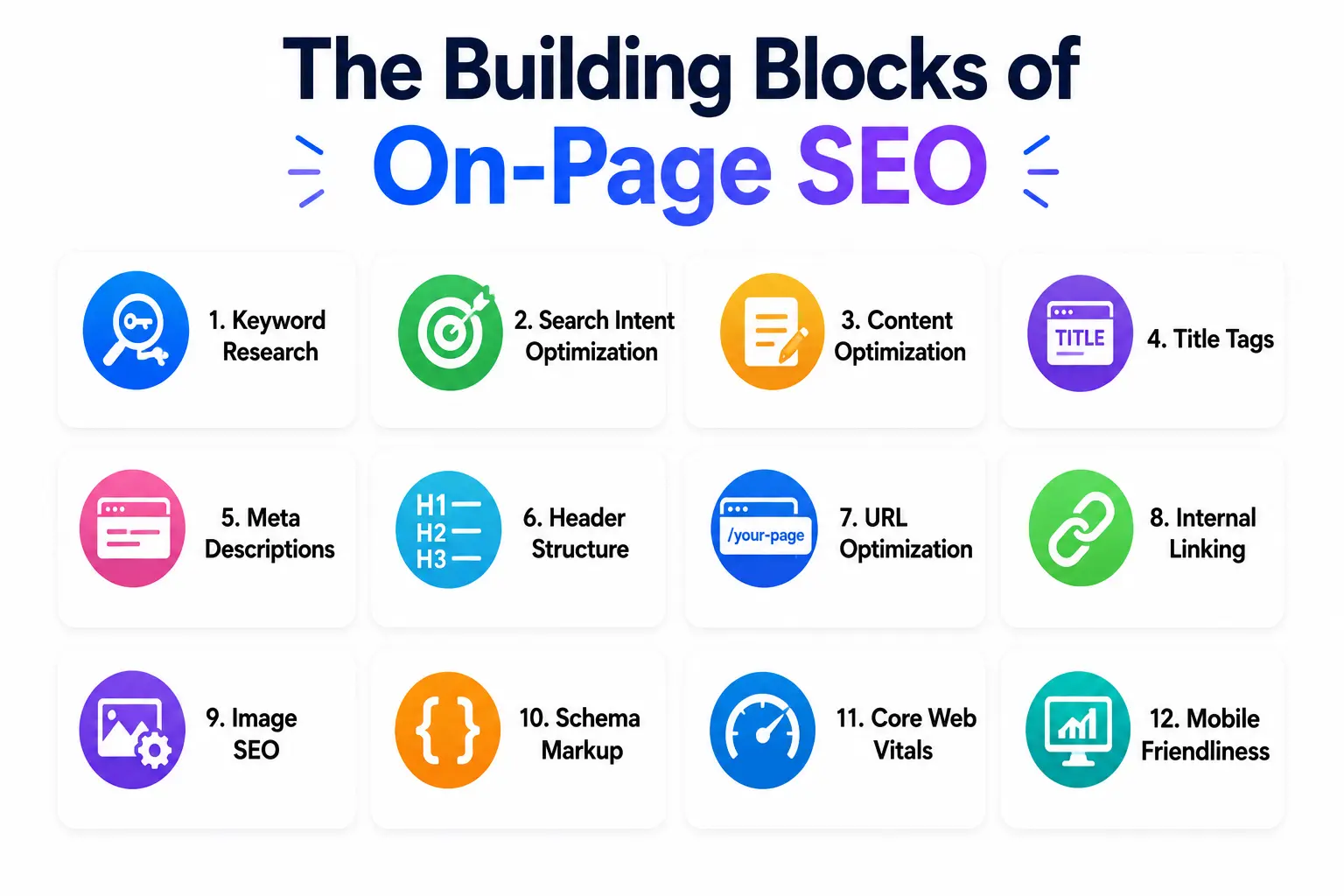
Keyword Research
Everything starts with understanding what your audience is actually typing into Google. This means identifying primary keywords, secondary keywords, and the long-tail phrases that show real buying intent.
Search Intent Optimization
Not every search means the same thing. Someone typing “what is on-page SEO” wants an explanation. Someone typing “on-page SEO agency London” wants to hire someone. Matching your content to the correct intent (informational, commercial, transactional, or navigational) is one of the biggestranking factorsmost websites ignore.
Content Optimization
Strong content answers the searcher’s question clearly, covers the topic in enough depth, and is structured so both readers and search engines can follow it easily.
Title Tags
Your title tag is often the first thing a searcher sees. It needs to include your target keyword naturally while staying compelling enough to earn a click.
Meta Descriptions
While meta descriptions don’t directly affect rankings, they have a big impact on click-through rate, which influences how Google perceives the value of your page over time.
Header Structure
Clear H1, H2, and H3 tags help search engines understand your page’s structure and help readers scan content quickly, which improves time on page.
URL Optimization
Short, descriptive, keyword-relevant URLs are easier for both users and search engines to understand and trust.
Internal Linking
Linking between related pages on your site helps spread authority across your website and guides visitors toward the pages that matter most for conversions.
Image SEO
Compressed images with descriptive file names and alt text improve page speed and accessibility, both of which influence rankings.
Schema Markup
Structured data helps search engines understand exactly what your content represents, whether that’s a product, a service, a review, or a local business listing, increasing your chances of appearing in rich results.
Core Web Vitals
Page speed, visual stability, and interactivity are now direct ranking factors. A slow or clunky site undermines even the best content.
On-Page SEO vs Off-Page SEO vs Technical SEO
Key Differences
Type
Focus
Goal
On-Page
Website content and structure
Relevance
Off-Page
External signals like backlinks
Authority
Technical
Site infrastructure and crawlability
Accessibility
When Each Matters Most
On-page work matters most when your content isn’t matching what people are searching for. Off-page work matters most when you have great content but low domain authority. Technical work matters most when search engines are struggling to crawl or index your site at all.
Combined SEO Strategy
These three pillars work together, not separately. A technically sound site with weak content won’t rank, and great content on a site nobody links to will struggle just as much. A complete SEO strategy addresses all three.
Advanced On-Page SEO Strategies for [this_year]
Semantic SEO
Modern search engines don’t just match keywords, they understand meaning. Semantic SEO involves writing content that covers a topic thoroughly using related terms and concepts, rather than repeating one exact phrase.
Entity SEO
Search engines increasingly think in terms of entities (people, places, brands, and concepts) rather than isolated keywords. Clearly defining your business, services, and location as recognizable entities helps Google place you correctly within its knowledge of the world.
Topical Authority
Ranking for one page is good. Becoming the recognized authority on an entire topic is far more powerful. This is built by covering a subject from multiple angles across a connected set of pages.
Topic Clusters
A topic cluster is a central pillar page supported by several related articles, all interlinked. This structure signals depth of expertise to search engines and keeps visitors engaged for longer.
NLP Optimization
Google uses natural language processing to understand the meaning behind your content, not just the words on the page. Writing naturally, answering questions directly, and avoiding awkward keyword repetition all support this.
AI Overview Optimization
Google’s AI-generated answers at the top of search results pull from clear, well-structured, directly worded content. Pages that answer questions concisely near the top, with supporting detail below, have a better chance of being featured.
EEAT Optimization
Experience, expertise, authoritativeness, and trustworthiness are core to how Google evaluates content quality. This means showing real-world experience, author credentials, and transparent business information throughout your site.
How Long Does On-Page SEO Take?
Timeline Expectations
Most businesses start seeing measurable movement in rankings within two to four months, with stronger results building over six to twelve months as search engines build trust in the updated content.
Quick Wins
Fixing title tags, meta descriptions, and obvious content gaps can produce noticeable improvements within a matter of weeks.
Long-Term Results
Building topical authority and earning top rankings for competitive London keywords is a longer process, generally taking several months to a year of consistent optimization.
How we do On-Page SEO at Rankller
Website Audit
We start by reviewing your current content, structure, and technical health to find what’s holding your rankings back.
Competitor Analysis
We study the pages currently ranking above you to understand what’s working in your specific niche and where the gaps are.
Keyword Mapping
Every page on your site should target a distinct set of keywords, with no overlap or competition between your own pages.
Content Optimization
Existing pages get rewritten or expanded where needed, with attention to depth, clarity, and search intent alignment.
Internal Linking Strategy
We build a linking structure that pushes authority toward your most valuable pages, like service and conversion pages.
Technical Improvements
We fix any issues affecting crawlability, indexing, or site speed that could be limiting your on-page work.
Performance Tracking
Rankings, traffic, and conversions are monitored continuously so the strategy can be adjusted based on real data, not guesswork.
Get Expert On-Page SEO Services in London
Free SEO Audit
Find out exactly what’s holding your website back with a detailed review of your current on-page performance, content gaps, and technical issues.
Consultation Process
A short initial consultation helps identify your goals, your competitive landscape, and the fastest path to measurable results.
Contact Information
Reach out today to start improving your search visibility and turning more London searchers into customers.
FAQs About On-Page SEO London
1. How much does on-page SEO cost in London?
Costs vary widely based on website size and industry competitiveness, with most agencies offering monthly retainers or project-based pricing.
2. How long does on-page SEO take to work in London?
In London’s competitive market, businesses typically see early improvements within 4–8 weeks, while stronger ranking and traffic growth usually takes 3–6 months, depending on competition, website authority, and industry.
3. What is included in on-page SEO services in London?
On-page SEO services in London typically include keyword research, local search intent optimization, content improvements, title and meta tag optimization, internal linking, image SEO, schema markup, and website performance enhancements to improve rankings and attract more local customers.
4. What is the difference between on-page and technical SEO?
For London businesses, on-page SEO focuses on optimizing content, keywords, and page relevance to attract local search traffic, while technical SEO ensures your website is fast, secure, and easy for search engines to crawl and index. Both are essential for improving rankings in London’s competitive search market.
5. Can on-page SEO improve local rankings?
Yes. Optimizing for local keywords, borough-specific content, and consistent business information directly supports local search visibility.
6. Does on-page SEO help Google AI Overviews?
Yes. For London businesses, clear, well-structured content that directly answers local search queries can improve the chances of appearing in Google AI Overviews, helping increase visibility, traffic, and brand authority in competitive search results.
7. What are the most important on-page SEO factors?
For London businesses, the most important on-page SEO factors include local search intent alignment, high-quality content, optimized title tags, strong internal linking, fast page speed, and location-specific relevance to help improve visibility in competitive local search results.
8. How often should on-page SEO be updated?
For London businesses, on-page SEO should be reviewed every 6–12 months, or sooner if rankings drop, competitors improve, or search trends change. Regular updates help keep your content relevant and competitive in London’s fast-moving search market.
9. Is on-page SEO enough to rank in London?
On its own, it significantly improves your chances, but combining it with technical SEO and off-page authority building delivers the strongest results.
10. What tools are used for on-page SEO?
London SEO agencies commonly use Google Search Console, Google Analytics 4, Ahrefs, Semrush, Screaming Frog, and Surfer SEO to identify local keyword opportunities, optimize content, track rankings, and improve website performance in London’s competitive search market.
Imagine taking a single photo and turning it into a fully animated, talking character one that speaks, blinks, raises its eyebrows, and lip-syncs to your script with near-human precision. That used to take a studio, a production team, and a serious budget. Now it takes Hedra AI and a few minutes of your time.
Hedra AI is one of the fastest-growing AI video platforms in 2026, and its rise makes complete sense once you see what it can actually do. Whether you are a content creator who needs to scale output without going on camera, a marketer looking for branded video without a film crew, or an educator trying to make lessons genuinely engaging Hedra AI makes all of that possible with zero technical skills required.
This guide covers everything you need to know: what Hedra AI actually is, how its technology works, a step-by-step walkthrough of the platform, an honest breakdown of pricing, real pros and cons, and the best alternatives to consider if Hedra does not quite fit your workflow.
What Is Hedra AI?
Hedra AI is an AI-powered video creation platform built around a single, very impressive capability: turning static images into expressive, talking characters. Feed it a portrait photo and a text script, and its flagship Character-3 omnimodal model will return a short video in which that character speaks, lip-syncs, blinks, and displays natural facial expressions automatically, with no manual animation required.
The platform was created as a creative AI lab with a specific mission: empowering storytellers, marketers, and creators to produce professional talking-character videos without any production experience. It supports both text-to-video and image-to-video workflows, giving users two flexible paths into the same result.
What sets Hedra AI apart from similar tools is the precision of its lip-sync technology. Where most avatar platforms approximate mouth movements, Hedra’s Character-3 model delivers phoneme-level lip-sync accuracy meaning the character’s mouth actually follows the sounds being produced in real time, not just in a rough approximation. Layered on top of that are automatic micro-expressions: natural blinks, gaze shifts, eyebrow raises the small details that make animated faces feel lifelike rather than robotic.
The business side reflects the product quality. Hedra AI is backed by a16z (Andreessen Horowitz) with $44 million in funding and has grown to more than 20 million users numbers that reflect genuine creator demand, not just hype.
Hedra AI is built around a focused, well-designed feature set rather than trying to do everything at once. Here is what you are actually working with:
Character-3 Model – Industry-Leading Lip Sync
The Character-3 model is Hedra’s flagship AI engine and the main reason people choose it over competitors. Using an omnimodal architecture, it generates phoneme-accurate lip movements combined with natural facial micro-expressions. When your character speaks, its mouth, eyes, and entire face respond in sync not as a mechanical replay, but with genuine expressiveness that holds up under close viewing.
Image-to-Video and Text-to-Video
Hedra supports two input methods. You can upload an existing portrait image a photo, illustration, or digital artwork and animate it into a talking character. Alternatively, you can generate a character entirely from a text description. Both paths produce the same result: a short, expressive, lip-synced video ready to download or share.
Built-in Audio Script Tool
You do not need to record a voiceover separately. Hedra’s integrated audio script tool gives you three options: type your script and choose from an AI voice library, record your own voice directly in the browser, or upload a pre-recorded audio file. The character’s lip movements then sync to whichever audio you use.
Multi-Language Character Generation
Hedra supports character generation across multiple languages, making it viable for global content teams and international brands that need to produce multilingual video at scale without running separate production pipelines for each market.
Multiple Image Format Support
Hedra accepts JPEG, PNG, and WEBP image uploads the three formats that cover the vast majority of creator workflows. No conversion or resizing is needed before uploading.
Unified AI Agent Workflow
Scripting, voice generation, and video creation all happen inside the same platform. You do not need to bounce between multiple tools to put together a talking avatar video. Hedra handles the full pipeline in one place, which significantly reduces the friction of producing content at volume.
Direct Download and Share
Once a video is generated, you can download it to your device immediately or share it directly from the platform without going through any additional editing step. For creators operating on tight timelines, the ability to go from idea to published video in one session is a genuine advantage.
API Access for Developers and Teams
Hedra offers API access for developers and enterprise teams who want to integrate talking character video generation into their own platforms, apps, or automated content pipelines. This makes it a viable backend capability for businesses building AI-assisted content at scale rather than just a tool for individual creators.
How to Use Hedra AI Step-by-Step Guide
Using Hedra AI is genuinely straightforward, even if you have never touched an AI video tool before. Here is a clear, step-by-step walkthrough from start to finish:
Step 1 – Go to the Hedra AI Website
Open your browser and go to the Hedra AI website. On the homepage, click the “Try Hedra” button. For basic use, no account or sign-in is required you can generate videos immediately without creating a profile. If you plan to use the platform regularly or want access to paid features, creating a free account takes under a minute.
Step 2 – Upload Your Image (Start Frame)
Once inside the tool, click the “Start Frame” option to upload the image you want to animate. This is the character Hedra will bring to life. You can upload a portrait photo, an illustrated character, or any image in JPEG, PNG, or WEBP format.
For the best output, use a clear front-facing image where the character’s face is well-lit, centered, and unobstructed. Hedra also gives you the option to write a short text prompt describing how you want the character to behave for example, “warm and enthusiastic” or “calm and professional.” Adding this context gives the model more to work with and produces noticeably better results.
Step 3 – Add Your Audio Script
Click the “Audio Script” section. You have three options here:
Type your script into the text box and choose an AI-generated voice from the available library
Record your own voice directly in the browser using the built-in recorder
Upload a pre-recorded audio file you have already prepared
If you are using an AI voice, take a moment to audition two or three options before committing. The voice style has a significant impact on how natural the final character feels, especially when it needs to match a specific brand tone or persona.
Step 4 – Customize Output Settings
Before generating, review the available output settings. You can adjust the aspect ratio (important for different social media formats), resolution, and video duration. Once everything looks right, click “Add to Video” to confirm your selections and queue up the generation.
Step 5 – Generate and Download
Hit the generate button. Hedra will process your inputs and render the talking character video. Generation typically takes between 30 seconds and a couple of minutes depending on the length and complexity of the output. Once it is ready, preview the result directly in the browser. If you are happy with it, download to your device or share it from the platform.
Hedra AI Pricing – Free vs. Paid Plans
Hedra AI offers a genuinely functional free tier, which is relatively rare for an AI video platform operating at this level of output quality. Here is the full breakdown:
Plan
Price
Generations / Month
Commercial Use
Free
$0 / month
5 per day
No — personal use only
Starter
$15 / month
Enhanced credits
Yes
Pro
Higher tier
Bulk credits
Yes
Team / Enterprise
Custom
Unlimited (API)
Yes
The free tier gives you 5 video generations per day without requiring an account, a credit card, or even an email address. That is more than enough to properly evaluate the platform and understand the output quality before spending anything.
Paid plans start at $15 per month and unlock commercial use rights essential if you are creating content for clients, brands, or any monetized platform. Higher tiers offer increased credit allowances, longer video outputs, higher resolution options, and full API access for teams who need to integrate Hedra into larger workflows.
Who Should Use Hedra AI?
Hedra AI fits a wider range of use cases than it might initially appear. Here is who genuinely gets the most value from the platform:
Content Creators and Influencers
If you are building a YouTube channel, running a social media presence, or producing UGC content, Hedra AI gives you a fast way to create talking avatar videos, faceless content, or character-based storytelling without appearing on camera yourself. The lip-sync quality is good enough that audiences respond to it as professional content rather than obviously AI-generated filler.
Marketers and Brand Teams
Marketing teams use Hedra to produce AI video ads, branded spokesperson content, product demo characters, and social media clips at a fraction of the time and cost of traditional video production. Because the same character image can be used repeatedly, brand consistency across multiple videos is built in.
Educators and Course Creators
Teachers and e-learning creators use Hedra to build AI character explainer videos, animated lecture avatars, and educational content that is more engaging than static slides or text-heavy presentations. A talking character with natural expressions holds attention better than a PowerPoint with a voiceover.
Developers and Tech Teams
Through the Hedra API, developers can integrate talking character video generation into their own applications, content platforms, or automated publishing workflows. This positions Hedra as a viable backend capability for software products that need AI-generated video as a feature rather than just a one-off creative tool.
Independent Filmmakers and Storytellers
Independent filmmakers and short-form storytellers use Hedra to animate characters without a studio budget. It is not a replacement for live-action film, but for animated characters, concept videos, short narratives, and pitch materials, it dramatically reduces the cost and turnaround time involved.
Hedra AI Pros and Cons
No tool is perfect — and Hedra AI is no exception. Here is an honest look at what it does very well and where it still has real limitations:
Pros
Best-in-class lip-sync accuracy: The Character-3 model leads the market on phoneme-level facial animation. No competing tool currently matches it on this specific capability.
Beginner-friendly: The interface is clean, simple, and requires zero technical knowledge to use. If you can upload a photo and type a script, you can use Hedra AI.
Generous free tier: Five generations per day with no account required is a genuinely useful evaluation window more than most AI video tools offer for free.
Unified workflow: Script, voice, and video all in one platform means fewer tools, fewer exports, and less friction in the production pipeline.
Multi-language support: Useful for international content teams producing multilingual character videos without running separate pipelines per market.
API available: Developers can integrate Hedra into their own platforms and workflows, making it more than just a standalone creative tool.
Cons
Stiff body motion: Character-3 excels at facial animation, but full-body movement remains noticeably robotic. Characters do not move naturally from the shoulders down, which limits certain use cases.
Limited voice options: The AI voice library is functional but not extensive. Niche languages and highly specific vocal tones are not always available, and voice customization options are limited.
Credits expire monthly: Unused monthly credits do not roll over, which frustrates regular subscribers who miss their usage window.
Resolution caps on lower plans: Higher output resolution requires upgrading to a paid plan, and even then it is not always user-controllable.
Pricing vs. feature breadth: Compared to tools that offer a broader feature set at similar price points, Hedra AI’s subscription cost can feel steep if lip-sync is not your primary need.
Hedra AI Alternatives Worth Considering
Hedra AI is the strongest option for talking avatar videos with accurate lip-sync, but it is not the right fit for every use case. Here are the top alternatives to consider depending on what you actually need:
Tool
Best For
Key Difference vs Hedra AI
Dreamina
All-in-one creators
HD upscale, more free credits, broader creative toolset
Pika
Cinematic video output
Greater control over motion dynamics and video style
Runway
Professional editing
Full production suite for advanced video teams
Pollo AI
Publish-ready avatars
More natural body motion with minimal editing needed
Dreamina by CapCut
Dreamina is an all-in-one creative AI platform offering HD image generation, video creation, and AI editing tools inside a single interface. It is a strong choice for creators who want a broader creative toolkit beyond talking avatars — with more generous free credits and a more visual, design-forward workflow. If Hedra AI feels too narrow for your needs, Dreamina is the most natural alternative to explore first.
Pika
Pika focuses on cinematic video generation with strong text-to-video and image-to-video capabilities. If you need more dynamic camera movements, greater control over video motion, and a more film-like aesthetic rather than talking character videos specifically, Pika delivers better output for that use case. It is less focused on facial lip-sync and more focused on visual storytelling.
Runway
Runway is the professional-grade option in the AI video space. It offers a full video editing and generation suite with a high output quality ceiling, making it the right choice for production teams, creative agencies, and filmmakers who need more control over the final product. The learning curve is steeper, the cost is higher, but the capabilities are broader. Worth considering if you are building a full video production workflow rather than just a talking character tool.
Pollo AI
Pollo AI positions itself specifically as a publish-ready avatar solution. Where Hedra produces great facial animation but stiff body movement, Pollo AI focuses on making the full character not just the face feel more physically natural. If Hedra’s body motion limitations are a genuine dealbreaker for your content, Pollo AI is the most direct alternative to test.
FAQ
Is Hedra AI free to use?
Yes. Hedra AI offers a free tier that gives you 5 video generations per day without requiring an account or credit card. This is enough to properly evaluate the platform and understand its output quality. Paid plans start at $15/month and unlock commercial use rights, higher credit allowances, and better resolution options.
How accurate is Hedra AI’s lip sync?
Hedra AI’s lip-sync is currently among the most accurate available in any consumer AI video tool. The Character-3 model uses phoneme-level synchronization, meaning the character’s mouth movements match the actual sounds being produced rather than just approximating them. It also generates automatic micro-expressions — blinks, gaze shifts, eyebrow raises — that make the output feel far more lifelike than traditional avatar tools.
Can I use Hedra AI videos commercially?
Commercial use is only available on paid plans. Free tier output is for personal, non-commercial use only. If you are creating content for clients, brands, or any monetized platform, you need to be on a paid subscription before publishing or selling Hedra AI output.
What image formats does Hedra AI support?
Hedra AI accepts JPEG, PNG, and WEBP image formats. These three formats cover the vast majority of images creators work with day to day, so you are unlikely to need to convert anything before uploading.
Does Hedra AI offer an API?
Yes. Hedra AI provides API access for developers and enterprise teams who want to integrate talking character video generation into their own applications or content workflows. API access is available on higher-tier paid plans and is particularly useful for businesses building AI-assisted content pipelines at scale.
What are the main alternatives to Hedra AI?
The top alternatives are Dreamina (best for all-in-one creative workflows), Pika (best for cinematic video generation), Runway (best for professional production teams), and Pollo AI (best for publish-ready avatars with more natural body motion). Each suits a different primary use case, so the right choice depends on what you need the most from an AI video tool.
Why do my Hedra AI credits expire?
Hedra AI’s paid plan credits reset at the end of each billing cycle, and any unused credits are not carried forward. This is a well-documented limitation that regular subscribers frequently cite as a frustration. To get full value from a paid plan, schedule your content production in advance and aim to use your monthly allocation before it resets.
Conclusion
Hedra AI has earned its reputation as one of the most capable AI video creation platforms available right now, and that reputation rests almost entirely on how good the Character-3 model is at what it does. If you need a tool that can turn a static image into a convincing, expressive, lip-synced talking character, Hedra AI currently does that better than any competing platform on the market.
The limitations are real and worth acknowledging. Body motion remains stiff, voice customization options are limited, credit expiry frustrates regular subscribers, and the pricing feels high relative to tools that offer a broader overall feature set. For anyone whose primary need is general AI video rather than specifically talking avatar lip-sync – an alternative like Dreamina, Pika, or Runway may ultimately be the better fit.
But for content creators, marketers, educators, and developers who need phoneme-accurate talking characters at scale, Hedra AI is the clearest choice available in 2026. The free tier is genuinely functional five generations a day, no account required so the smartest move is to test it directly with your actual content before committing to a paid plan. You will know within your first session whether it delivers what your workflow needs.
Social media is really about people interacting with your stuff.Whether you are someone who makes things, has a lot of followers, owns a business, makes music or represents a brand the number of likes you get on your posts can really change how people think about what you put out.
When you get likes, people are more likely to see your posts. They think you are more trustworthy and you get more chances to grow.
That is why a lot of people looking for LeoFame likes to make their social media better without spending any money.
So what are these LeoFame free likes anyway? Are they safe to use? Do they really help your account get bigger?. How can you use them to make your social media plan work for a long time?
This guide will answer all those questions. Give you tips that you can actually use to get more people engaged with your stuff and make your online presence stronger.
What Are LeoFame Free Likes?
LeoFame free likes are promotional engagement services offered through the LeoFame platform that allow users to receive likes on their social media content without an upfront payment.
When users see content with higher engagement, they are often more likely to interact with it themselves. This psychological principle is known as social proof, and it plays a significant role in modern social media marketing.
Why Likes Matter on Social Media
Many people assume likes are just vanity metrics.
In reality, likes influence several important aspects of social media performance.
Increased Visibility
Most social platforms use engagement signals to determine which content deserves wider distribution.
Posts receiving early engagement often gain:
More impressions
Better reach
Increased discoverability
Higher chances of appearing in recommendations
Stronger Social Proof
Users naturally trust content that appears popular.
When a post already has engagement, new visitors are more likely to:
View the content
Watch videos longer
Follow the account
Leave comments
Share the post
Better Brand Credibility
For businesses and creators, engagement metrics contribute to perceived authority.
A highly engaged profile often appears:
More trustworthy
More established
More influential
More valuable to potential followers
How LeoFame Free Likes Work
The process is generally straightforward.
Step 1: Select the Desired Service
Users choose a free likes option available through the platform.
Step 2: Provide Post Information
The specific post or content link is submitted for engagement.
Step 3: Receive Likes
The platform delivers likes according to its service structure.
Step 4: Monitor Results
Users track engagement performance and observe any changes in reach or interaction.
The simplicity of the process is one reason many users explore free engagement services before investing in paid growth strategies.
Benefits of Using LeoFame Free Likes
1. Improved First Impressions
Visitors often make judgments within seconds.
A post with strong engagement immediately appears more relevant and interesting.
Example
Imagine two identical posts:
Post A has 12 likes.
Post B has 1,200 likes.
Most users naturally perceive Post B as more valuable.
This demonstrates the power of social proof.
2. Increased Engagement Potential
Higher visible engagement can encourage additional organic interactions.
People often engage with content that others have already validated.
This creates a positive engagement cycle.
3. Better Content Discovery
Social media algorithms reward activity.
Posts receiving interactions early may gain additional exposure through:
Explore pages
Suggested content feeds
Recommendations
Trending sections
4. Cost-Effective Growth
For new creators and small businesses, free engagement tools provide an accessible starting point.
Instead of allocating marketing budgets immediately, users can test engagement strategies while learning platform dynamics.
5. Faster Audience Building
Growing from zero engagement can be challenging.
Free likes may help create momentum during the early stages of account development.
Are LeoFame Free Likes Safe?
This is one of the most frequently asked questions.
Short Answer
Safety depends on how the service operates and how users implement it within their overall social media strategy.
The most sustainable social media success always comes from authentic engagement combined with valuable content.
Do Free Likes Actually Help Grow an Account?
The answer is nuanced.
What Free Likes Can Do
Free likes can help:
Increase perceived popularity
Improve social proof
Encourage additional engagement
Enhance first impressions
What Free Likes Cannot Do
Free likes alone cannot:
Create loyal followers
Build a community
Generate meaningful conversations
Replace quality content
Successful accounts combine engagement strategies with strong content marketing.
Best Content Types to Promote with LeoFame Free Likes
Not all content performs equally.
Some formats naturally benefit more from additional engagement signals.
Educational Posts
People frequently engage with content that teaches them something useful.
Examples include:
Tutorials
How-to guides
Industry tips
Step-by-step instructions
Reels and Short Videos
Short-form video remains one of the strongest engagement drivers.
Additional likes can help reinforce audience interest.
Product Showcases
Businesses often use engagement boosts to increase visibility for:
New product launches
Promotions
Service announcements
Brand campaigns
Personal Branding Content
Creators building authority frequently promote:
Expert insights
Industry opinions
Success stories
Thought leadership content
How to Maximize Results from LeoFame Free Likes
Simply receiving likes is not enough.
You must support engagement with a broader growth strategy.
Create High-Quality Content
Content quality remains the foundation of success.
Focus on:
Clear visuals
Strong headlines
Valuable information
Audience relevance
Post Consistently
Consistency builds familiarity and trust.
Recommended posting schedule:
Daily for active creators
Three to five times weekly for businesses
Multiple stories per day when applicable
Write Strong Captions
Captions influence engagement.
Effective captions:
Ask questions
Encourage discussion
Share stories
Provide value
Use Strategic Hashtags
Relevant hashtags improve discoverability.
Choose hashtags that match:
Your niche
Audience interests
Content topic
Engage With Your Audience
Growth is a two-way process.
Respond to:
Comments
Messages
Mentions
Community discussions
Common Mistakes to Avoid
Focusing Only on Likes
Likes are just one engagement metric.
Pay attention to:
Comments
Shares
Saves
Watch time
Follower growth
Ignoring Content Quality
Even the best engagement strategy cannot compensate for weak content.
Quality remains essential.
Expecting Instant Fame
Social media growth requires patience.
Sustainable success is built over time through consistency and audience trust.
Neglecting Analytics
Review performance regularly.
Track:
Reach
Impressions
Engagement rate
Follower growth
Conversion metrics
Data helps refine future content strategies.
LeoFame Free Likes vs Organic Growth
Many users wonder whether they should focus on free likes or organic growth.
The best approach combines both.
Free Likes
Organic Growth
Provides social proof
Builds long-term trust
Can improve visibility
Creates loyal audiences
Generates momentum
Drives sustainable engagement
Supports promotion efforts
Produces lasting results
The strongest strategy integrates engagement tools with authentic content creation.
Expert Tips for Sustainable Social Media Growth
Build a Content System
Create a repeatable process for:
Research
Content creation
Publishing
Analysis
Consistency outperforms sporadic posting.
Prioritize Audience Value
Ask yourself:
“Why would someone engage with this post?”
The answer should always center on audience benefit.
Study High-Performing Competitors
Observe:
Content formats
Posting schedules
Engagement tactics
Audience interactions
Learn from successful creators in your niche.
Optimize for Saves and Shares
Modern algorithms increasingly prioritize meaningful engagement.
Content that gets saved and shared often performs better than content that only receives likes.
GEO Insights: What AI Search Engines Want
Generative search engines such as ChatGPT, Gemini, Claude, and Perplexity prioritize content that is:
Accurate
Well-structured
Easy to quote
Helpful
Directly answers questions
Expert Quote
“Engagement boosts can create momentum, but sustainable growth comes from content that consistently solves problems, entertains audiences, or delivers meaningful value.”
This type of insight is increasingly favored by AI-powered search systems..
FAQ
What are LeoFame free likes?
LeoFame free likes are engagement services designed to help users increase likes on social media posts, improving visibility and social proof.
Are LeoFame free likes free?
Certain promotional offerings may provide likes without requiring direct payment, depending on platform availability and conditions.
Can free likes help my content reach more people?
They may contribute to stronger engagement signals, which can improve visibility and attract additional audience interactions.
Are likes enough to grow a social media account?
No. Sustainable growth requires quality content, consistency, audience engagement, and a clear content strategy.
Should businesses use engagement services?
Businesses can use engagement tools as part of a broader marketing approach, but they should prioritize authentic customer engagement and valuable content.
What is the best way to increase social media engagement?
The most effective strategy combines:
High-quality content
Consistent posting
Audience interaction
Strong storytelling
Strategic promotion
conclusion
LeoFame free likes are something that a lot of people use to make their social media look better.
This can be helpful because when people like your stuff more people see it and that makes you look good.
Having a lot of likes does not mean you are really successful.
The people who do really on social media are the ones who make things that people really want to see and who people trust.
They make sure to put out good content and understand what their audience likes.
You can use tools to help you get engagement but it is really about making real connections with people and making good content.
If you use LeoFame likes in a smart way and you have a good plan, for what you post it can help you get more people to see your stuff and make you look more credible.
Marketing keeps changing all the time. New digital tools come out every year. Search engine rules get updated. Social media trends move fast. Artificial intelligence keeps changing how businesses talk to customers.
Even with all these changes the basic marketing rules stay the same. Successful businesses are not always the ones using the trend. They are the ones that get their customers and know how to give them what they want.
If you own a business in marketing and understanding marketing basics can help you make better choices. Knowing what customers need, what makes them choose something and how to talk to them can make your marketing work better.
In this guide you’ll learn the marketing principles that make businesses grow. You’ll see how they work in today’s world. You’ll find ways to use them to get customers, build trust and succeed in the long run.
What Are Marketing Fundamentals?
Marketing fundamentals are the foundational principles that help businesses identify customer needs, create valuable solutions, communicate effectively, and build profitable relationships.
At its core, marketing is not about selling products.
It is about understanding people.
Customers don’t buy products simply because they exist. They buy products and services because they solve problems, fulfill desires, save time, reduce risk, or improve their lives.
For example:
People don’t buy a drill because they want a drill.
They buy a drill because they need a hole in the wall.
They buy the hole because it helps them achieve a larger goal.
This customer-centric mindset forms the basis of all successful marketing efforts.
Why Marketing Fundamentals Matter More Than Ever
Many businesses focus exclusively on tactics.
They chase trends, experiment with platforms, and invest heavily in advertising without understanding why customers buy.
This often leads to wasted budgets and disappointing results.
Strong marketing fundamentals provide:
Clear customer understanding
Better decision-making
Stronger brand positioning
Higher conversion rates
Sustainable growth
Improved customer loyalty
When fundamentals are strong, every marketing channel performs better.
The Evolution of Marketing in the Digital Age
Marketing has changed a lot over the years. In the past businesses mainly used methods to reach customers. These traditional methods worked well. They often required large budgets and made it difficult to measure the results of marketing accurately.
Traditional marketing relied heavily on communication channels that reached large audiences at the same time and this was a key part of traditional marketing.
Traditional Marketing Channels
Some of the most common traditional marketing methods included:
Television advertising
Radio commercials
Newspapers
Magazines
Billboards
Flyers and brochures
Direct mail campaigns
For example, a company might place an advertisement on television and hope that the right people would see it. While these methods helped businesses build brand awareness, they often lacked precise targeting.
The Rise of Digital Marketing
The internet and modern technology have changed the way businesses communicate with customers. Companies can now reach people online anytime and from almost anywhere in the world. This makes it easier to share information, promote products, and connect with potential customers.
Digital marketing also helps businesses reach their target audience more effectively and track campaign performance in real time. By measuring results and making improvements when needed, businesses can build stronger customer relationships and grow their online presence.
Today’s marketers use many digital channels, including:
Search engines
Social media platforms
Email marketing
Content marketing
Video-sharing platforms
Mobile applications
Online communities and forums
AI-powered marketing tools
These channels provide businesses with more opportunities to reach potential customers where they spend most of their time online.
Why Digital Marketing Is Different
Digital marketing offers several advantages over traditional marketing.
The Role of Technology in Marketing
Technology has made marketing more efficient and data-driven.
These tools help businesses make smarter decisions and improve their marketing results.
What Has Not Changed
Although marketing channels have evolved, the core purpose of marketing remains the same.
Successful businesses still need to focus on the fundamentals.
Businesses Must Still:
Understand their customers
Identify customer needs and problems
Create valuable products and services
Communicate clear messages
Build trust and credibility
Develop long-term relationships
Generate sustainable revenue
No matter how advanced technology becomes, customers still want solutions to their problems and positive experiences with brands.
The Importance of Building Relationships
People who buy things have a lot of options these days. This means that companies need to focus on building relationships with their customers rather than just trying to make a sale.
Companies that give customers value, useful information and good customer service are more likely to get customer loyalty from their customers and this is what companies like these companies need to do to keep their customers happy, with the customer service and value that these companies provide.
Relationship-building can be achieved through:
Helpful content
Personalized emails
Social media engagement
Customer support
Community building
Consistent communication
Strong customer relationships often lead to repeat purchases and positive word-of-mouth referrals.
Looking Ahead
Marketing will continue to evolve as technology advances. New tools such as artificial intelligence, automation, and data analytics are already changing how businesses reach and serve customers.
However, the most successful marketers will always focus on understanding people and delivering value.
Modern Digital Marketing Channels
Today companies have a lot of ways to get in touch with people who might want to buy from them. These ways help businesses get noticed, build trust with customers, get people interested in what they have to offer and make more sales.
The businesses that do the best usually use different marketing channels, like social media and websites instead of just using one marketing channel. They use a combination of these marketing channels to reach customers and grow their sales and their businesses.
Search Engine Optimization (SEO)
When you look for something on the internet you use a search engine like Google. Search Engine Optimization or SEO for short is the way to make a website better so it shows up higher in the search results on Google.
This is really helpful for businesses because SEO makes them easier to find when people are searching for things to buy or learn about. SEO is important because it helps businesses become more visible to people who are looking for the things they offer.
Benefits of SEO
Drives organic (free) website traffic
Increases brand credibility and trust
Supports long-term business growth
Reduces dependence on paid advertising
Generates qualified leads from search engines
SEO Best Practices
Publish helpful and high-quality content regularly
SEO takes time, but it often delivers one of the highest returns on investment because traffic continues to come even after content is published.
Content Marketing
Content marketing is about making stuff that people find useful on the internet. This kind of marketing helps people solve problems or figure out answers to things they do not know. It is also about teaching people things by trying to sell things right away. Content marketing gives people information that helps them trust the business. Content marketing does this by giving information they need which helps build trust with the people who are looking at the product or solution.
Popular Content Formats
Blog posts and articles
Videos and tutorials
E-books and guides
Podcasts
Case studies
Infographics
Webinars
Why Content Marketing Works
People prefer learning before making a purchase decision. When a business consistently shares helpful information, customers begin to trust the brand. With an AI powered video translation tool like invideo, businesses can easily adapt existing video content into multiple languages, helping them reach global audiences while keeping production time and effort low.
Benefits of Content Marketing
Builds trust and credibility
Educates potential customers
Improves SEO performance
Generates leads naturally
Encourages customer loyalty
Supports other marketing channels
The more value a business provides through content, the more likely customers are to choose that brand when they are ready to buy.
Social Media Marketing
Social media marketing is a way for companies to use media platforms to talk to people, share things and tell them about the things they sell. This helps businesses talk to their customers directly. Make friendships with them that last a long time. Social media marketing is really good at helping companies build bonds with the people who use their products or services.
Popular Social Media Platforms
LinkedIn
Facebook
Instagram
X (formerly Twitter)
TikTok
YouTube
Pinterest
Benefits of Social Media Marketing
Increases brand awareness
Builds online communities
Encourages customer engagement
Generates leads and sales
Provides customer support
Helps businesses understand audience preferences
Tips for Success
Post consistently
Share valuable and relevant content
Respond to comments and messages
Use images and videos to increase engagement
Focus on helping and educating audiences
Successful social media marketing is about building relationships, not just promoting products.
Email Marketing
Email marketing remains one of the most effective digital marketing channels. It allows businesses to communicate directly with customers through personalized messages.
Benefits of Email Marketing
Direct access to customers
Personalized communication
Marketing automation opportunities
High return on investment (ROI)
Strong customer retention
Effective Email Marketing Practices
Send useful and relevant content
Personalize emails whenever possible
Segment audiences based on interests
Use clear and engaging subject lines
Maintain a consistent email schedule
Include strong calls to action
Email marketing works best when businesses focus on helping subscribers rather than constantly selling to them.
Paid Advertising
Paid advertising allows businesses to quickly reach targeted audiences by paying for online visibility. Unlike SEO, which can take time, paid ads can generate traffic almost immediately.
Popular Paid Advertising Channels
Google Ads
Facebook Ads
Instagram Ads
LinkedIn Ads
YouTube Ads
Display Advertising Networks
Benefits of Paid Advertising
Immediate visibility
Highly targeted audience reach
Faster lead generation
Measurable results
Flexible budgeting options
Supports product launches and promotions
Best Practices for Paid Advertising
Define clear campaign goals
Target the right audience
Create compelling ad copy
Use attractive visuals
Test multiple ad variations
Track and optimize performance regularly
Paid advertising works best when combined with strong content, SEO, and effective landing pages.
Choosing the Right Marketing Channels
Not every marketing channel is suitable for every business. The best strategy depends on your audience, goals, industry, and budget.
Consider the following:
Use SEO for long-term growth.
Use content marketing to build trust.
Use social media to engage with customers.
Use email marketing to nurture relationships.
Use paid advertising for quick visibility and faster results.
Many successful businesses combine all of these channels to create a balanced and effective digital marketing strategy.
Understanding the Core Marketing Concept: Customer Value
Customer value is the foundation of marketing.
Value represents the benefits customers receive compared to the costs they incur.
These costs may include:
Money
Time
Effort
Risk
Customers choose brands that provide the highest perceived value.
How to Increase Customer Value
Businesses can increase value by:
Improving Product Quality
Offer solutions that perform better than alternatives.
Enhancing Customer Experience
Make interactions simple, enjoyable, and convenient.
Providing Better Support
Help customers achieve desired outcomes quickly.
Building Trust
Customers prefer brands they believe in.
When businesses consistently deliver value, marketing becomes easier because customers become advocates.
The Marketing Mix: Understanding the 4 Ps
One of the most important marketing fundamentals is the marketing mix.
The 4 Ps help businesses create effective marketing strategies.
1. Product
The product is the solution offered to customers.
Questions to ask:
What problem does it solve?
What benefits does it provide?
How is it different from competitors?
2. Price
Pricing influences customer perception and profitability.
Consider:
Customer willingness to pay
Competitive pricing
Profit margins
Market positioning
3. Place
Place refers to how customers access your product.
Examples include:
Websites
Online marketplaces
Retail stores
Mobile apps
4. Promotion
Promotion includes all communication activities used to attract customers.
Examples include:
SEO
Advertising
Social media
Email marketing
Public relations
The most successful marketing strategies align all four elements.
Market Research: The Foundation of Effective Marketing
Marketing without research is guesswork.
Market research helps businesses understand:
Customer behavior
Industry trends
Competitor activities
Market opportunities
Types of Market Research
Primary Research
Information collected directly from customers.
Examples:
Surveys
Interviews
Focus groups
Secondary Research
Information collected from existing sources.
Examples:
Industry reports
Government statistics
Market studies
Research reduces uncertainty and improves marketing performance.
Understanding Your Target Audience
One of the biggest marketing mistakes is trying to market to everyone.
Effective marketing focuses on specific audiences.
Key Audience Factors
Demographics
Age
Gender
Income
Education
Psychographics
Interests
Values
Lifestyle
Attitudes
Behavioral Data
Purchase habits
Brand loyalty
Usage patterns
The more you understand your audience, the more relevant your marketing becomes.
Brand Positioning: Why Customers Choose You
Brand positioning defines how customers perceive your business relative to competitors.
Strong positioning answers a simple question:
Why should customers choose you instead of someone else?
Examples of Positioning
Premium quality
Lowest price
Best customer service
Innovation leader
Industry specialist
Clear positioning helps customers make purchasing decisions faster.
The Role of Customer Experience in Marketing
Marketing does not end when a customer makes a purchase.
Customer experience influences:
Retention
Reviews
Referrals
Lifetime value
Modern consumers share experiences widely through social media and review platforms.
Positive experiences become powerful marketing assets.
How AI Is Transforming Modern Marketing
Artificial intelligence is changing how marketers analyze data, create content, and personalize experiences.
AI applications include:
Content generation
Customer support chatbots
Predictive analytics
Marketing automation
Personalization engines
However, AI does not replace marketing fundamentals.
Understanding customer needs remains the most important skill.
AI simply helps marketers execute more efficiently.
Common Marketing Mistakes to Avoid
Even experienced marketers make mistakes.
Ignoring Customer Research
Assumptions often lead to ineffective campaigns.
Weak Positioning
Customers need a clear reason to choose your brand.
Inconsistent Branding
Mixed messages create confusion and reduce trust.
Focusing Only on Sales
Strong marketing builds relationships before pursuing transactions.
Neglecting Data Analysis
Marketing decisions should be guided by evidence, not guesswork.
Practical Steps to Build a Strong Marketing Strategy
Follow these steps:
Step 1: Understand Your Audience
Research customer needs, goals, and pain points.
Step 2: Define Your Value Proposition
Explain why customers should choose you.
Step 3: Create Valuable Content
Educate, inform, and solve problems.
Step 4: Select Appropriate Channels
Focus on platforms your audience uses.
Step 5: Measure Results
Track performance and optimize continuously.
Conclusion
Marketing tools and technologies will continue to evolve, with new platforms, digital trends, and AI tools emerging over time. However, the reasons people buy products and services remain the same. Customers still look for solutions to their problems, value, and brands they can trust.
Businesses that understand their customers, provide real value, and build strong relationships are more likely to succeed. You do not need to follow every new trend. Successful marketing comes from applying proven marketing principles through modern channels such as SEO, content marketing, social media, and email marketing.
Frequently Asked Questions (FAQ)
What are marketing fundamentals?
Marketing fundamentals are the core principles that help businesses understand customer needs, create value, communicate effectively, and build profitable customer relationships.
Why are marketing fundamentals important?
They provide the foundation for successful marketing strategies, improve decision-making, increase customer satisfaction, and support sustainable business growth.
What are the 4 Ps of marketing?
The 4 Ps are Product, Price, Place, and Promotion. Together, they form the marketing mix used to create effective marketing strategies.
What is the difference between traditional and digital marketing?
Traditional marketing uses channels such as TV, radio, and print media, while digital marketing uses online channels including search engines, social media, email, and websites.
How does SEO fit into marketing fundamentals?
SEO helps businesses increase online visibility, attract qualified traffic, and connect customers with valuable content through search engines.
Is content marketing part of digital marketing?
Yes. Content marketing is a key digital marketing strategy that focuses on creating valuable content to attract, engage, and convert audiences.
Can small businesses benefit from marketing fundamentals?
Absolutely. Understanding marketing fundamentals helps small businesses compete effectively, build customer trust, and maximize marketing budgets.
There are hundreds of AI image tools online right now, and most of them look almost identical on the surface. So when gramhir.pro started picking up attention in the creator community, the obvious question was: what makes this one any different?
Before diving into the platform itself, it’s worth understanding how modern AI image discovery works. If you’re interested in finding better visual content online, check out our guide on image search techniques to learn how creators and marketers uncover high-quality images more efficiently.
In this review, we dig into exactly that. We tested gramhir.pro across real use cases- blog graphics, social media posts, product mockups, and more to give you a straight answer on whether it holds up.
By the time you finish reading, you will know what gramhir.pro is, how it works under the hood, what it costs, where it falls short, and how it compares to the bigger names like DALL-E 3 and Midjourney. No fluff, no marketing spin just an honest breakdown.
What Is Gramhir.pro?
Gramhir.pro is an AI-powered image generator that converts written text descriptions into finished visuals. You type a prompt, the tool processes it, and within seconds you have an image ready to download.
It runs entirely in your browser, so there is nothing to install. That alone makes it more accessible than tools like Stable Diffusion, which require a local setup. Whether you are on a desktop, tablet, or phone, the platform loads and works without any friction.
The platform is built for a wide audience, from professional designers who need to iterate quickly, to bloggers and marketers who just need decent visuals without hiring a designer or paying for stock photos.
The Technology Behind Gramhir.pro
The engine powering gramhir.pro is built on Generative Adversarial Networks (GANs). If that sounds complicated, here is a simple way to think about it:
Imagine two people working against each other. One is a forger whose job is to create an image from scratch. The other is an art expert whose job is to spot fakes. They go back and forth,the forger tries to fool the expert, and the expert keeps pushing back – until the image is good enough that the expert cannot tell the difference.
That is essentially what GANs do. The generator network creates images, the discriminator network evaluates them, and the loop repeats until the output meets a quality standard.
On top of that, gramhir.pro uses natural language processing (NLP) to understand your text prompt. Before any image is rendered, the system parses your words, maps them to visual concepts, and builds a kind of blueprint for the image. This is why detailed prompts consistently produce sharper results than vague ones.
How to Use Gramhir.pro – A Step-by-Step Walkthrough
Getting started with gramhir.pro takes about two minutes. Here is the exact process:
Visit gramhir.pro and create a free account. No credit card required for the free tier.
Once logged in, the dashboard loads directly in your browser. It is clean and minimal — no learning curve.
Type your text prompt in the input field. Be as descriptive as you can. Include the subject, setting, lighting, mood, and art style.
Select your preferred style if the platform offers style options (photorealistic, illustration, abstract, etc.).
Hit generate. The tool processes your request and returns one or more image variations.
Review the results, pick your favourite, and download in PNG or JPEG format at high resolution.
Writing Better Prompts – What Actually Works
The single biggest factor in output quality is your prompt. Here is how to get better results consistently:
Be specific about the subject. ‘A dog’ gives a generic output. ‘A golden retriever sitting in autumn leaves, warm afternoon light, shallow depth of field’ gives something you can actually use.
Name the art style. Saying ‘photorealistic’, ‘flat illustration’, ‘cinematic’, or ‘watercolour’ helps the model understand the visual language you are going for.
Add mood and lighting. Words like ‘moody’, ‘bright and airy’, ‘dramatic shadows’, or ‘golden hour’ make a significant difference.
Avoid contradictions. Asking for ‘minimalist and highly detailed’ in the same prompt often produces inconsistent results.
Gramhir.pro Features – What You Actually Get
Here is a breakdown of the main features the platform offers:
Feature
What It Does
Text-to-Image Generation
Converts written prompts into finished visuals in seconds
Multiple Art Styles
Supports photorealistic, illustration, abstract, and more
Variation Mode
Generates multiple takes on the same prompt for comparison
High-Resolution Export
Downloads in PNG/JPEG suitable for web, print, and social media
Browser-Based Access
No installation needed; works on any device with a browser
Real-Time Processing
Fast generation times without long wait queues
NLP Prompt Parsing
Understands natural language so you can write prompts conversationally
Style Customization and Output Quality
One of the things that sets gramhir.pro apart from more barebones generators is the range of visual styles available. You are not locked into one look. Whether you need something photorealistic for a product listing or a flat illustration for a blog header, the platform adapts to what you specify.
Quality is consistently strong for landscape shots, abstract visuals, and product-style images. Where it gets a bit shaky and this is true of most AI image tools is with complex human portraits and any image that requires precise text rendering.
Who Is This Tool Best Suited For?
Based on our testing, gramhir.pro works best for:
Content creators and bloggers who need featured images, thumbnails, and social graphics without a design budget.
Small marketing teams looking to speed up visual content production.
E-commerce sellers who want quick product lifestyle images or mockups.
Freelancers who need a fast way to sketch out visual concepts for client presentations.
Gramhir.pro Pricing – Free vs. Pro Plan
Gramhir.pro offers a free tier, which is a good starting point if you just want to test the platform. Here is how the two plans compare:
Feature
Free Plan
Pro Plan
Daily Image Generations
Limited (basic quota)
High-volume access
Image Resolution
Standard
High-resolution export
Art Style Options
Core styles
All styles + advanced
Commercial Use
Restricted
Full commercial rights
Variation Mode
Limited
Unlimited variations
Priority Processing
No
Yes
Customer Support
Community only
Priority support
Watermark
May apply
No watermark
Is the Pro Plan Worth It?
For casual personal use, the free plan is genuinely usable. You get enough daily generations to experiment with and get a feel for the tool.
Where the Pro plan starts to justify itself is when you are producing content at volume – say, a marketing team that needs 20+ graphics per week, or a content creator posting daily. The higher resolution output is also a real differentiator if your images are going to be printed or displayed at large sizes.
If you are still on the fence, the sensible move is to run the free plan for a week, see how often you hit the generation limit, and upgrade only if you find yourself consistently bumping against it.
Where Gramhir.pro Falls Short
No tool is perfect, and gramhir.pro has some real limitations you should know about before you commit.
Text in Images
If your prompt asks for readable text inside the image a billboard, a product label, a sign the results are often garbled or illegible. This is a known weakness across virtually all GAN-based generators, not just gramhir.pro. If you need text in images, plan to add it in post with a tool like Canva or Photoshop.
Human Anatomy
Hands are notoriously difficult for AI image generators, and gramhir.pro is no exception. Fingers get strange, proportions go off, and detailed portrait work can feel slightly uncanny. For simple headshots or figures in the background, it is fine. For close-up human portraits with precision, it struggles.
Limited Integrations
Unlike Midjourney (which integrates into Discord) or DALL-E 3 (which plugs directly into ChatGPT), gramhir.pro sits as a standalone web tool. If you are building an automated content workflow, the lack of API access or native integrations is a meaningful constraint.
Smaller Community
Part of what makes tools like Midjourney so powerful is the massive community sharing prompts, tips, and workflows. Gramhir.pro does not have that ecosystem yet, which means you are more on your own when figuring out what works.
Gramhir.pro Alternatives – How It Stacks Up in 2026
If gramhir.pro does not quite fit your needs, here are the main alternatives worth considering:
DALL-E 3
Built by OpenAI and integrated directly into ChatGPT, DALL-E 3 is the easiest option for anyone already in the OpenAI ecosystem. It handles text-in-images better than most competitors, and prompt accuracy is excellent. The downside is that the free tier is limited and quality drops noticeably compared to the paid version.
Midjourney
If visual quality is your top priority and you do not mind a steeper learning curve, Midjourney produces some of the most aesthetically striking AI images available. It operates through Discord, which feels clunky at first, but the output quality is difficult to beat for artistic and editorial work. There is no free plan.
Stable Diffusion
The open-source choice. Stable Diffusion gives you more control than any other option, but it requires technical setup unless you are using a hosted version like DreamStudio. If you want to run things locally on your own hardware, this is your best bet.
Leonardo AI
Particularly strong for game assets, concept art, and illustration-heavy workflows. Leonardo AI has a generous free tier and excellent style fine-tuning options. If your work skews artistic or fantastical, it is worth exploring.
Side-by-Side Comparison
Tool
Best For
Free Plan
Ease of Use
Best At
Gramhir.pro
Quick, accessible image gen
Yes
5/5
Simplicity & speed
DALL-E 3
GPT/ChatGPT integration
Limited
4/5
Prompt accuracy
Midjourney
Artistic, high-quality visuals
No
3/5
Aesthetic quality
Stable Diffusion
Open-source power users
Yes
2/5
Customization
Leonardo AI
Game & concept art
Yes
4/5
Style fine-tuning
Gramhir.pro holds its own as an accessible, browser-based option with no install friction. It is not the most powerful tool on this list, but it is arguably the quickest to start using – and for many creators, that is exactly what they need.
Real Use Cases: What People Are Actually Using Gramhir.pro For
Based on our research and hands-on testing, here are the scenarios where gramhir.pro consistently delivers value:
Blog featured images and article thumbnails – generate custom visuals that are on-brand without touching stock photo libraries.
Social media graphics for Instagram, LinkedIn, and Twitter/X – quick iterations for content calendars.
E-commerce lifestyle shots – place your product concept in a setting without a photo shoot.
YouTube thumbnails – generate background visuals and combine with text overlays in Canva.
Presentation mockups – rough visual ideas for pitch decks or client proposals.
Ad creative testing – generate multiple visual concepts before committing to a full production shoot.
Pro Tips for Better Results on Gramhir.pro
A few habits that will save you time and get you to better outputs faster:
Think Like a Film Director, Not a Search Engine
The biggest mistake beginners make is typing single-noun prompts. ‘Mountain’ or ‘city at night’ gives you something generic. Instead, describe the scene the way a director would brief a cinematographer: subject, setting, lighting, mood, and camera perspective.
Layer Your Descriptors
Subject + art style + mood + lighting is the formula that works. Example: ‘a minimalist coffee shop interior, flat illustration style, warm soft lighting, morning light coming through large windows.’
Use Variation Mode Before Refining
Before you rewrite your entire prompt, generate a few variations on the same one. Often a different interpretation of the same words is exactly what you were looking for.
Download at Maximum Resolution
Always download at the highest resolution available, even if your immediate use case does not require it. You can always scale down; you cannot scale up without quality loss.
Test Multiple Style Settings
Run the same prompt through two or three different style settings and compare. The same scene can look dramatically different between photorealistic and painterly modes – and one of them will almost always surprise you.
FAQ
Q: What is gramhir.pro and what does it do?
A: Gramhir.pro is a browser-based AI image generator. You type a text description of an image – called a prompt – and the platform uses AI to produce a finished visual based on your input. No design skills or software installation required.
Q: Is gramhir.pro free to use?
A: Yes, gramhir.pro offers a free plan that lets you generate a limited number of images per day. A Pro plan is also available with higher generation limits, better resolution output, commercial usage rights, and no watermarks.
Q: How does gramhir.pro compare to Midjourney and DALL-E 3?
A: Gramhir.pro is easier to start using than either Midjourney or DALL-E 3 since it runs in a browser with no extra setup. However, Midjourney produces higher-quality artistic images, and DALL-E 3 handles text within images more accurately. Gramhir.pro wins on simplicity and accessibility.
Q: Can I use gramhir.pro images commercially?
A: Commercial usage rights depend on the plan. The free tier typically restricts commercial use, while the Pro plan grants full commercial rights. Always review the current terms of service on the platform before using images in paid projects.
Q: Is gramhir.pro the same as the Gramhir Instagram viewer?
A: No. They are completely separate products. Gramhir.pro is an AI image generator. If you are looking for an Instagram profile viewer, that is a different tool entirely.
Q: What are the main limitations of gramhir.pro?
A: The three main limitations are: (1) text rendered inside images is often illegible, (2) complex human portraits – especially hands – can be anatomically inconsistent, and (3) there are no native API integrations for automated workflows.
Q: Does gramhir.pro require any technical skills or software?
A: None at all. The platform runs in a browser and is designed for users with zero design or technical background. If you can type a sentence, you can use gramhir.pro.
Q: What is the best AI image generator for beginners in 2026?
A: For pure ease of use, gramhir.pro is one of the more beginner-friendly options because it requires no installation and has a minimal learning curve. DALL-E 3 (via ChatGPT) is also very beginner-friendly if you are already a ChatGPT user.
Conclusion
Gramhir.pro does what it promises. It generates images quickly, it works in any browser without setup, and the output quality is solid enough for most content creation use cases.
It is not trying to compete with Midjourney on artistic sophistication, and it does not have DALL-E 3’s text-rendering accuracy. But if you are a content creator, marketer, or small business owner who needs visuals on a regular basis and does not want to deal with complicated tools or stock photo licensing, gramhir.pro is a genuinely useful addition to your toolkit.
The free plan is enough to judge for yourself. Spend a week with it, push it across a few different use cases, and you will know fairly quickly whether it earns a spot in your workflow.
Imagine getting visitors to your website every day without spending money on ads. That’s the power of organic SEO ranking. When your website appears higher in search engine results, more people can naturally discover your content, products, and services, leading to consistent traffic and greater online visibility.
Many businesses depend on paid advertising to attract visitors, but traffic often stops as soon as the advertising budget runs out. Organic SEO offers a more sustainable solution by helping your website attract qualified visitors over the long term. This makes it one of the most cost-effective digital marketing strategies available.
Modern SEO is about much more than simply adding keywords to a webpage. Search engines now prioritize content that is relevant, helpful, and trustworthy. Websites that consistently provide valuable information are more likely to rank higher and earn the trust of both users and search engines.
As AI-powered search platforms such as ChatGPT, Gemini, Claude, and Perplexity continue to grow, businesses must optimize their content not only for traditional search engines but also for answer engines and generative AI systems. In this guide, you’ll learn how organic SEO ranking works and discover proven strategies that can help your website grow steadily and attract more organic traffic over time.
What Is Organic SEO Ranking?
Organic SEO ranking refers to a website’s position in unpaid search engine results.
When users search for information, products, or services, search engines evaluate millions of web pages and rank them according to relevance, quality, authority, and user experience. The higher your page ranks organically, the more visibility and traffic it receives.
Unlike paid advertising, organic rankings are earned through effective SEO practices rather than purchased placements.
Many websites achieve ranking gains without publishing new content simply by improving existing pages.
Common Mistakes That Hurt Organic SEO Ranking
Avoid these frequent errors:
Keyword Stuffing
Overusing keywords reduces readability and may harm rankings.
Thin Content
Short, low-value pages struggle to compete.
Ignoring User Intent
Ranking depends on satisfying searchers, not merely matching keywords.
Poor Mobile Experience
Mobile usability issues can reduce visibility.
Neglecting Technical SEO
Indexing and crawlability problems can prevent rankings entirely.
Measuring Organic SEO Success
Track key performance indicators consistently.
Important SEO metrics include:
A. Organic Traffic
Measure visitors arriving from search engines.
B. Keyword Rankings
Monitor target keyword positions.
C. Click-Through Rate (CTR)
Evaluate how effectively search listings attract clicks.
D. Bounce Rate
Assess user engagement.
E. Conversion Rate
Track leads, sales, and business outcomes.
SEO success is not solely about rankings—it is about generating meaningful results.
Future Trends in Organic SEO Ranking
The SEO landscape continues evolving rapidly.
Key trends include:
AI-Powered Search
Generative AI is reshaping search experiences.
User Experience Signals
Engagement metrics will continue growing in importance.
E-E-A-T Principles
Experience, Expertise, Authoritativeness, and Trustworthiness remain critical.
Entity-Based Search
Search engines increasingly understand concepts rather than individual keywords.
Conversational Search Queries
Users are searching with natural language and complete questions.
Businesses that adapt early will gain competitive advantages.
FAQ
What is organic SEO ranking?
Organic SEO ranking is the position that a webpage gets in search engine results when people search for something. It is not a paid ad. This position is based on how relevant the webpage’s how good it is, how much people trust it and what people think of it when they use it.
How long does it take to get organic SEO rankings?
Most websites start to see improvements in their organic SEO rankings within three to six months.. If the business is in a very competitive field it can take longer to get better rankings.
What is the important thing for SEO ranking?
There is not one thing that makes a webpage rank high.. Some things that are very important are having good content getting links from other websites making sure people have a good experience when they use the webpage and making sure the webpage is what people are looking for.
Can I get a ranking without links from other websites?
It is possible to get a ranking if not many people are searching for the same thing.. If a lot of people are searching for the same thing having links from other websites really helps to get a better ranking.
How is GEO different from the way of doing SEO?
The usual way of doing SEO is about getting a webpage to rank high in search engines.. Geo is about making content that works well with artificial intelligence that can answer questions and show information in a new kind of search platform.
Is SEO better than paying for ads?
Organic SEO is good because it can bring people to a webpage, for a time. Paying for ads can bring people to a webpage away but it does not last. The best way to market something is often to use both SEO and paid ads.
conclusion
Organic SEO ranking is a lot more than just getting your website to the top of Google. These days businesses need to make content that’s useful to people and also easy for search engines and other platforms to understand, like Google.
Organic SEO ranking is important for businesses. A good Organic SEO strategy has a key parts, including good content, strong technical Organic SEO trusted backlinks and optimization for traditional search results and answers that are generated by AI.
All these parts work together to make your website more visible online. When you do Organic SEO correctly it can bring a flow of visitors leads and customers to your website without needing to spend a lot on paid ads. Organic SEO is a good long-term investment for digital marketing.
The websites that do well are the ones that focus on giving people helpful and accurate information. These websites consistently answer peoples questions better than websites, which helps them keep their rankings high and grow over time.
By doing Organic SEO businesses can achieve lasting success, with their website and get more visitors and
If you have ever wondered which is the best country for SEO, you are not alone. SEO is one of the most flexible digital careers, allowing professionals to work from almost anywhere. However, location can still impact salary, job opportunities, client access, and long-term growth.
With global SEO spending expected to exceed $80 billion in 2026, demand for skilled SEO professionals continues to rise worldwide. But some countries offer stronger markets, higher salaries, and more career opportunities than others.
In this guide, we explore the best countries for SEO careers and the top markets for hiring SEO talent, helping you make informed decisions whether you are an SEO professional, freelancer, or business owner.
What Makes a Country the ‘Best’ for SEO?
Before diving into the list, it is worth clarifying what we mean by ‘best.’ The word means different things depending on who is asking.
If you are an SEO professional looking for work, you probably want to know about salary ranges, job openings, and visa pathways. If you are a business owner or agency, you are likely more interested in where to find skilled talent at a competitive rate. And if you are a freelancer, you want to know where the demand is highest and where clients are actively looking for help.
For this guide, we evaluate each country across four key dimensions:
Job market size and demand for SEO professionals
Salary potential (adjusted for cost of living where relevant)
English proficiency and international client access
Career growth pathways and remote work culture
The 8 Best Countries for SEO in 2026
Let’s get into the countries that consistently rank at the top – whether you are looking to work there, hire from there, or relocate.
1. United States – The Global Standard for SEO Careers
If we are talking purely about earning potential, the United States is the best country for SEO without much debate. The US digital marketing industry is the largest in the world, driven by thousands of tech companies, e-commerce giants, and agencies that need SEO expertise at every level.
The median salary for SEO professionals in the US sits at $66,000 – significantly higher than in Europe or Asia-Pacific. Senior SEO managers and directors regularly earn $100,000+, and many top specialists cross that threshold through freelance consulting on the side.
On LinkedIn alone, over 23,500 SEO job postings appeared in a single month in 2024, with more than 5,300 listed as fully remote. Cities like New York, San Francisco, Austin, and Chicago are the traditional hubs, but remote work has opened up the whole country.
Best for: Maximum earning potential, senior career roles, access to top-tier clients
Challenge: Work authorization (H-1B visa is lottery-based for non-US nationals)
Avg. Salary: $66,000 median / $100,000+ for senior roles
2. United Kingdom – Europe’s Digital Marketing Capital
London is arguably the SEO capital of Europe. The UK has one of the most mature digital marketing ecosystems in the world, with hundreds of international agencies, global brands, and a strong publishing industry that relies heavily on SEO-driven content.
SEO salaries in the UK range from £35,000 to £45,000 annually for mid-level professionals, with experienced specialists and SEO managers easily earning £60,000 to £80,000 or more. London commands a premium, but Manchester, Birmingham, and Edinburgh have growing digital scenes of their own.
The post-Brexit environment has actually created more demand for local UK SEO, as businesses needed to focus on domestic audience optimization rather than relying on pan-European strategies.
Best for: Agency careers, international brand experience, editorial SEO
Challenge: High cost of living in London
Avg. Salary: £35,000–£45,000 (up to £80,000+ for senior roles)
3. India – The World’s SEO Outsourcing Powerhouse
India is a unique entry on this list. It is not just one of the best countries for SEO professionals to build careers domestically – it is also the world’s largest outsourcing destination for SEO services. Agencies in the US, UK, and Australia routinely rely on Indian SEO teams for content creation, link building, technical audits, and more.
The domestic digital economy is booming too. Cities like Bangalore, Mumbai, Delhi NCR, and Hyderabad are overflowing with startups and established tech companies hiring SEO talent aggressively. Entry-level specialists start at ₹2.5–₹5 lakh per year, while experienced professionals with strong portfolios can command ₹10–₹15 lakh or more.
For freelancers, India’s low cost of living combined with access to international clients via platforms like Upwork, Fiverr, and Toptal makes it an exceptional base.
Best for: Freelancers, agency professionals, remote work for international clients
Challenge: Salary ceiling lower than Western markets unless targeting global clients
Avg. Salary: ₹2.5L–₹15L domestically; significantly higher with international client base
4. Australia – High Salaries with an Unbeatable Lifestyle
Australia does not always get the attention it deserves in conversations about the best country for SEO, but it absolutely should. SEO professionals here benefit from one of the world’s strongest combinations of high pay, strong job markets, and an excellent quality of life.
Salaries for SEO specialists in Australia typically range from AUD $60,000 to AUD $120,000 annually, driven by strong demand in e-commerce, travel, finance, and technology sectors. Sydney and Melbourne lead in job volume, but Brisbane and Perth are catching up fast.
Australia also has a skilled worker visa pathway (the 482 visa) that makes it more accessible for international SEO professionals compared to the US lottery system.
Best for: Professionals who want both financial reward and work-life balance
Challenge: Geographic isolation from major global markets
Avg. Salary: AUD $60,000–$120,000/year
5. Canada – The Most Accessible Market for International SEO Professionals
Canada may be the most underrated country on this list for international SEO professionals. The job market is strong, salaries are competitive, and – crucially – the immigration system is genuinely designed to welcome skilled workers.
The Express Entry system actively seeks professionals with digital and marketing skills, making Canada one of the easiest developed nations for SEO professionals to legally relocate to. Cities like Toronto, Vancouver, and Montreal have thriving digital agency scenes with constant demand for experienced SEO talent.
Remote work is deeply embedded in Canadian work culture, which also makes it an excellent base for freelancers targeting North American clients in the same or adjacent time zone.
Best for: International professionals looking to relocate, remote freelancers targeting North America
Challenge: Winters (seriously – but remote work helps)
Avg. Salary: CAD $55,000–$90,000/year
6. Germany – Europe’s Biggest Untapped SEO Opportunity
Germany is one of the most interesting markets for SEO professionals right now. As Europe’s largest economy, it is undergoing a significant digital transformation – particularly in its historically traditional manufacturing, automotive, and financial sectors.
SEO specialists in Germany typically earn around €40,000 per year on average, with significant upward potential as experience grows. The country also offers exceptional work-life balance, strong labor protections, and the added advantage of being a gateway to the entire EU market.
One unique angle: Germany’s multilingual SEO market creates demand for professionals who can optimize for German, English, and other European languages simultaneously – a skill set that commands a premium.
Challenge: German language skills are expected for most local roles
Avg. Salary: €40,000–€60,000/year
7. Philippines – Remote SEO Work for Global Clients
The Philippines has quietly become one of the strongest hubs for remote SEO work, particularly in the areas of content creation, link outreach, and white-label agency services. High English proficiency, a strong BPO industry infrastructure, and a growing digital marketing talent pool make it a top choice for both professionals and businesses looking to hire.
For Filipino SEO professionals, the real opportunity lies in targeting international clients US, UK, and Australian businesses that pay global rates while the lower cost of living at home stretches those earnings significantly further.
Best for: Remote SEO professionals, content-led SEO, white-label agency work
Challenge: Lower domestic pay scale if working local clients only
Avg. Salary: $10,000–$25,000/year (significantly higher with US/UK clients)
8. Singapore – Asia’s Digital Marketing Capital
For SEO professionals looking to break into Asian markets, Singapore is the launchpad. It serves as the regional headquarters for dozens of global brands targeting Southeast Asia, and has one of the highest concentrations of digital marketing agencies in the Asia-Pacific region.
Salaries are strong – typically SGD $60,000 to $100,000 for experienced SEO professionals -and the city-state’s business-friendly environment attracts a steady stream of tech companies and e-commerce players who all need local SEO support.
Best for: Professionals targeting Southeast Asian and broader APAC markets
Challenge: High cost of living; competitive hiring market
Avg. Salary: SGD $60,000–$100,000/year
Quick Country Comparison: SEO Salary & Market Overview
Here is a side-by-side snapshot to help you compare your options at a glance:
Country
Avg. SEO Salary
English Level
Best For
USA
$66,000/yr median
Native
Max salary, senior roles
UK
£35,000–£45,000/yr
Native
Agency careers, global brands
Australia
AUD $60K–$120K/yr
Native
High salary + lifestyle
Canada
CAD $55K–$90K/yr
Native
Immigration-friendly
Germany
~€40,000/yr
High
Technical & multilingual SEO
India
₹2.5L–₹15L+/yr
High
Freelancing, outsourcing
Philippines
$10K–$25K/yr
High
Remote, white-label SEO
Singapore
SGD $60K–$100K/yr
High
Asia market expansion
Best Countries to Hire SEO Talent (For Business Owners and Agencies)
If you are on the other side of this equation – running a business, agency, or startup and looking for cost-effective SEO talent – the picture looks a little different.
Latin America has emerged as a standout region for US-based companies hiring remote SEO talent. Argentina and Colombia in particular offer a strong combination of technical skills, English proficiency, and salaries that are 50–60% below US equivalent rates. Mid-level SEO specialists in these countries typically earn between $28,000 and $42,000 per year, compared to $63,000–$103,000 for a comparable US hire.
For European businesses, Poland and Romania are worth serious consideration. Both countries have growing SEO communities, strong technical education pipelines, and competitive salary rates relative to Western Europe.
Key Factors to Consider Before Choosing a Country
Picking the best country for your SEO career or hiring needs is not just about salary numbers. Here are the five factors that actually matter when you dig into the decision:
1. Salary vs. Cost of Living A $50,000 salary means something very different in Bangalore versus New York. Always benchmark purchasing power, not just the raw number.
2. English Proficiency If you are targeting international clients or working with global brands, fluent English is non-negotiable. Countries like the Philippines, India, and Singapore have strong English capabilities.
3. Remote Work Culture Some markets have fully embraced distributed work; others still skew toward in-office. Canada, Australia, and the US are among the most remote-friendly.
4. Visa and Immigration Pathways If relocation is part of your plan, look closely at visa options. Canada’s Express Entry and Australia’s 482 visa are genuinely accessible for skilled digital marketing professionals.
5. Local SEO Market Maturity More mature markets like the US and UK have more competition, but also more demand, higher budgets, and better career infrastructure. Emerging markets like India and Southeast Asia offer volume and speed of growth.
FAQ
Q: Which is the best country for SEO jobs?
The United States currently leads the world for SEO job volume, salary potential, and career advancement opportunities. The UK and Australia are strong alternatives if you are looking outside the US, particularly for those who want competitive pay with better work-life balance.
Q: Is India good for an SEO career?
Absolutely. India has one of the fastest-growing SEO job markets in the world, driven by a booming domestic digital economy and massive global outsourcing demand. It is especially strong for freelancers and professionals targeting international clients.
Q: Which country pays the most for SEO?
The US leads with a median SEO salary of $66,000 and senior roles routinely exceeding $100,000. Australia follows closely with salaries ranging from AUD $60,000 to $120,000. Singapore is the top-paying market specifically within Asia.
Q: Can I do SEO remotely from any country?
Yes. SEO is one of the most location-independent digital skills. Countries like India, the Philippines, Colombia, and Argentina have large communities of remote SEO professionals working for US, UK, and Australian clients full time.
Q: What is the best country for SEO freelancers?
India and the Philippines offer the best mix of English proficiency, low cost of living, and high international client demand. For earning higher hourly rates, US and UK freelancers have a clear advantage in premium markets.
Q: Is SEO a good career in 2026?
Yes global SEO spending is projected to exceed $80 billion in 2026. Demand for skilled professionals continues to grow as businesses compete for organic visibility, making SEO one of the more future-proof digital careers available right now.
Conclusion
There is no single best country for SEO; it depends entirely on what you are optimizing for (pun intended). If maximum earning potential is your north star, the US is your answer. If you want a great career with room to breathe, look at Australia or Canada. If you are building a freelance business or agency, India and the Philippines give you remarkable leverage. And if Europe is calling, the UK and Germany both offer strong, growing markets.
The good news is that SEO skills travel across borders better than almost any other profession. Wherever you choose to operate, the demand for people who genuinely understand how search works – and how to make it work for businesses – is only going up.
The best move you can make right now is to pick your market, double down on your skills, and start building a portfolio that speaks for itself.