Every week, thousands of well-written articles get published and immediately disappear into the void. No traffic. No shares. No rankings. Not because they were bad but because they were invisible.
Here’s the hard truth: Google doesn’t care how long you spent writing. It cares whether your content is the best answer to what someone just typed into the search bar. If it isn’t, someone else’s article gets the click and you get nothing.
Learning how to write content that ranks is a skill and like any skill, it can be learned. This guide breaks it down step by step: from picking the right keywords and matching search intent, to structuring your article, building trust with Google’s E-E-A-T framework, and nailing every on-page SEO detail before you hit publish.
Whether you’re writing your first blog post or trying to rescue a site full of stagnant content, by the end of this guide you’ll have a clear, repeatable process for creating articles that actually show up and stay there.
1. What Does It Actually Mean for Content to Rank?

When people say content ‘ranks,’ they mean it appears on page one of Google’s search results for a specific keyword or query. That matters more than most people realize.
Studies consistently show that the first result on Google gets around 27–30% of all clicks. By page two, traffic drops off dramatically. So if your article isn’t on page one, it’s essentially invisible.
Here’s the thing Google doesn’t rank content based on how hard you worked on it. It ranks content based on relevance, authority, and how well it satisfies what the searcher actually wants. Once you understand that, everything about SEO starts to make more sense.
2. Start with Keyword Research (The Right Way)
Before you write a single sentence, you need to know what your audience is searching for. That’s where keyword research comes in.
How to find the right keywords
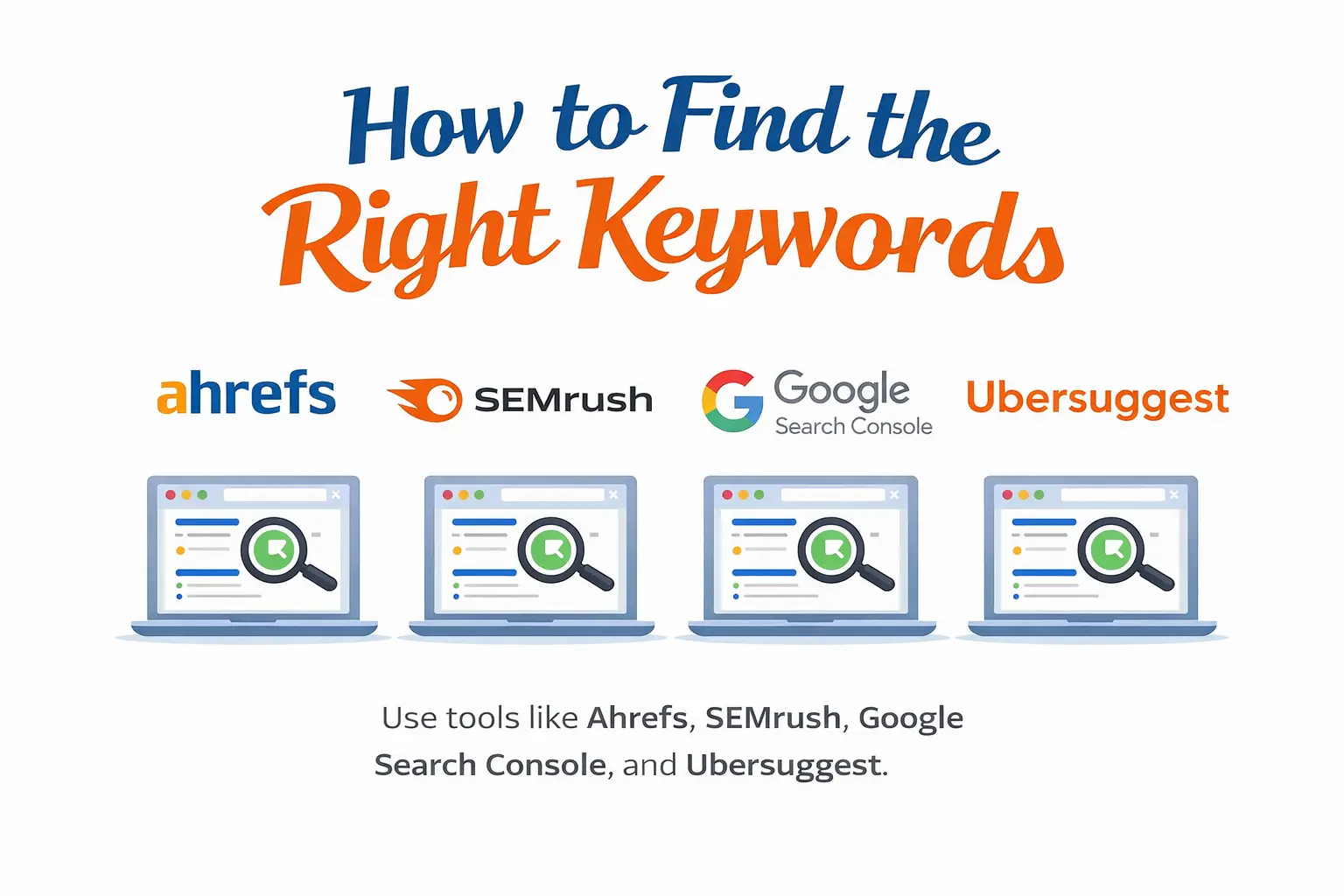
Use tools like Ahrefs, SEMrush, or even free options like Google Search Console and Ubersuggest to identify keywords related to your topic. Look for terms that:
- Have a decent monthly search volume (1,000+ for competitive niches, even 100–500 for niche topics)
- Match your audience’s actual language, not industry jargon
- Have manageable keyword difficulty, especially if your site is newer
Short-tail vs. long-tail keywords
Short-tail keywords (e.g., ‘SEO tips’) are broad and highly competitive. Long-tail keywords (e.g., ‘how to write SEO blog posts for beginners’) are more specific and easier to rank for, especially in the early stages of building your site’s authority.
3. Understand Search Intent Before You Write a Word
Keyword research tells you what people are searching for. Search intent tells you why they’re searching for it. Getting this wrong is the single biggest reason good content fails to rank.
There are four main types of search intent:
- Informational — The user wants to learn something (e.g., ‘how to write content that ranks’)
- Navigational — The user wants to find a specific site (e.g., ‘Ahrefs login’)
- Commercial — The user is comparing options before buying (e.g., ‘best SEO tools 2025’)
- Transactional — The user is ready to take action (e.g., ‘buy Ahrefs subscription’)
For the keyword ‘how to write content that ranks,’ the intent is clearly informational. That means your content should be a comprehensive how-to guide — not a product page, not a comparison post.
4. How to Structure Your Content for Google and Readers
Great structure helps both readers and search engines understand your content. Think of it like a roadmap — your headings are the signposts.
Use a clear heading hierarchy
Your H1 is the article title (use it once). H2s are your main sections. H3s break down sub-topics within each section. Google reads your headings to understand the topic and context of your content.
Keep it scannable
Most readers don’t read every word — they scan. Short paragraphs (2–3 sentences), bullet points, and subheadings make your content easy to digest. Walls of text push readers away, which increases your bounce rate and hurts your rankings.
Where to place your keyword
- H1 title
- First 100 words of the introduction
- At least one H2 subheading
- Meta title (50–60 characters)
- Meta description (150–160 characters)
- URL slug (keep it short and descriptive)
5. Write for Humans First — Google Will Follow
Google’s Helpful Content Update made one thing crystal clear: if you write for search engines instead of real people, your rankings will suffer. The algorithm is now smart enough to detect thin, robotic, keyword-stuffed content — and it penalizes it.
What human-first writing looks like
- Use plain, conversational language — write like you’re explaining to a smart friend
- Use active voice wherever possible (‘We improved rankings’ vs. ‘Rankings were improved by us’)
- Avoid robotic transitions like ‘In conclusion, it is evident that…’ — just say what you mean
- Cut filler phrases: ‘In today’s fast-paced digital landscape…’ adds nothing and screams AI-generated content
- Tell stories, use real examples, and share genuine opinions where relevant
Content density matters more than raw word count. A 1,200-word article that answers every angle of a question beats a 3,000-word piece that repeats itself just to hit a target.
6. E-E-A-T: How Google Decides If Your Content Is Trustworthy
E-E-A-T stands for Experience, Expertise, Authoritativeness, and Trustworthiness. It’s Google’s framework for evaluating content quality — especially for topics where accuracy really matters.
How to demonstrate E-E-A-T in your content
- Add a clear author byline with credentials and a short bio
- Include personal experience, first-hand insights, or real-world examples
- Cite credible external sources (studies, official sites, industry data)
- Add a ‘last updated’ date to signal freshness
- Use HTTPS and clearly display your privacy policy and contact info (for site-level trust)
7. On-Page SEO Checklist — Before You Hit Publish
Before you publish, run through this checklist to make sure your on-page SEO is solid:
- Keyword in H1, meta title, meta description, URL, and first paragraph
- LSI/semantic keywords used naturally throughout (not exact repetitions)
- All images compressed, with alt text including keyword where natural
- 2–4 internal links to relevant pages on your site
- 1–2 external links to authoritative sources (open in new tab)
- Schema markup added where relevant — FAQ, How-To, or Article schema
- Mobile responsiveness checked
- Page load speed tested (Google PageSpeed Insights)
- No duplicate content or keyword cannibalization with existing articles
8. How Long Should Your Content Be to Rank?
There’s no magic word count that guarantees rankings. But research consistently shows that long-form content (1,500+ words) tends to rank higher and earn more backlinks than short-form content — especially for informational queries.
The real question isn’t ‘how long?’ — it’s ‘does this fully answer the question?’ Use the Skyscraper Technique: analyze the top-ranking articles for your keyword, identify what they cover, and then write something more complete, more accurate, and more useful.
9. Building Backlinks Through Content Worth Linking To
Backlinks remain one of Google’s top ranking signals. But you can’t fake your way to good links — you have to earn them.
The best way to earn backlinks naturally is to create content that other sites genuinely want to reference:
- Original research, surveys, or industry data
- Comprehensive guides that become go-to resources
- Unique frameworks or methodologies with original names
- Well-designed infographics or visual explainers
Once your content is live, do outreach: email relevant bloggers, journalists, or site owners in your niche to let them know your resource exists. A single link from a high-authority domain can move the needle more than dozens from low-quality sites.
10. Update and Refresh Old Content to Keep Rankings
Ranking isn’t a one-time achievement — it requires maintenance. Google rewards content that stays fresh and accurate, and it gradually demotes pages with outdated information.
Signs it’s time to update an article
- Traffic has dropped over the past 3–6 months
- Stats, tools, or examples referenced in the article are outdated
- Competitors have published more comprehensive versions
- New subtopics have emerged that your article doesn’t cover
When you update, don’t just fix typos — expand thin sections, replace outdated stats, improve internal linking, and refresh the publish/update date. A solid refresh can recover and even improve rankings within weeks.
FAQ: How to Write Content That Ranks
How long does it take for content to rank on Google?
Most new pages take 3–6 months to reach their peak ranking position. This depends on your domain authority, the competitiveness of the keyword, and the quality of your content and backlinks. Some pages rank faster, especially on established sites or for low-competition keywords.
How do I know if my content is SEO-optimized?
Run your article through a tool like Yoast SEO, Surfer SEO, or Clearscope. These tools check keyword placement, readability, content length, internal linking, and more. Also manually verify your meta title, meta description, and URL include your target keyword.
Does word count affect SEO rankings?
Indirectly, yes — longer content tends to cover a topic more thoroughly, which Google rewards. But padding an article with fluff just to hit a word count target will hurt your rankings. Focus on content density: every sentence should add value.
What is the best keyword density for SEO in 2025?
There’s no fixed rule. Avoid stuffing — aim for your keyword to appear naturally, roughly once every 200–300 words. Focus more on semantic relevance (using related terms and synonyms) than hitting a specific percentage.
Can I rank on page one without backlinks?
Yes, especially for long-tail, low-competition keywords. However, for competitive terms, backlinks remain a major ranking factor. Focus first on writing the best possible answer to the query — links will follow if the content is genuinely valuable.
Conclusion
Ranking on Google isn’t about gaming the algorithm — it’s about understanding what your audience is searching for and delivering the best possible answer.
When you know how to write content that ranks, you combine solid keyword research, a deep understanding of search intent, human-first writing, strong E-E-A-T signals, and clean on-page SEO into every article you publish.
Start with one article this week using this guide. Pick a long-tail keyword, match your format to the search intent, write like a real person, and tick every item on the on-page checklist. That’s all it takes to give your content a fighting chance on page one.