
If you searched “SEO Agency in USA Glorvix,” you probably came across the name somewhere online and want to know whether it holds up before you spend any time or budget on it. That instinct is a good one. SEO agencies are easy to market and hard to verify, and the only real defense is knowing what to check before you sign anything.
This guide does two things. First, it lays out what we could and couldn’t confirm about Glorvix specifically, so you’re not starting from scratch. Second, and more useful in the long run, it walks through how to judge any SEO agency on its own merits: what real service delivery looks like, what fair pricing looks like, and which questions separate a company that can back up its claims from one that can’t.
What Is “SEO Agency in USA Glorvix”?
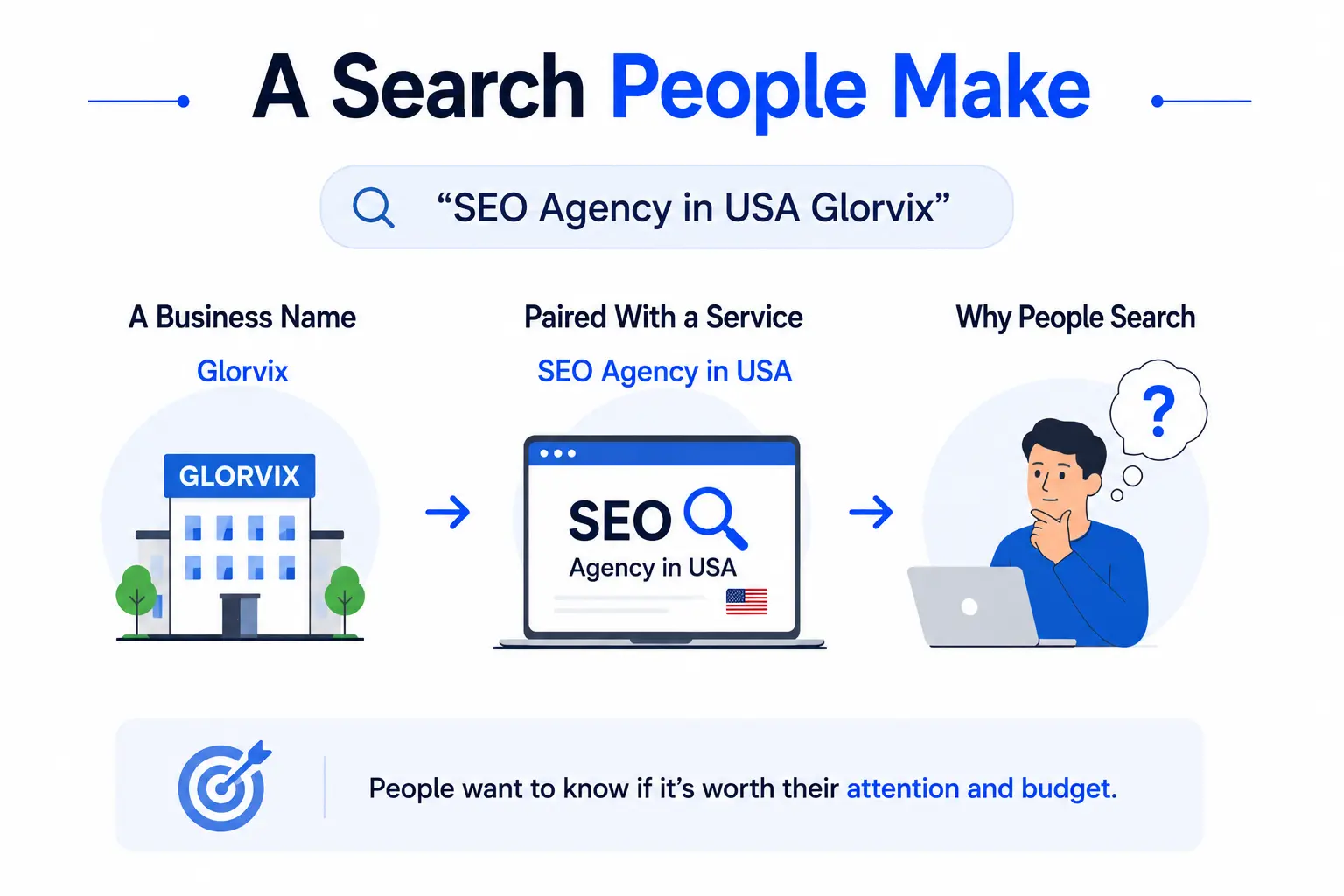
“SEO Agency in USA Glorvix” is a search phrase, not a standard industry term. It pairs a business name, Glorvix, with a service category, SEO agency in USA. People type it into Google after seeing the name somewhere and wanting to know if it’s worth their attention before they hand over a marketing budget.
Who searches for Glorvix
Most people running this search are doing one of a few things: a business owner who saw a Glorvix ad or outreach email and wants a second opinion, someone comparing several SEO vendors by name one at a time, or a person trying to figure out why the same company keeps showing up across so many oddly similar articles.
Key takeaways
- “SEO Agency in USA Glorvix” is a branded search term. Branded searches deserve the same scrutiny as any other vendor claim.
- Independent, verifiable information about Glorvix specifically is limited as of this writing (more on that below).
- The more durable skill is knowing how to evaluate any SEO agency using criteria that hold up no matter who’s pitching you.
- This guide covers what legitimate SEO work looks like, what it costs, and the questions to ask before signing a contract.
What a Legitimate SEO Agency Actually Provides
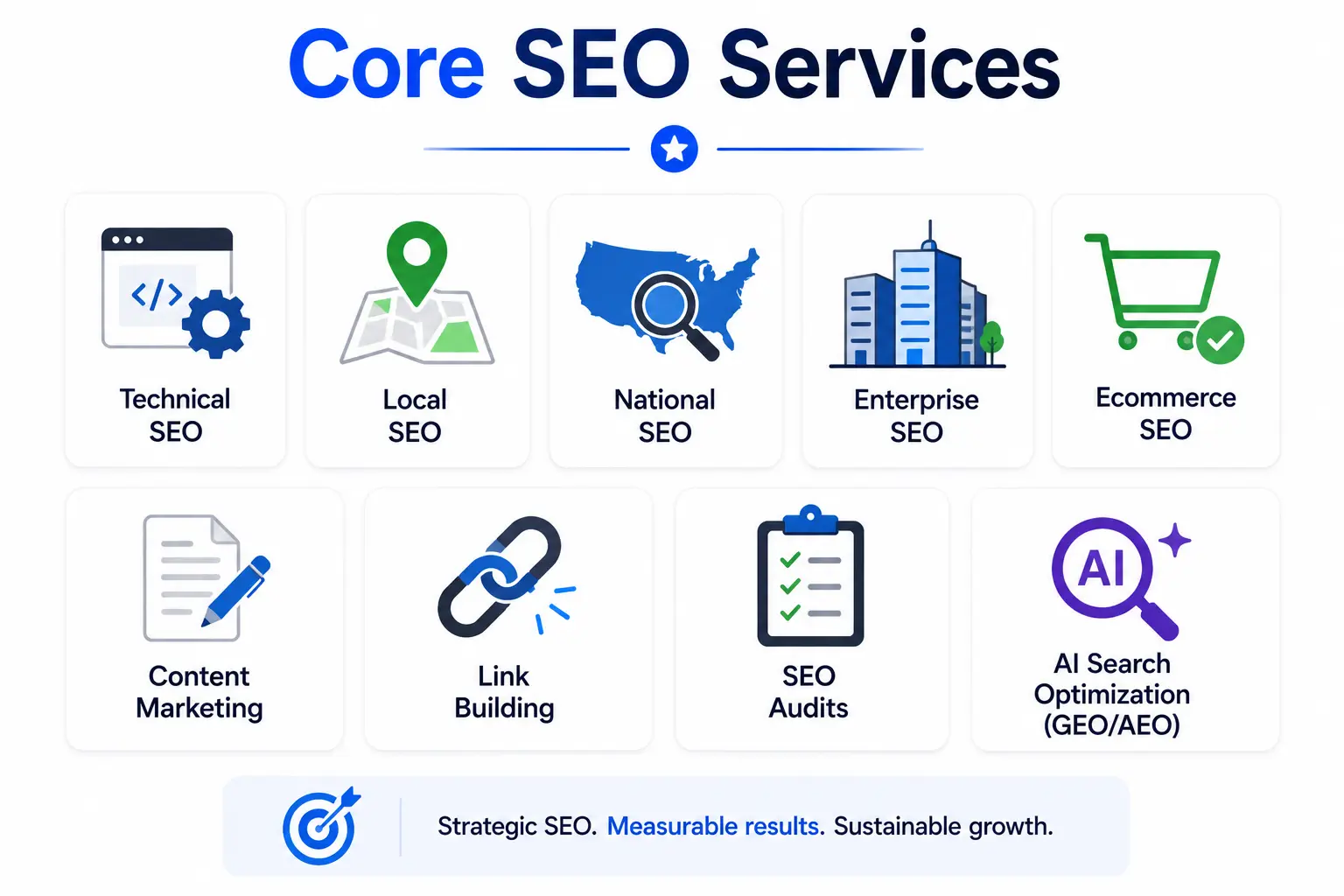
Reputable agencies build their service list around the same core disciplines. If a vendor’s pitch skips most of these, or lumps them together vaguely, that’s worth a follow-up question.
Technical SEO
Site speed, crawlability, indexation, structured data, mobile usability, and Core Web Vitals. This is the foundation everything else sits on. Content can’t rank if a search engine can’t crawl or render the page properly.
Local SEO
Google Business Profile optimization, local citations, review management, and location-specific landing pages for businesses that serve customers in a defined geographic area.
National SEO
Broader keyword targeting, content scaling, and authority building for businesses competing across an entire country rather than a single metro area.
Enterprise SEO
SEO for large, often multi-location or multi-brand sites, where the work involves cross-team coordination, migration planning, and governance at a scale small-business SEO doesn’t require.
Ecommerce SEO
Category and product page optimization, faceted navigation handling, structured data for products, and technical work specific to large enterprise catalogs.
Content Marketing
Keyword-driven blog content, resource pages, and on-site content built to rank and to actually answer what the searcher needed.
Beyond text-based assets, agencies often package strategic roadmaps, and performance reports, into cloud-hosted visual materials.
Utilizing an interactive presentation maker allows to transform flat PDFs or static slides into web-based HTML5 decks featuring real-time reader engagement analytics.
Link Building
Earning or acquiring backlinks from other sites in a way that builds topical authority without triggering a manual action from Google.
SEO Audits
A structured review of a site’s technical health, content gaps, and competitive position, usually delivered before any strategy work begins.
AI Search Optimization (GEO/AEO)
Optimizing content so it gets pulled into AI Overviews, chat-based answer engines, and other generative search surfaces. This has gone from optional to standard over the past year.
How a Professional SEO Process Should Work
The order matters. An agency that jumps straight to link building without an audit, or promises content volume before finishing keyword research, is skipping steps that protect your results.
Website audit
A full technical and content review that identifies what is currently holding rankings back.
Keyword research
Mapping search demand to business intent, not just chasing the highest-volume terms regardless of fit.
Competitor analysis
Understanding what is already ranking and why, so the strategy targets a realistic, winnable gap.
On-page optimization
Titles, headings, internal linking, and content structure aligned to both the target keyword and actual user intent.
Technical improvements
Fixing the crawl, speed, and indexation issues surfaced in the audit.
Content strategy
A planned content calendar built around keyword clusters rather than one-off, disconnected posts.
Authority building
Earning links and mentions that support the sites and pages the strategy is built around.
Performance tracking
Regular reporting against rankings, organic traffic, and, ideally, leads or revenue rather than vanity metrics alone.
SEO Tools Reputable Agencies Use
You do not need to know how to run these tools yourself, but recognizing the names helps you follow along in a sales call or a reporting deck.
Google Search Console
Google’s own free tool for indexation status, search performance, and technical error reporting.
Google Analytics 4
Traffic and conversion tracking, used to connect SEO work back to actual site behavior.
Ahrefs
Backlink analysis, keyword research, and competitive gap reporting.
Semrush
A similar all-in-one platform covering keyword tracking, site audits, and competitor research.
Screaming Frog
A site crawler used to find technical issues at scale, including broken links, duplicate titles, and redirect chains.
PageSpeed Insights
Google’s tool for measuring Core Web Vitals and page speed, directly tied to a known ranking factor.
Pricing: What Businesses Should Expect
SEO pricing varies more than most services because the scope of work varies so much by site size, competition, and goals. These are general US market ranges, not a quote from any specific agency.
Monthly retainers
Most small-to-midsize businesses pay somewhere between $750 and $5,000 per month for ongoing SEO, depending on scope and the agency’s overhead.
Project-based SEO
One-time work like a technical audit or a site migration review is often priced separately, typically from $1,500 to $10,000 depending on site size and complexity.
Local SEO pricing
Single-location local SEO tends to sit at the lower end of the retainer range, often $500 to $1,500 per month, since the scope is narrower than national campaigns.
Enterprise pricing
Large or multi-location sites can run $10,000 per month and up, reflecting the added coordination, reporting, and technical complexity involved.
Factors affecting cost
- Site size and current technical health
- Competitiveness of the target keywords and industry
- Whether content production is included or billed separately
- Geographic scope: local, national, or multi-market
- Agency overhead and location, since US-based teams typically cost more than offshore ones
Pros and Cons of Outsourcing SEO
| Advantages | Limitations |
| + Access to specialized skills without hiring a full in-house team | – Quality varies enormously between agencies |
| + Established processes and tooling already in place | – Results typically take three to six months to become visible |
| + Faster ramp-up than building SEO capability from scratch | – Requires ongoing budget commitment to see compounding gains |
| + Objective, outside perspective on what is and isn’t working | – Harder to verify agency claims than to verify in-house work |
Who Should Hire an SEO Agency?
Small businesses
Businesses without in-house marketing expertise often get the most value from an agency, provided the scope matches their actual budget and goals.
Startups
Early-stage companies benefit from SEO as a lower-cost-per-lead channel over time, though it competes with paid acquisition for immediate results.
Local businesses
Service-area businesses like clinics, contractors, and law firms typically see the fastest, most measurable wins from local SEO specifically.
Enterprise brands
Large organizations usually need an agency capable of enterprise-scale technical work and cross-team coordination, not just content production.
Established Agencies vs. Newer or Unverified Entrants
Rather than compare Glorvix directly against named competitors, which would require verified details we don’t have, it’s more useful to compare the traits that separate an established agency from a newer or harder-to-verify one.
What established agencies typically have
- A multi-year public track record with named case studies
- Third-party reviews on independent platforms, not just testimonials on their own site
- A clearly stated leadership team and company history
- Consistent branding and domain history rather than a scattered network of near-duplicate pages
What to look for in newer agencies
A newer agency isn’t automatically a bad choice. Every established firm started somewhere. The difference is transparency: a newer agency worth considering will still give you real client references, a clear team, and specific answers instead of vague assurances.
Where names like Glorvix fit
Based on what is publicly available, Glorvix currently reads more like a keyword-targeted web presence than a verifiable, established firm. That could change as more independent information becomes available. Until it does, apply the same due diligence you would to any unfamiliar vendor.
Comparison table
| Trait | Established Agency | Unverified / Newer Entrant |
| Public track record | Multiple years, named clients | Limited or unclear |
| Independent reviews | Present on Clutch, G2, BBB, etc. | Often absent or only on-site |
| Team transparency | Named leadership, LinkedIn presence | Often unclear or unlisted |
| Web presence pattern | One coherent brand site | Sometimes scattered across many near-duplicate domains |
| Case studies | Specific, verifiable results | Often generic or missing |
How to Evaluate Any SEO Agency Before Hiring
Questions to ask
- Can you share three client references I can contact directly?
- What does your reporting look like, and how often will I receive it?
- Who specifically will work on my account, and what is their background?
- Can you walk me through a past project similar to mine, with real numbers?
- What happens if rankings do not improve within the agreed timeline?
Warning signs
- Guaranteed #1 rankings or a specific timeline promise
- Pressure to sign quickly or lock in a long-term contract before an audit
- No willingness to share client references or past results
- Vague answers about who is actually doing the work
- A company that is difficult to verify outside its own marketing pages
Reporting expectations
At minimum, expect monthly reporting covering keyword rankings, organic traffic trends, and a summary of completed work. Agencies tracking leads or revenue attribution are further along in maturity than those reporting on rankings alone.
Contract checklist
- Clear scope of work, listed explicitly rather than bundled into vague categories
- A defined reporting cadence and format
- A reasonable notice period for cancellation, not an indefinite lock-in
- Clarity on who owns the content and any assets produced during the engagement
- No exclusivity clause preventing you from verifying claims against outside data
SEO Trends for 2026
AI Overviews
AI-generated summaries now appear above traditional results for a large share of informational searches, changing how much traffic even a #1 ranking delivers.
Entity SEO
Search engines increasingly evaluate brands as entities, connected across mentions, structured data, and third-party sources, rather than judging a single page in isolation.
EEAT
Experience, Expertise, Authoritativeness, and Trust remain central to how Google evaluates content quality, especially for topics that affect health, finances, or safety.
Semantic SEO
Content strategy built around topic coverage and search intent, not isolated keyword insertion, continues to outperform older keyword-density approaches.
GEO and AEO
Generative Engine Optimization and Answer Engine Optimization, meaning structuring content so it gets cited inside AI-generated answers, has moved from an emerging tactic to a standard line item in most SEO proposals.For businesses looking for specialized help, this roundup of the Best GEO agencies highlights firms focused specifically on improving visibility, citations, and recommendations across generative search platforms.
Frequently Asked Questions
How do I know if an SEO agency is legitimate?
Check for a verifiable business history, named leadership, independent reviews on third-party platforms, and case studies with specifics you can confirm. A polished website alone is not proof of legitimacy.
What should I ask before hiring an SEO agency?
Ask for client references you can contact directly, a breakdown of who will work on your account, and examples of past results with real numbers rather than general claims.
How much does SEO cost per month in the USA?
Most small-to-midsize businesses pay between $750 and $5,000 per month, with enterprise engagements running higher depending on site size and scope.
What is the difference between local and national SEO?
Local SEO targets visibility within a specific geographic area, often centered on Google Business Profile and local citations. National SEO targets broader keyword competition across an entire country.
How long does SEO take to show results?
Most campaigns start showing measurable movement in three to six months, with more significant gains compounding over six to twelve months of consistent work.
What red flags should I watch for when researching an SEO company online?
Watch for guaranteed rankings, pressure to sign quickly, an absence of independent reviews, and a web presence that consists mainly of near-duplicate pages built around the company’s own name.
Can I check an SEO agency’s reviews and case studies myself?
Yes, and you should. Search for the company on independent platforms like Clutch, G2, or the Better Business Bureau rather than relying only on testimonials shown on the agency’s own site.
What is GEO (Generative Engine Optimization)?
GEO is the practice of structuring content so it is more likely to be surfaced or cited inside AI-generated answers, such as Google’s AI Overviews or chat-based search assistants.
Do SEO agencies guarantee rankings?
No reputable agency guarantees specific rankings, since no agency controls Google’s algorithm. A guarantee of a specific position or timeline is a warning sign, not a selling point.
Should I choose a niche or industry-specific SEO agency?
An agency with direct experience in your industry often ramps up faster, since they already understand the competition and the ranking obstacles specific to that space.
What’s the difference between an SEO agency and a freelancer?
Agencies typically offer broader team capacity and established processes, while freelancers can offer more direct communication and lower cost, often with narrower scope.
How do I evaluate an agency’s past client results?
Ask for specific before-and-after data, such as rankings, traffic, or leads, tied to a named project you can verify, rather than aggregate claims with no attribution.
What contract terms should I look for?
Look for a clearly defined scope of work, a reasonable cancellation notice period, a set reporting cadence, and clarity on who owns the content produced during the engagement.
Is cheap SEO ever worth it?
Very low-cost SEO usually means limited scope, offshore content production, or shortcuts that risk a future penalty. It can work for narrow, well-defined tasks, but rarely for full-scope strategy.
How do I verify an SEO agency’s identity if I can’t find much about them online?
Look up the business registration in the state where it claims to operate, search for the company on independent review platforms, and ask directly for client references you can contact yourself.
Conclusion
“SEO Agency in USA Glorvix” is a search worth taking seriously, just not for the reasons the phrase itself suggests. At the time of writing, Glorvix doesn’t have the kind of independently verifiable track record a business should expect before committing an SEO budget to it. That’s not a final judgment on the company. It’s a starting point for due diligence.
The real value in a search like this is the evaluation process itself. Whether you end up considering Glorvix, a well-known national firm, or a local specialist, the same checklist applies: verify the company independently, ask for real client references, understand exactly what is included in the price, and be skeptical of any agency that resists a direct question. SEO is a long-term investment. Choose the partner you can actually verify, not just the one that ranks first for its own name.