Customer expectations have changed pretty dramatically over the last few years, it’s not like they wanted to stop calling or anything, but people don’t really want to stand on hold for ten minutes just to schedule an appointment, confirm a booking, or ask something simple. At the same time, businesses that still rely entirely on traditional call support are starting to feel the squeeze of higher staffing costs, missed calls, uneven service and honestly, frustrated customers who just want answers.
That was pretty much the exact mess we ran into before switching to an AI Receptionist and a more automated Voice AI setup.
At first, we were kinda skeptical. Like could an AI-powered phone system actually handle true customer conversations without sounding robotic, and would customers be okay talking to an AI Call Assistant instead of a real live agent, or a person who can improvise a little? And the biggest question… would it improve efficiency without hurting the customer experience?
After a few months of testing, tuning, and rolling things out, the results surprised us in ways we didn’t anticipate, and now we’re not looking back.
Why Traditional Call Support Was Becoming a Problem
Like many businesses, we originally leaned on a small in-house support team to handle incoming phone calls. During peak hours, our folks kinda struggled to stay on top of appointment requests, basic inquiries, and also customer follow-ups.
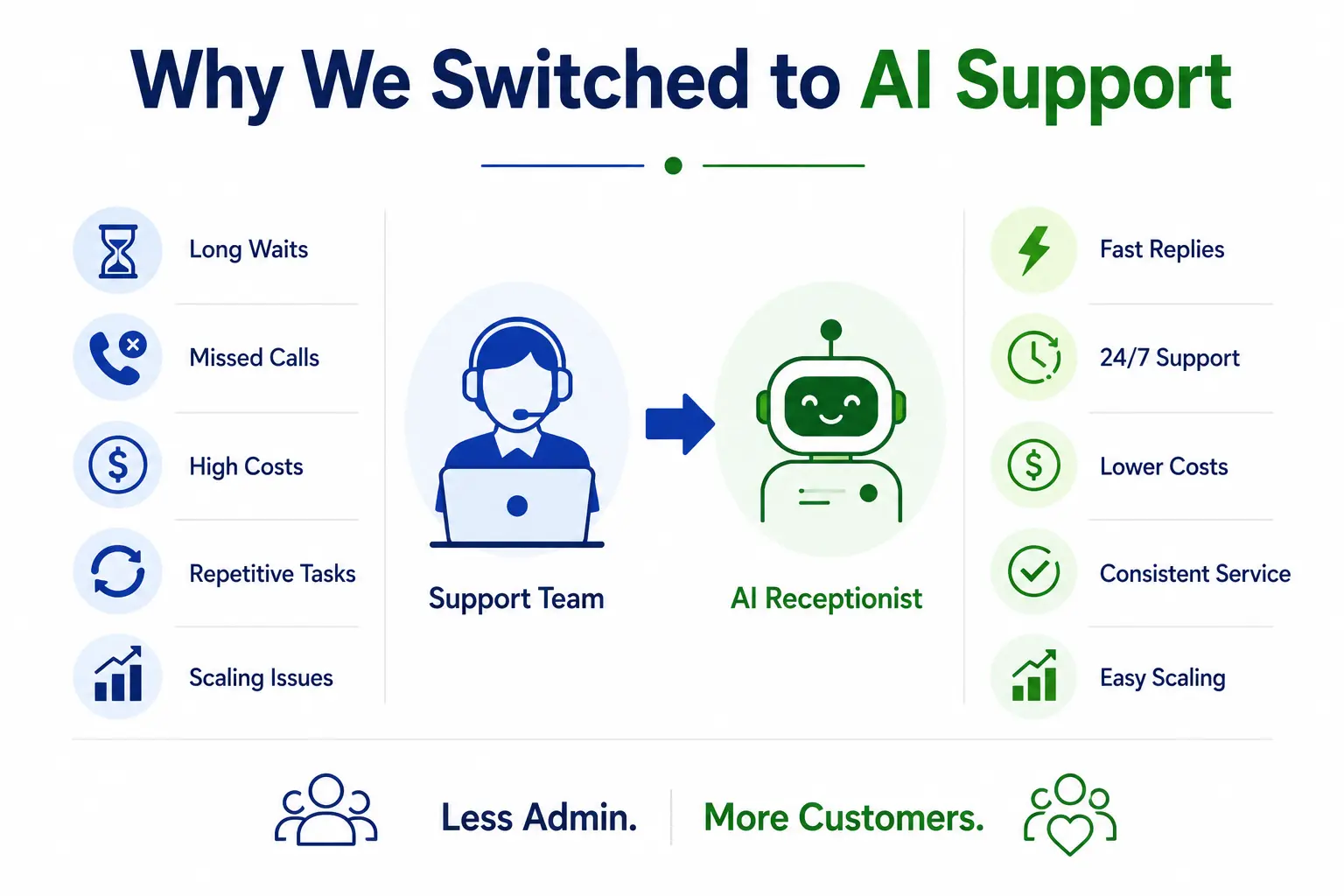
Some of the bigger issues, honestly, were these :
- Long customer wait times
- Missed after hours calls
- High staffing costs
Same conversations repeating over and over, taking up employee time
Hard to scale support when the busy season ramps up
Our team ended up spending more time fielding routine questions than actually tackling the kind of problems that matter to customers. Even if our agents worked hard, the overall system just was not that efficient anymore.
That’s when we started looking into AI Receptionist Software as an alternative.
The Decision to Implement Voice AI
At first, we were like ok lets outsource the customer support to some third party call center. But then, once we sat down and compared the pricing models along with operational constraints, we noticed that modern AI call centre tech was, honestly, way more scalable . Today’s conversational bots are far more advanced than those old fashioned automated phone menus customers really hate . Instead of making people “Press 1 for support”, newer platforms rely on natural language understanding to pick up real speech patterns and answer in a more fluid, back and forth way.
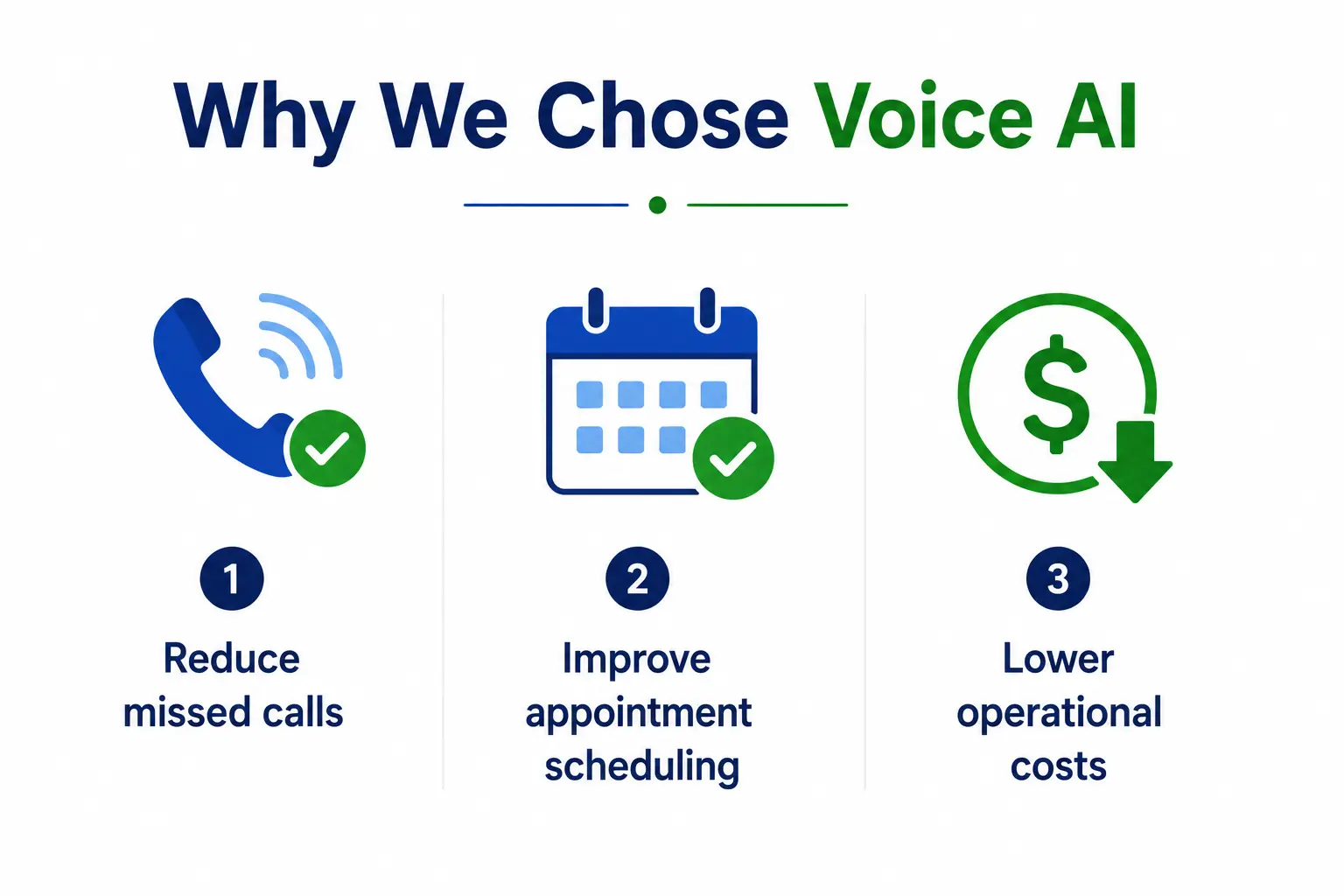
Our main aims were pretty simple:
1. Reduce missed calls
A lot of people reached out after business hours, like kinda often. With an automated AI phone call setup the system can respond immediately, anytime, even if time zone gets weird or staffing is low.
2. Improve appointment scheduling
A big part of our incoming calls were basically about setting up consultations, or changing existing appointments. By using AI appointment booking, customers can finish those requests right away, no need to wait around for a human representative to be free
3. Lower operational costs
Bringing on and training extra support staff was getting kinda pricey. We wanted to check if voice AI could cut overhead and still keep the service quality where it needs to be.
What Happened After Implementation
The transition wasn’t perfect overnight, but after a few weeks we saw clear, measurable improvements in several areas, more or less across the board.
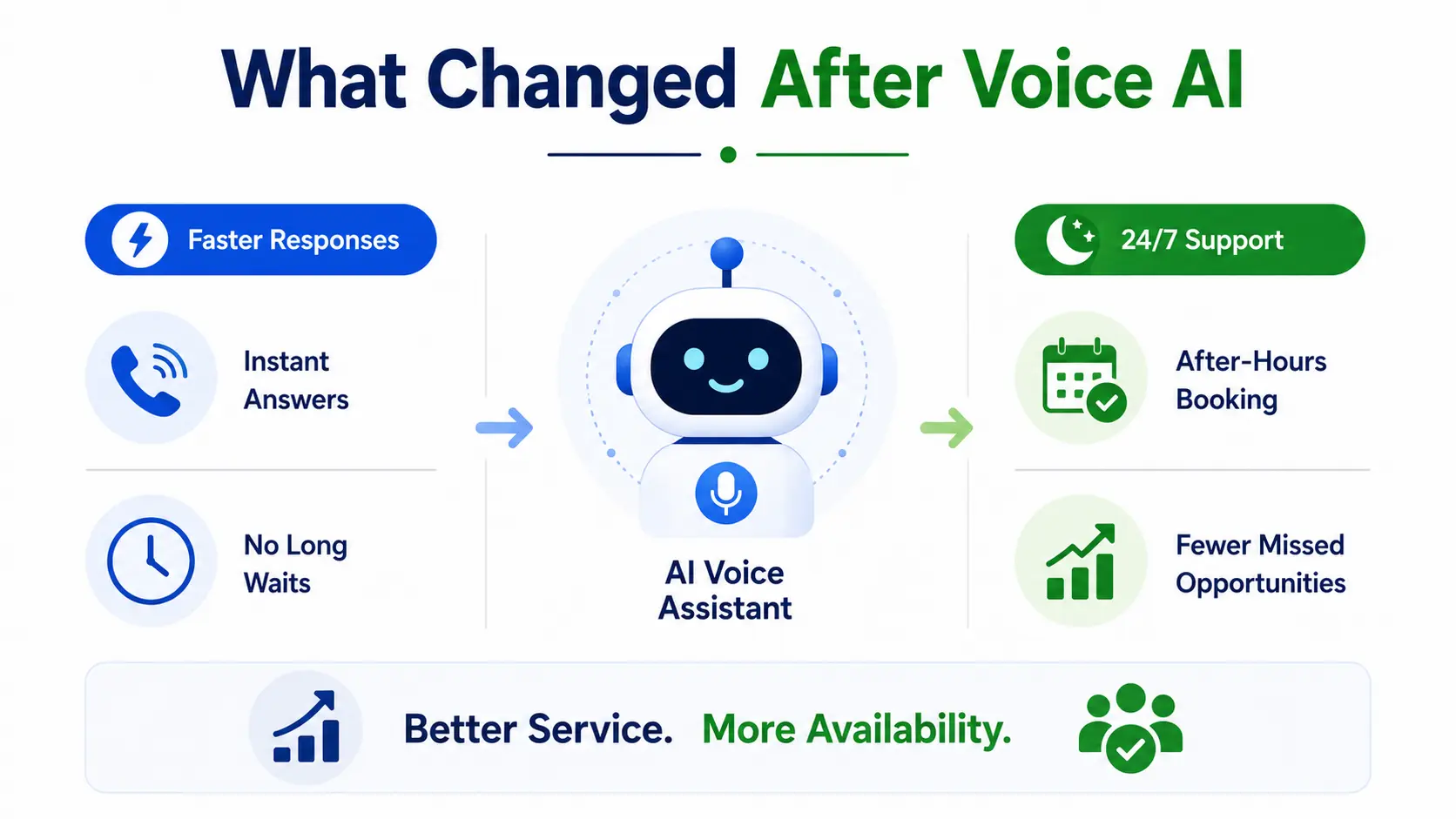
- Faster response times
The quickest win was simply response speed. Calls got answered right away, instead of sitting in queues, which used to happen a lot. Customers didn’t have to sit through that long hold music anymore, or try to figure out tangled phone menus. The AI call assistant took care of simple asks immediately. For anything more complicated it would escalate the conversation to a human agent when it was truly needed. In practice, that blended method made our support flow a lot more effective, like smoother and more streamlined.
- Better after-hours support
Another big benefit was 24/7 availability, and that mattered. Before this, after-hours calls often ended in voicemail, and honestly many customers never bothered calling back. Once we switched to automated call handling, people could still get answers, schedule appointments, or leave detailed requests at any hour. Not exaggerating, this alone cut down on missed business opportunities quite a bit, because those calls didn’t just disappear.
Customers Adapted Faster Than We Expected
One concern we had was customer resistance, like, we sorta figured people would not really enjoy dealing with AI -powered systems right away.
Surprisingly, most customers responded positively, especially when the experience felt quick and pretty natural.
The main difference was the conversational quality. Modern Voice AI systems don’t sound like those old fashioned robotic assistants anymore. The tech can handle context, reply in a dynamic way, and keep things flowing with less awkward pauses than typical automated menus.
In fact, a few customers went out of their way to say they really liked the convenience.
“After reading multiple AI Receptionist Reviews, we decided to try an automated call system ourselves. The experience turned out to be far smoother than expected, and our customers actually preferred the faster response times.”
That comment really underscored the bigger point here: customers care more about speed and convenience than the question of whether a person answers every routine call.
The Real Cost Savings
Cost reduction was one more big benefit, though not always in the way we first thought it would go.
We weren’t trying to wipe out employees, not at all. Instead, the automation basically let our current crew operate more efficiently, in a sharper way.
So rather than bringing in extra people during the busiest moments, our AI-powered help system took on a lot of that spike in calls automatically, sort of in the background.
That then led to lower:
- Overtime expenses
- Staffing pressure
- Training costs
- Burnout among support employees
And our human agents said they felt less hassled too, because they weren’t stuck answering hundreds of the same kind of repetitive questions each week.
Where Human Support Still Matters
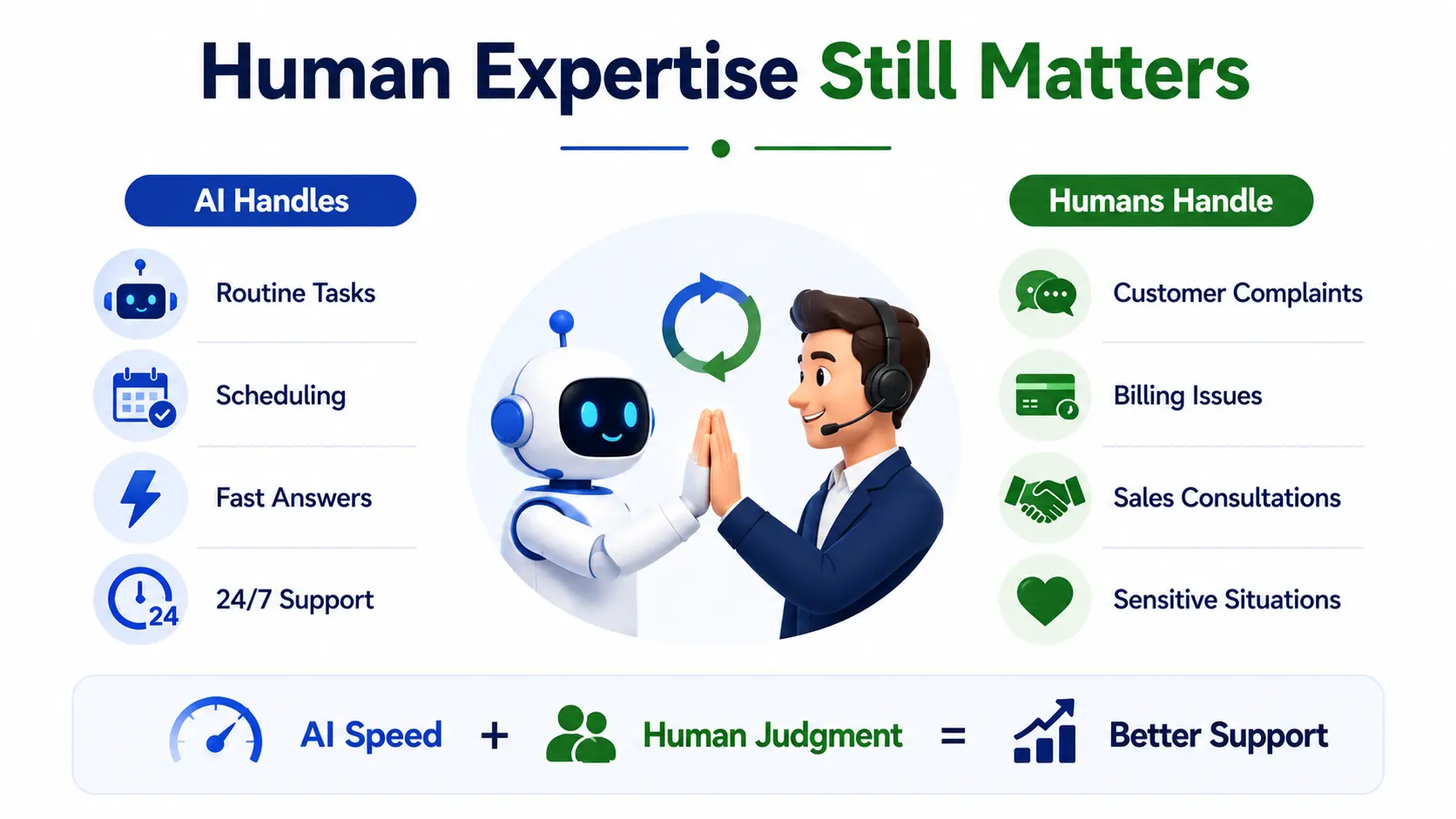
Even with the success of our AI Receptionist set up, we pretty quickly figured out that automation is not a total replacement for real human interaction. There are still those conversations that need empathy, genuine problem solving, and emotional nuance which AI cannot really match, not all the way.
For instance, you’ll still run into:
- Complex billing arguments
- Touchy customer complaints
- High stakes sales consultations
- Emotional or urgent moments
The best results showed up when we somehow blended AI speed with human know-how. Our AI handled the repetitive, easy-to-predict back and forth, and then human agents stepped in when it was time for deeper judgment , more careful personalization and a touch more context. At the end that mix made the whole customer care experience feel stronger, and honestly a bit more dependable too.
Why More Businesses Are Adopting AI Call Centre Technology
The rapid growth of AI Call Centre solutions isn’t happening by accident.
Businesses today face increasing pressure to provide:
- Faster customer service
- 24/7 support availability
- Lower operational costs
- Personalized experiences at scale
Traditional support systems struggle to meet all of these demands simultaneously.
Modern AI Receptionist Software solves many of these challenges by automating repetitive interactions while maintaining conversational quality.
As the technology continues improving, adoption will likely accelerate across industries including healthcare, real estate, legal services, hospitality, and local businesses.
FAQ
1. What is an AI Receptionist, and how does it work?
An AI Receptionist uses artificial intelligence to answer calls, schedule appointments, handle common inquiries, and route customers to the appropriate department automatically.
2. Can AI voice agents replace human customer support teams?
AI voice agents can handle routine and repetitive tasks, but human agents are still essential for complex issues, sensitive conversations, and personalized support.
3. How does Voice AI improve customer service?
Voice AI reduces wait times, provides instant responses, offers 24/7 availability, and helps customers get answers faster without long hold periods.
4. What are the biggest benefits of using AI call centre technology?
The main benefits include lower operational costs, fewer missed calls, improved appointment scheduling, increased efficiency, and better scalability during busy periods.
5. Is AI Receptionist Software suitable for small businesses?
Yes. AI Receptionist Software helps small businesses manage customer calls more efficiently, improve response times, and provide round-the-clock support without hiring additional staff.
conclusion
Switching from the usual support setup to AI powered voice technology was a big operational change for our company. At first we thought we would only get small efficiency upgrades. But what actually happened was, we noticed real differences in how fast customers got replies, how appointments were handled, how scalable our operations became, and even how good the support felt overall.
The key point wasn’t simply that AI replaced human workers. More than that, the automation removed that repetitive, annoying friction from the customer journey, the little delays and back and forth that stack up.
A modern AI Phone Call system doesn’t really need to fully swap out people in order to create value. Used in a focused way, Voice AI can strengthen customer service, raise internal efficiency, and let businesses scale more smoothly without losing quality.
And for companies dealing with heavy call volume, missed appointments, or support costs that keep climbing, bringing in an AI Call Assistant might no longer feel like some futuristic experiment. It may be the next logical step, pretty much.