If you have searched for the best CTR manipulation tools, you have probably noticed that most “top 10” pages read like ads.
Many repeat the same three products, quote vendor dashboards as proof, and skip the hard questions.
This guide takes a different route. It explains what these tools do, what they reportedly cost, what the evidence says about clicks and rankings, and where the real risks sit.
It also shows you the legitimate way to lift your organic click-through rate, which is the option most sites should pick first.
Best CTR Manipulation Tools
Choosing a CTR manipulation tool requires more than comparing prices or looking at the number of clicks a platform promises to deliver.
You also need to understand how each service generates traffic, what targeting options it offers, how transparent its reporting is, and whether its claims can be independently verified.
The following tools and services appear in current comparison content and have identifiable public footprints. They serve different purposes, ranging from automated search traffic and human click networks to managed campaigns and freelance marketplaces.
Where pricing or product features could not be independently confirmed, that limitation is mentioned rather than presenting estimates as verified facts.
1. SearchSEO
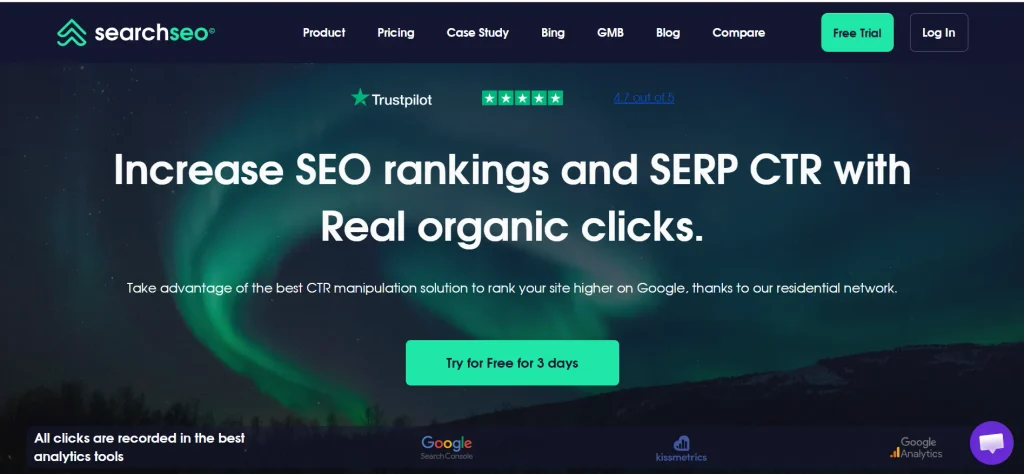
SearchSEO (searchseo.io) is an automated CTR platform that sends simulated search sessions to a keyword’s results page. Its listings describe a residential IP network and a mix of mobile and desktop sessions. They also describe campaigns across Google, Bing and Google Maps (Google Business Profile). It is listed as a US company founded in 2020.
The platform lets you set time on site, pages per visit and bounce rate. It also lets you target 150+ locations and track campaigns from a dashboard. Reviewers often position it as a cheaper alternative to human click networks like SerpClix.
Software directories list a Mini plan from about $29 per month (roughly 25 searches per day). One third-party guide estimates around $0.04 per click, but that figure comes from a comparison page, not official pricing. Confirm current plans on the official site.
Customer evidence is thin and mixed. Capterra shows a 2.5 out of 5 rating from only two users. The Trustpilot reviews are mostly positive, but the vendor replies to them, so read them with that in mind. At least one independent review argues the tool may not use enough browser diversity to look like unique users.
Advantages:
- Low reported entry price compared with human click networks.
- Covers organic results and Google Business Profile listings.
- Adjustable dwell time, pages per visit and bounce rate.
- Wide location targeting (150+ locations reported).
Limitations:
- Pricing and per-click figures come mostly from third-party pages and may be outdated.
- Very few independent reviews, and the ones available are mixed.
- Automated sessions carry the same policy and detection risks as other bot tools.
- Vendor claims about rankings are not independent proof of ranking gains.
- Settings like bounce rate and dwell time do not make artificial clicks look like real demand.
Who should consider it: Experienced marketers who want a low-cost automated platform for a controlled test on a site they own. Start small, keep independent tracking in Search Console, and don’t treat the vendor dashboard as proof of results.
2. CTR Software
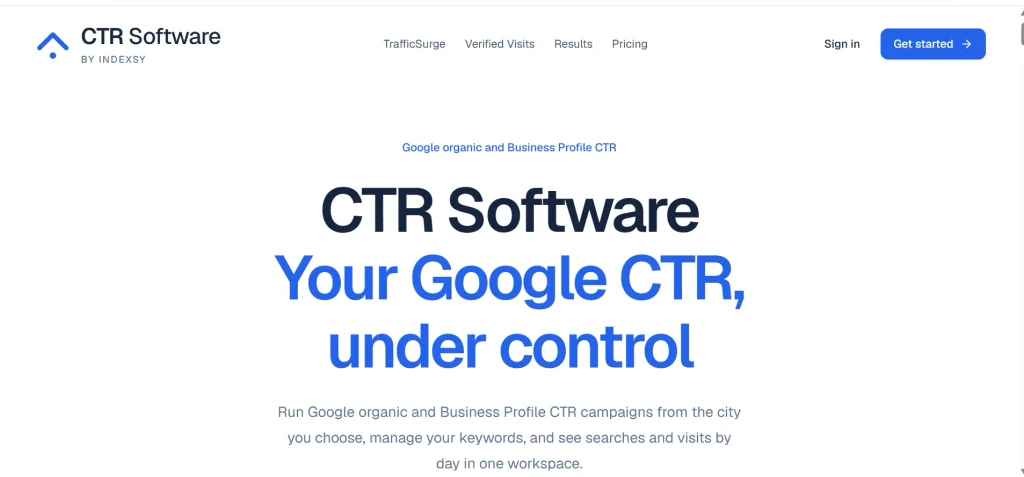
CTR Software is one of the names that frequently appears in agency-focused CTR manipulation roundups. It is generally described as an automated platform designed to generate search sessions around selected keywords, with options targeting both traditional organic search results and Google Business Profile listings.
The platform is primarily positioned toward SEO professionals and agencies interested in managing keyword-focused campaigns. Its reported functionality makes it relevant to businesses exploring local SEO, geographic targeting, and search visibility campaigns. However, the actual effectiveness of these campaigns should not be confused with verified improvements in organic rankings.
Advantages:
- Dedicated platform focused on CTR-related campaigns rather than general website traffic generation.
- Commonly associated with organic search and Google Maps use cases.
- Potentially useful for agencies evaluating different campaign management approaches.
- More specialized than generic traffic-generation platforms.
Limitations:
- Public pricing information was not clearly available during research.
- Many performance claims originate from vendors and users rather than independent testing.
- Reported campaign capabilities should be verified directly before purchasing.
- Artificial search activity can create search policy concerns and unreliable analytics data.
Who should consider it: SEO agencies and experienced marketers researching dedicated CTR platforms for controlled experiments on properties they own. They should understand the associated policy risks before considering a campaign.
3. SERP Empire
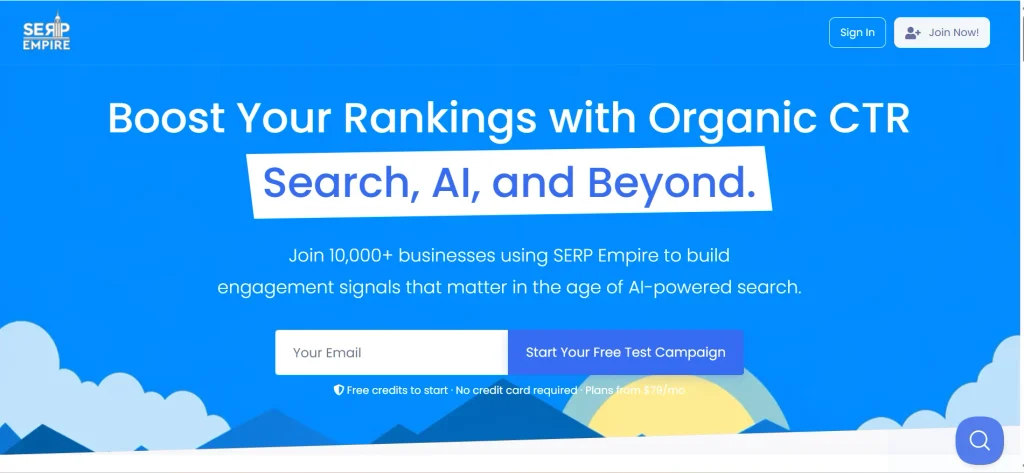
SERP Empire describes itself as a provider of automated organic traffic designed to influence search click-through rates. It is frequently mentioned in comparisons involving automated CTR software and is positioned as an option for marketers interested in keyword-based traffic campaigns.
Third-party directory listings have reported pricing starting at approximately $79 per month, generally based on monthly search volumes. However, prices and subscription conditions can change, so readers should verify the latest information through the official provider.
SERP Empire is also associated with free sign-up offers, allowing potential customers to explore the platform before committing to a paid plan.
Advantages:
- Offers a usage-based pricing structure according to third-party listings.
- Free sign-up is advertised.
- Specifically focuses on automated organic search traffic.
- Frequently included in comparisons of dedicated CTR manipulation platforms.
Limitations:
- Customer feedback is mixed across review platforms.
- One Trustpilot profile has reported an average rating around 3.5 out of 5 across approximately 30 reviews; ratings and review counts should be rechecked before publication.
- Some customers have raised concerns about pricing changes.
- Automated search traffic carries policy and measurement risks.
- Vendor-reported traffic volumes do not independently demonstrate improvements in Google rankings.
Who should consider it: Marketers researching automated CTR platforms who want to evaluate subscription costs and campaign reporting. It is important to assess the risks and avoid interpreting generated clicks as proof of SEO improvements.
4. SerpClix
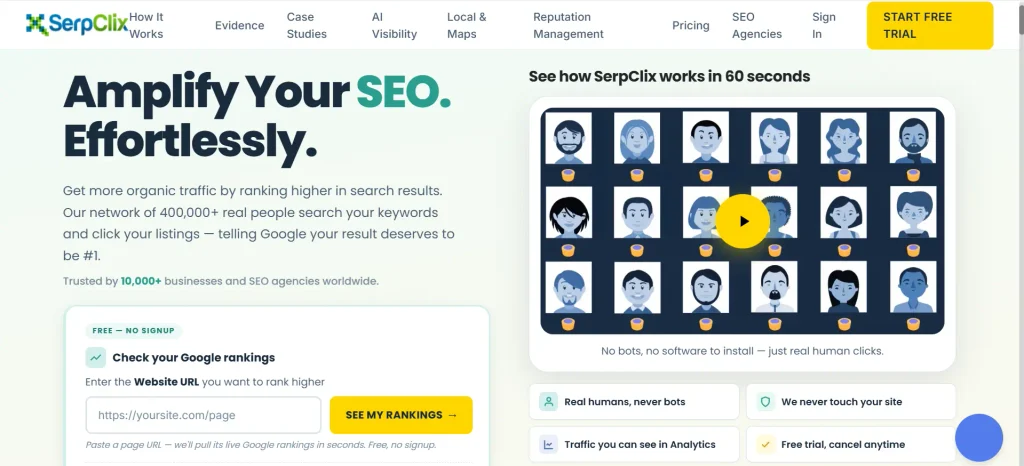
SerpClix takes a different approach from automated CTR platforms by promoting a human click network. Instead of relying entirely on automated visits, the service connects advertisers with contributors who receive search-related tasks through a browser extension.
The typical process involves contributors receiving a keyword and target URL, searching for the relevant phrase, locating the specified result, and clicking through to the website. Some campaigns also involve remaining on the destination page for a short period.
This human-based model is often marketed as a way to produce more natural-looking browsing activity. However, real people performing paid or incentivized searches are still generating artificial engagement. Human participation does not automatically make the activity compliant with search engine policies.
Third-party reviews have reported plans starting around $197 per month, including a starter package of approximately 660 clicks. That would represent roughly $0.30 per click, although current package details should be confirmed with the provider.
How the human network works:
- The advertiser selects keywords and target pages.
- Contributors receive search tasks through the platform.
- They search for the assigned keyword.
- They locate and visit the specified website.
- The platform records completed tasks and campaign activity.
Some third-party reviews have also reported unsuccessful task attempts, suggesting that completed clicks may differ from the number of assigned tasks.
Advantages:
- Uses a network of human contributors rather than relying exclusively on automated browser sessions.
- Provides a keyword-based task system.
- Has a recognizable presence in CTR software comparisons.
- Offers an alternative to conventional bot-based traffic generation.
Limitations:
- Costs can increase quickly as click requirements grow.
- Paid search interactions remain artificial engagement, even when performed by real people.
- Task completion rates may vary.
- Human participation does not guarantee natural user behavior or protection from search policy issues.
- Generated clicks should not be treated as evidence of improved rankings.
Who should consider it: SEO professionals researching human-based click networks who want to understand how task-based traffic services operate. Anyone evaluating the platform should carefully consider the distinction between real human activity and genuine user interest.
5. ClickSEO
ClickSEO is a SaaS platform positioned around generating keyword-related clicks to increase website CTR. It is frequently mentioned as a lower-cost alternative to more established CTR services.
Third-party comparison pages have listed subscription plans ranging from approximately $30 to $900 per month, depending on campaign requirements and usage. Some listings also mention a short free trial, although the current availability and conditions should be checked directly.
Its relatively low reported entry price makes it an option that attracts smaller businesses and individual SEO professionals researching CTR campaign software.
Advantages:
- Reported entry-level pricing is comparatively affordable.
- Offers a dedicated CTR-focused service rather than general website traffic.
- Appears in comparisons of automated CTR platforms.
- May appeal to users looking for different subscription levels.
Limitations:
- Current pricing and trial conditions require direct verification.
- Automated sessions introduce the same general policy concerns associated with artificial search traffic.
- Third-party pricing descriptions may not reflect current packages.
- Independent evidence demonstrating ranking improvements is limited.
Who should consider it: Marketers comparing the costs and features of dedicated CTR software. Before purchasing, check the current subscription terms, reporting capabilities, and refund conditions.
6. SerpSEO
SerpSEO is commonly positioned in comparison content as a more affordable alternative to human-based CTR services such as SerpClix. Some third-party descriptions associate it with mobile traffic, residential IP addresses, and keyword-focused campaign options.
These capabilities can sound attractive to marketers interested in geographic targeting and different device environments. However, there is a difference between a feature being advertised and its actual performance being independently verified.
Public pricing information is difficult to establish, and some low per-click estimates circulating online originate from comparison pages rather than clearly documented official pricing.
Advantages:
- Frequently mentioned as an alternative in CTR software comparisons.
- Reported targeting options may appeal to marketers evaluating mobile and residential traffic.
- Positioned as a flexible option for different campaign requirements.
Limitations:
- Public pricing information is limited.
- Independent product reviews are relatively scarce.
- Traffic quality and targeting claims require verification.
- Limited transparency makes direct comparisons difficult.
- Advertised traffic characteristics do not establish compliance with search engine policies.
Who should consider it: Experienced marketers researching alternative CTR platforms who are willing to investigate the provider’s credibility, pricing, and reporting before making a purchasing decision.
7. Scale Rankings
Scale Rankings takes a managed-service approach rather than presenting itself simply as another self-service CTR software platform. Its content discusses human traffic, keyword targeting, gradual campaign delivery, and behavioral signals associated with search engines.
One reason it deserves attention is its detailed explanation of campaign design and the role of search interaction systems such as Google’s Navboost.
However, there is an important distinction between explaining how a search system works and proving that a particular service can influence it. Scale Rankings is also a provider discussing its own service, so its performance claims should be evaluated as vendor claims rather than independent research findings.
Advantages:
- Provides detailed explanations of campaign design and targeting.
- Discusses human traffic and behavioral search concepts.
- Covers gradual traffic delivery and keyword selection.
- Offers a managed-service alternative to self-service software.
Limitations:
- Primarily promotes its own managed service.
- Claims about ranking improvements require independent verification.
- Low detection risk should not be assumed.
- Pricing and service conditions should be confirmed directly.
- There is limited independent evidence establishing the effectiveness of its campaigns.
Who should consider it: Businesses and agencies researching managed CTR-related services who prefer evaluating a provider’s campaign approach rather than operating software themselves.
8. SEOClerks
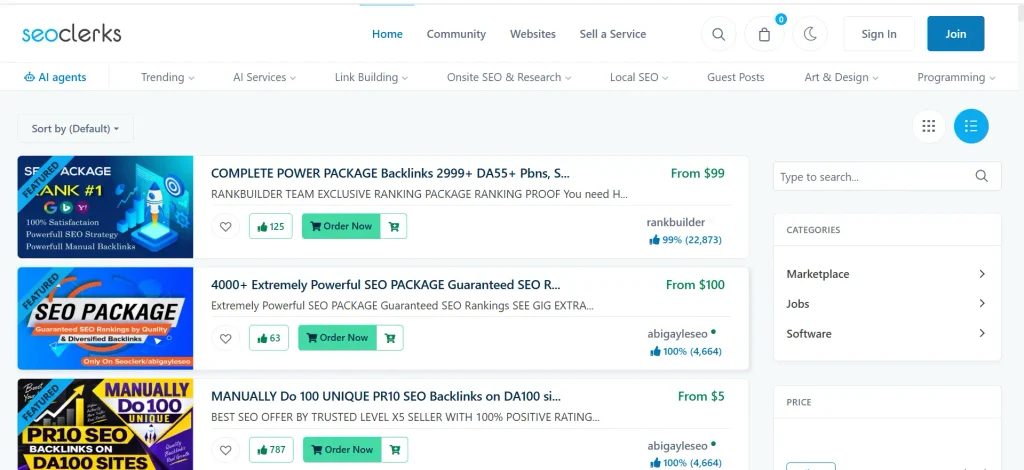
SEOClerks is different from the dedicated CTR platforms discussed above. It is a freelance marketplace where independent sellers offer SEO-related services, including website traffic, search clicks, and CTR-related packages.
Instead of purchasing a standardized software subscription, customers browse individual service listings and select sellers based on their advertised deliverables, pricing, reviews, and turnaround times.
This marketplace structure offers flexibility, but it also creates significant differences in service quality. Two sellers offering apparently similar CTR packages may use completely different traffic sources, reporting methods, and delivery processes.
Before purchasing anything, customers should examine seller history, independent feedback, service descriptions, and refund conditions.
Advantages:
- Provides access to multiple sellers and service packages.
- Allows buyers to compare advertised prices.
- Offers flexibility in terms of service selection.
- Includes reviews and seller profiles that can support initial evaluation.
Limitations:
- SEOClerks is a marketplace, not a dedicated CTR manipulation product.
- Traffic quality can vary significantly between sellers.
- Reporting standards are not consistent across services.
- Buyers may have difficulty verifying actual traffic sources.
- Cheap bulk-click packages can generate misleading analytics data.
Who should consider it: Buyers researching different SEO service providers who are comfortable evaluating individual sellers. It is important to remember that marketplace reviews and advertised delivery numbers do not guarantee genuine engagement or SEO results.
9. Generic Bot-Traffic Tools
Generic bot-traffic platforms take a broader approach to website traffic generation. Rather than focusing specifically on search result interactions, these services are generally designed to send visits to selected URLs.
SparkTraffic is one example frequently mentioned in discussions of website traffic generation.
These platforms may advertise traffic based on geographic locations, devices, traffic volumes, or referral sources. However, generating website visits is not the same as generating meaningful search activity.
For example, a website receiving 5,000 automated visits does not necessarily receive 5,000 Google search clicks. The source of traffic, user behavior, and measurement method are fundamentally different.
Advantages:
- Often provides different traffic volume packages.
- May offer geographic and device-based targeting options.
- Can be used to understand website traffic delivery and analytics testing.
- Generally covers broader traffic-generation requirements rather than only CTR campaigns.
Limitations:
- Generic visits do not represent genuine organic search clicks.
- Automated traffic can distort Google Analytics reports.
- High traffic volumes do not demonstrate improved search visibility.
- Traffic quality and source transparency can vary.
- Artificial traffic should not be confused with actual customer interest.
Who should consider it: Website owners who need to evaluate traffic-generation services for legitimate testing or analytics purposes, rather than expecting generic bot visits to improve organic search rankings.
Important distinction: Visits are not searches. A traffic-generation platform can send visitors to a website without producing genuine interactions with Google search results. Therefore, generic bot-traffic tools should not be treated as direct substitutes for dedicated CTR platforms or legitimate organic CTR optimization software.
What Is CTR Manipulation?
CTR manipulation is the practice of generating artificial clicks, or simulated search sessions, on a result in Google to raise its click-through rate. It is different from CTR optimization, which improves titles, descriptions and content so real searchers choose your result.
That difference matters. One approach tries to fake demand. The other earns it.
How Does CTR Manipulation Work?
Most services follow the same basic flow:
- You enter a keyword and the URL you want clicked.
- The service sends a “searcher” to Google. That searcher is either a bot or a paid human.
- The searcher finds your result, clicks it, and stays on your page for a set time.
- The service spreads these visits across days, devices and locations so they look less uniform.
- You watch your rankings and Google Search Console for changes.
Bot-based tools use automation and proxy or residential IP addresses. Human networks pay real people small amounts to complete the search and click. SerpClix, for example, works as a two-sided marketplace. Third-party reports say clickers earn roughly $0.05 to $0.10 per click, while customers pay several times that.
Why Do SEO Professionals Use These Tools?
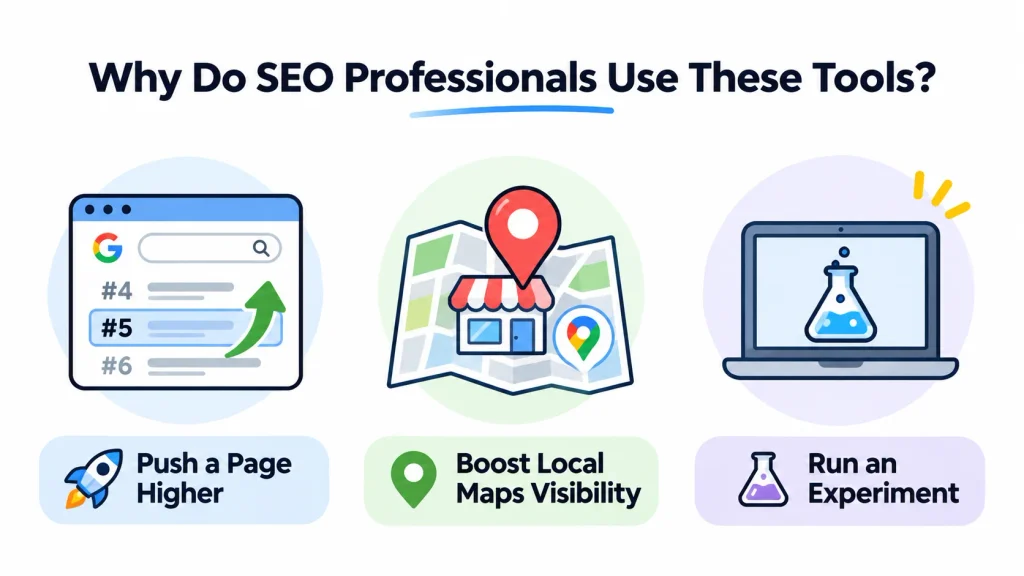
The usual reasons are practical. A page may sit at position 5 with strong content and links, and the owner wants a push. Local businesses chasing Google Maps visibility try it too. Others simply want to run an experiment.
None of these reasons remove the risk. They just explain the demand.
Does Google Use Click-Through Rate as a Ranking Signal?
Google has long been vague on this point. The 2023 US antitrust trial shifted the debate. Testimony from Google’s VP of Search, Pandu Nayak, confirmed that a system called Navboost uses historical click data to improve results. You can read a clear summary in SE Ranking’s Navboost breakdown.
Two cautions apply here:
- Navboost is described as using click data from real users over a long window (reports mention about 13 months). It is not a simple “more clicks, higher rank” switch.
- Having click data in the system does not mean paid clicks help. Google also runs spam detection designed to filter out unnatural behavior.
Wikipedia’s page on click-through rate captures the long-running split well. Some SEOs claim CTR affects rankings. Others say the effect is small or nonexistent.
Understanding Navboost in Plain English
Think of Navboost as a memory of what searchers did after typing a query. If many people click a result and seem satisfied, that result may get a lift. If people click, bounce back and try another result, it may not.
This is why one experiment is never enough. A short bump after a click campaign may come from the clicks, from normal ranking volatility, or from something else you changed that week.
Quick Comparison of the Best CTR Manipulation Tools
The table below groups tools by approach. Prices are reported figures from vendor pages and third-party directories at the time of writing. Treat them as starting points, not quotes.
| Tool | Category | Traffic approach | Reported starting price | Notes |
| SearchSEO | Dedicated CTR platform | Automated sessions via residential IPs | About $29/month per Capterra and reviews | Covers organic and Google Business Profile; few independent reviews |
| CTR Software | Dedicated CTR platform | Automated sessions | Not verified | Check the official site for current plans |
| SERP Empire | Dedicated CTR platform | Automated traffic via proxies | About $79/month per one directory; others list $59 to $499 | Pricing tied to monthly searches |
| SerpClix | Human click network | Paid human clickers | About $197/month starter plan, reported ~660 clicks | Higher cost per click than bots |
| ClickSEO | Dedicated CTR platform | Automated sessions | About $30 to $900/month, with a short free trial reported | Confirm trial terms yourself |
| SerpSEO | Dedicated CTR platform | Mixed (reported) | Not verified | Little public pricing detail |
| Scale Rankings | Managed service | Human traffic (vendor claim) | Campaign-based | Vendor claims, not independent evidence |
| SEOClerks | Freelance marketplace | Varies by seller | Varies | Quality depends on the seller |
| GSA Search Engine Ranker | Automation software | Mainly link-building automation | One-time license | Not a CTR tool at its core |
1. What About GSA Search Engine Ranker?
Some roundups list GSA Search Engine Ranker. It is mainly automation software for link-building, not a CTR platform. I mention it only so you understand why comparisons that include it are mixing categories.
2. What About SerpShark, SERP CTR and Others?
You may see other names in lists. I could not confirm that some of them are active, independently documented products, so I did not review them. If a vendor has no verifiable company details, no clear refund policy and no transparent reporting, skip it.
Best CTR Optimization Tools for Improving Organic Search Performance
Here is the part most competing pages leave out. You can improve CTR with data from real searchers, and these tools help.
1. Google Search Console
Search Console is free and shows impressions, clicks, CTR and average position per query and page. It is the best place to start.
Practical use: Filter by page, sort by impressions, and look for pages with high impressions but low CTR. Those are your quickest wins.
2. Semrush
Semrush is useful for keyword research, SERP feature checks and competitor snippet analysis. Use it to see which features (such as featured snippets or People Also Ask boxes) push organic results down.
3. Ahrefs
Ahrefs is strong for organic keyword and competitor research. Its keyword data helps you spot queries where your listing underperforms the typical result for that position.
4. SE Ranking
SE Ranking offers rank tracking and search performance monitoring. It is a good fit for smaller teams that want reporting without a heavy setup.
5. Advanced Web Ranking
Advanced Web Ranking focuses on SERP tracking and visibility analysis. It helps when you need to monitor many keywords across locations and devices.
CTR Manipulation Tools vs. CTR Optimization Tools
| CTR manipulation tools | CTR optimization tools | |
| Main purpose | Generate artificial clicks | Find and fix listings that underperform |
| Traffic | Paid or automated | Real searchers |
| Analytics effect | Can distort your data | Improves data quality |
| Policy risk | Higher | Low |
| Reporting | Vendor dashboards | Search Console and independent trackers |
| Typical use | Short-term experiments | Ongoing SEO work |
How to Choose a CTR Manipulation Tool (If You Still Plan To)
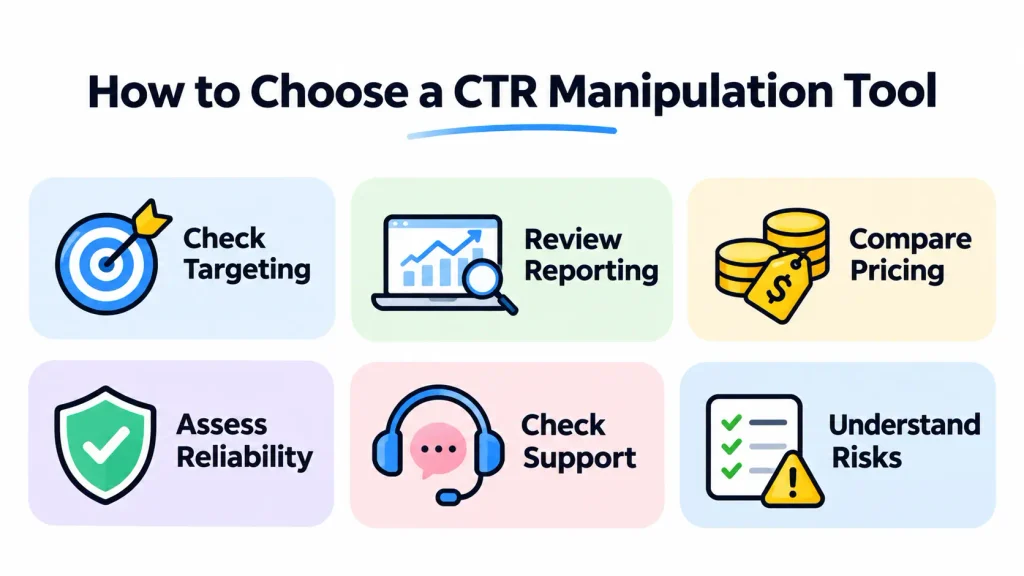
If you decide to test, be disciplined about it.
- Check the traffic source. Ask whether clicks come from bots or people, and how they are verified.
- Check geographic targeting. Wrong locations look unnatural and waste money.
- Review reporting. You want per-keyword logs, not a single “success” chart.
- Compare pricing. Look at cost per click and the terms for changes or cancellation.
- Test support. Send a question before you pay and see how fast you get a clear answer.
- Check the company. Look for a real business name, reviews on independent sites and an honest refund policy.
- Understand the policy risk. Read Google’s rules before you spend anything.
How to Measure Organic CTR Using Google Search Console
You do not need paid software to find your CTR problems. Following a consistent Google Search Console workflow makes it easier to monitor impressions, clicks, indexing issues, and changes in organic search performance.
- Open Google Search Console and choose your property.
- Go to Performance and then Search results.
- Turn on Clicks, Impressions, CTR and Position.
- Sort the Pages tab by impressions, then look for low CTR.
- Open a page and check its Queries tab, then compare Device and Country.
- Compare date ranges (for example, 28 days vs. the previous 28) to see change over time.
Beyond CTR, tracking other SEO performance metrics helps you understand how organic visibility, keyword rankings, and user engagement contribute to overall website performance.
Example: Say a “best running shoes for flat feet” page ranks around position 4 with 20,000 monthly impressions and a weak CTR. You rewrite the title to match what searchers want, add the year and a clear benefit, and tighten the description. After a few weeks, you compare the same query in the Search Console. If CTR rises at the same position, your change likely helped. You gained clicks from real people, with no policy risk.
Remember that CTR depends on position, intent, device and SERP features. A “good” CTR for a branded query is very different from one for a competitive informational query, so compare similar queries, not one universal number.
Is CTR Manipulation Safe for SEO?
Short answer: no tool can make it risk-free.
1. Google’s Search Spam Policies
Google’s spam policies define spam as techniques meant to deceive users or manipulate search systems. The machine-generated traffic section specifically covers sending automated queries to Google. Google says its systems and, when needed, human reviewers detect violations, and affected sites can rank lower or disappear from results.
In May 2026, Google also clarified that these policies apply to generative AI responses such as AI Overviews and AI Mode, as Search Engine Land reported.
One precise point: the policy text names automated queries directly. Paid human clicking is not listed word for word, but it is an attempt to influence ranking systems, which falls under the broader definition. Do not assume humans are exempt.
2. Can Google Detect Artificial Clicks?
Nobody outside Google can answer that with certainty. Google runs SpamBrain and other systems, and it has years of click data to compare against. Vendors who promise “undetectable” traffic cannot prove that promise.
3. Human Clicks vs. Bot Traffic
| Human click networks | Bot or automated tools | |
| Cost per click | Higher | Lower |
| Realism | Real browsers and people | Simulated, often via proxies |
| Policy fit | Still manipulation | Clearly overlaps with automated queries |
| Scale | Limited | Easy to scale |
Humans may look more natural. They are not “safe,” and they cost more.
4. How Artificial Traffic Distorts Your Data
Fake sessions inflate impressions and clicks in Search Console and add junk visits to Google Analytics. That makes it hard to judge real performance. You may “fix” pages that were never broken.
5. Why Guaranteed Ranking Promises Are a Warning Sign
Rankings depend on hundreds of factors you do not control. Any seller who guarantees positions is either guessing or selling hope. Other red flags include no transparent reporting, vague refund terms, requests for account access you do not need to give, and no verifiable company information.
How to Improve Organic CTR Without Artificial Clicks
These steps help real people choose you:
- Write clear title tags. Lead with the main benefit and keyword. Keep it readable, not stuffed.
- Write useful meta descriptions. Google may rewrite them, but a good one still helps.
- Match search intent. If people want a comparison, don’t title the page like a sales pitch.
- Use structured data where it fits. Review, FAQ-style and product markup can make listings more informative when eligible.
- Improve the page itself. A result people trust gets clicked and stays clicked.
- Check mobile. Look at how your snippet appears on a phone.
- Study competitor snippets. Notice what they promise that you don’t.
- Update stale content. Fresh facts and a current year can earn more clicks.
A deeper SERP analysis and keyword research process can also reveal what competing pages are doing differently and help you identify opportunities to make your search snippets more relevant.
Common CTR Manipulation Mistakes to Avoid
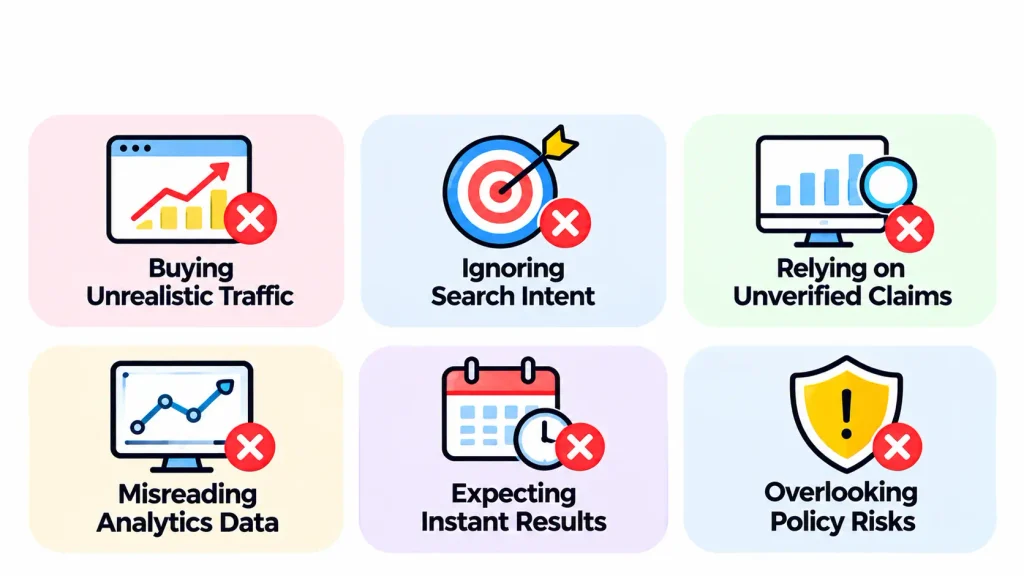
- Buying huge traffic packages. Sudden spikes look unnatural.
- Ignoring intent. Clicks on the wrong keyword prove nothing.
- Mistaking traffic for rankings. More visits do not mean higher positions.
- Trusting vendor claims. Cross-check with independent data.
- Ignoring data quality. Track which visits are artificial so you do not misread reports.
- Expecting instant results. Rankings move for many reasons. Isolate changes if you test.
Best CTR Manipulation Tools by Use Case
| What you need | Best category |
| Test human-based click campaigns | Human click networks |
| Low-cost experiments | Automated CTR platforms (with caution) |
| Local SEO performance | Google Business Profile and local rank trackers |
| Monitor organic CTR | Google Search Console |
| Keyword and SERP research | Semrush or Ahrefs |
| Rank tracking | SE Ranking or Advanced Web Ranking |
Frequently Asked Questions About CTR Manipulation Tools
What is the best CTR manipulation tool in 2026?
There is no verified “best.” SerpClix, SERP Empire, CTR Software and ClickSEO are the names that appear most often. Choose based on traffic source, transparency and your tolerance for risk, not on a ranking list.
Are free CTR manipulation tools available?
Some tools advertise free sign-ups or short trials. Free usually means very limited volume. Free bot scripts also carry security and quality risks.
Does CTR manipulation improve Google rankings?
Sometimes, briefly, according to many practitioner reports. Others see no effect or a drop. There is no solid independent evidence that it works reliably.
Can Google detect CTR manipulation?
Google says it detects spam using automated systems and reviewers. How well it spots any given campaign is unknown.
Are human clicks better than bot clicks?
They look more natural and cost more. They are still artificial.
Is CTR manipulation against Google’s guidelines?
Automated queries are explicitly covered. Broader manipulation of ranking systems falls under Google’s general spam definition.
Can CTR manipulation damage a website?
It can distort your analytics and may expose a site to demotion if Google treats the activity as spam. Outcomes vary.
How do I check my website’s organic CTR?
Use the Performance report in Google Search Console, as shown above.
What are the best alternatives to CTR manipulation software?
Search Console, Semrush, Ahrefs, SE Ranking and Advanced Web Ranking, plus better titles, descriptions and content.
Final Verdict
Here is the honest summary of the best CTR manipulation tools. SerpClix is the best-known human-click option and costs the most per click. SERP Empire, CTR Software, ClickSEO and SearchSEO are the usual automated choices at lower prices, with SearchSEO reportedly starting at around $29 per month. Scale Rankings is a managed service, and SEOClerks is a marketplace where quality varies.
None of them offers proof that it will lift your rankings, and none removes the risk of breaking Google’s rules. If you test one anyway, use a low-stakes site, start small, keep independent tracking, and don’t depend on vendor dashboards.
For most sites, the better path is simpler. Find low-CTR pages in Search Console, fix your snippets, match intent and improve the content. You build clicks that last, and your data stays clean.