
If you have spent any time doing SEO, you have probably faced this exact question should I go with guest posting or link insertion? Both strategies build backlinks, both can improve your rankings, and both are widely used by SEO professionals around the world. But they work in very different ways, suit different goals, and come with their own sets of advantages and risks.
When it comes to guest posting vs link insertion, there is no universal right answer. The best choice depends on your website’s age, your budget, your timeline, and what you are ultimately trying to achieve whether that is building brand authority, gaining quick ranking boosts, or both.
we will break down exactly what each strategy involves, how they differ, their pros and cons, and most importantly when you should use one, the other, or a smart combination of both. By the end, you will have a clear picture of which approach fits your SEO goals in 2026.
What Is Guest Posting?
Guest posting (also called guest blogging) is the practice of writing and publishing a brand-new article on someone else’s website or blog. In exchange, you typically receive a backlink to your own site — either within the body of the article or in the author bio.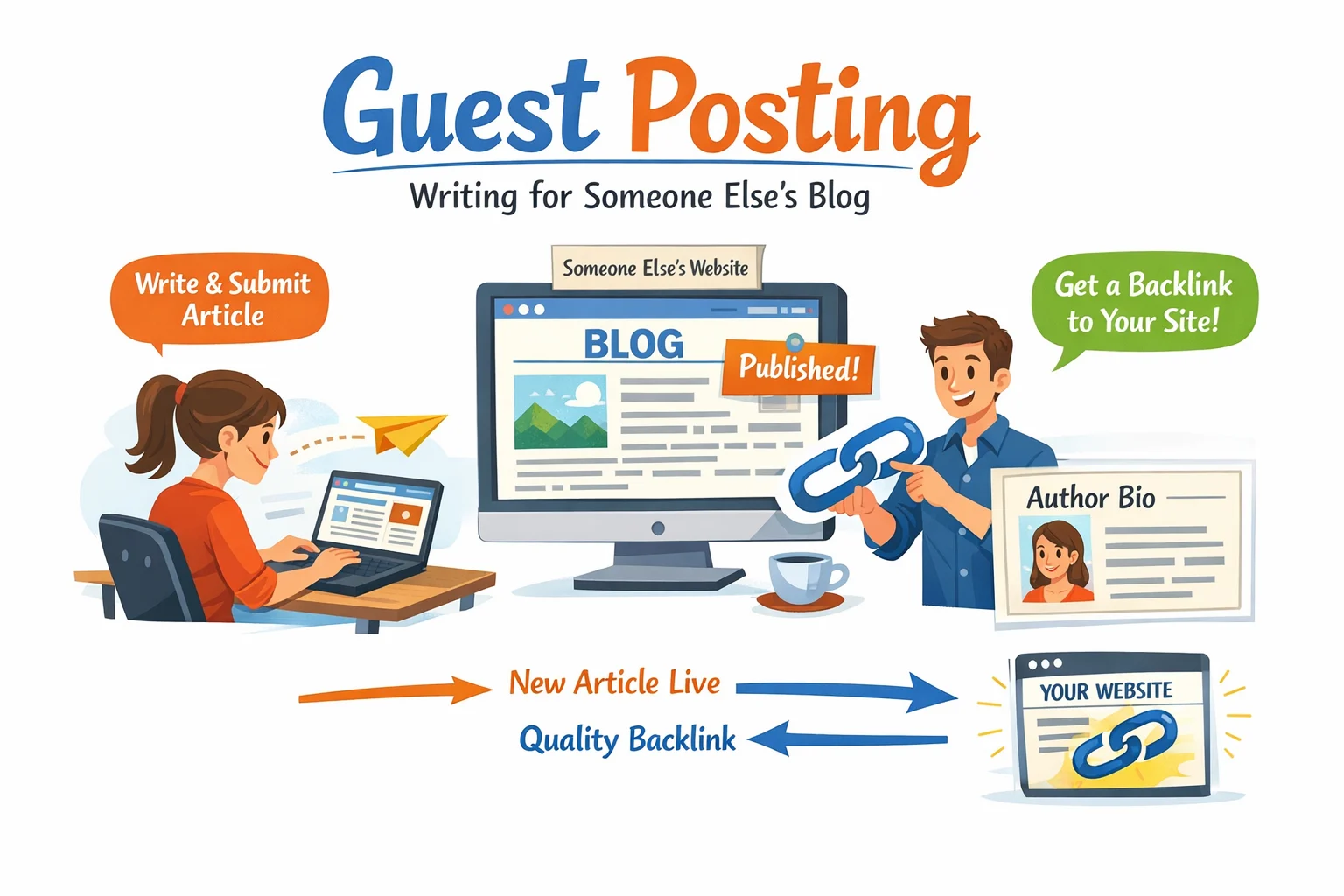
Here is how the process usually works:
- Find websites in your niche that accept guest contributions
- Pitch a topic idea that fits their audience and editorial guidelines
- Write a high-quality, original article tailored for their readers
- Get it published with a contextual backlink pointing to your site
Guest posts look completely natural to Google because you are genuinely contributing value to another site. You choose the topic, the anchor text, and the website giving you full control over the quality and context of your backlink.
Example: A fitness brand writing a guest post for a health magazine titled “5 Science-Backed Recovery Tips for Athletes” with a link back to their supplement store. The result is a natural, authoritative backlink from a relevant domain plus exposure to a targeted audience.
What Is Link Insertion?
Link insertion also called niche edits is a different approach. Instead of writing a new article, you find already-published, indexed content on another website and ask the site owner to add your link into that existing piece.
Here is how it typically works:
- Find relevant, high-performing articles on third-party websites
- Reach out to the site owner with a pitch to add your link contextually
- They edit the existing article to include your anchor text and link
- Your link is now live on a page that already has authority and traffic
The core advantage here is speed and efficiency. You skip the content creation process entirely and tap into a page that Google has already evaluated and ranked. Since the content is already indexed, the SEO impact can be felt more quickly.
Example: A local home services company gets a link inserted into a popular “Home Energy Savings Tips” blog post that already ranks on page one. They get a contextual, relevant backlink without writing a single word of new content.
Guest Posting vs Link Insertion: Key Differences at a Glance
Before diving deeper, here is a quick side-by-side comparison of both strategies across the most important SEO factors:
| Factor | Guest Posting | Link Insertion |
| Content Required | Yes — full new article | No — uses existing content |
| Time to Implement | Slower (days to weeks) | Faster (hours to days) |
| SEO Results Timeline | Long-term gains | Quicker initial boost |
| Cost | Higher | Lower |
| Control Over Content | Full control | Limited control |
| Brand Authority | High | Low to Medium |
| Risk Level | Lower | Medium (if overdone) |
| Indexing Speed | Slower (new content) | Faster (already indexed) |
| Anchor Text Control | Full | Partial |
As the table shows, both strategies have a clear role to play. Guest posting wins on control, authority, and long-term brand building. Link insertion wins on speed, cost, and scalability. Let us look at each in more detail.
Pros and Cons of Guest Posting
Pros of Guest Posting
- Full control over content, messaging, and anchor text — you shape the narrative
- Builds brand authority by positioning you as an expert in your niche
- Drives referral traffic from the host site’s existing readership
- Guest posts tend to stay published for longer since they are purpose-built, making them a more sustainable backlink source
- Safer from a Google penalty standpoint looks completely natural
- Helps with relationship building you network with editors, bloggers, and industry influencers
- You can target high-authority sites in your niche with custom-written content
Cons of Guest Posting
- Time-consuming research, outreach, writing, editing, and follow-up all take real effort
- No guarantee the post gets published or ranks well once live
- A guest post link delivers power from a brand-new page that has no backlinks pointing to it yet so the SEO punch can be delayed
- Some high-authority sites have strict editorial guidelines or do not accept guest posts at all
- Ongoing promotion is needed the post does not market itself
Pros and Cons of Link Insertion
Pros of Link Insertion
- Quick results — since the content is already live and indexed, link benefits can appear faster
- No content creation required saves significant time and resources
- You can analyze the exact URL using tools like Ahrefs or SEMrush before committing, giving you predictable SEO value
- Generally cheaper than commissioning full guest posts
- Leverages established page authority you ride the trust the page has already earned with Google
- Broader outreach potential not limited to sites that have a “Write for Us” page
Cons of Link Insertion
- Limited control over how your link is introduced the surrounding context is already set
- Search engines in 2026 are well-equipped to detect unnatural link patterns, which can trigger penalties if overdone
- Harder to find truly relevant and high-quality pages that are a natural fit for your link
- No brand visibility no byline, no author profile, no audience exposure
- Inserted links can sometimes feel forced, especially if the existing content does not naturally lead to your topic
Which One Is Better for SEO? (Honest Breakdown)
Here is the truth: neither strategy is universally better. The right choice depends entirely on where you are in your SEO journey, what your goals are, and what resources you have available.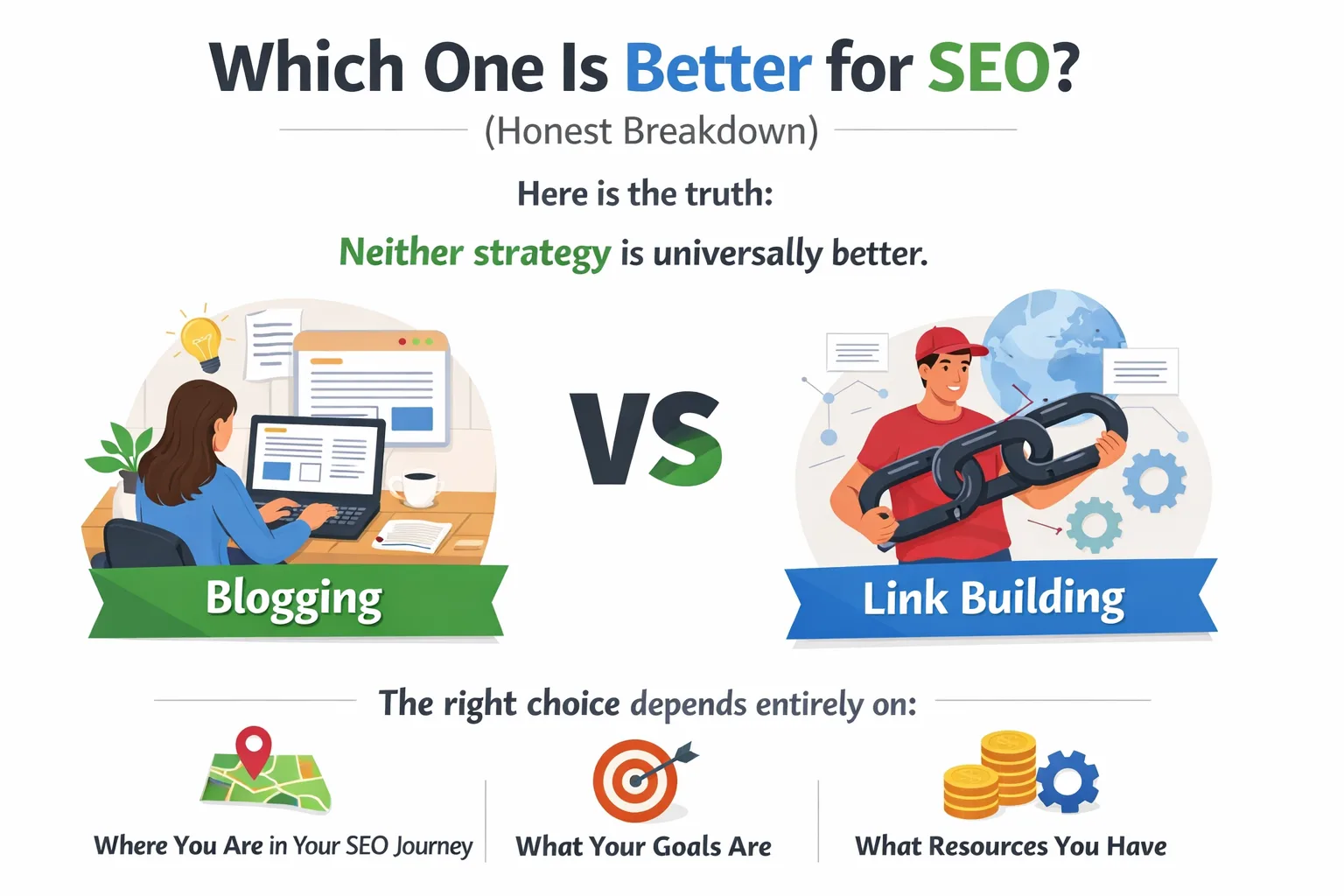
Choose Guest Posting When…
- You are building a new or relatively young website and need to establish authority from scratch
- Brand awareness and referral traffic matter as much as rankings to you
- You want full creative control over your backlinks and their context
- You are targeting high-authority sites in your niche where a byline matters
- You don’t have much existing content to pitch for link insertion — guest posting gives you a better starting point
Choose Link Insertion When…
- You already have great content on your site that deserves more inbound links
- You need faster results and are working with a tighter deadline
- Your budget is limited and you cannot afford full content creation
- You want an SEO boost without writing a new piece of content from scratch
- You are looking to scale your backlink profile efficiently alongside other link-building efforts
Use Both When…
The smartest SEO strategies in 2026 are not choosing one over the other — they are using both together. Guest posts build the long-term foundation of authority and trust. Link insertions provide quick wins and fill in gaps in your backlink profile. Together, they create a diverse, natural-looking link portfolio that Google rewards.
How to Use Guest Posting and Link Insertion Together
A well-rounded link-building campaign uses both strategies in a way that feels organic and serves your specific goals at each stage of growth.
Here is a simple framework to think about the right balance:
- New websites (0–6 months): Focus 70–80% on guest posting to build initial authority and trust signals, with 20–30% on link insertions in highly relevant existing articles.
- Growing websites (6–18 months): Shift toward a 50/50 split. Use guest posts for branded authority and link insertions to accelerate rankings on competitive pages.
- Established websites (18+ months): Link insertions become more valuable here. Use them to quickly boost specific pages. Reserve guest posting for high-authority publications and thought leadership.
Recommended tools for finding opportunities in both categories include Ahrefs (for competitor backlink analysis), SEMrush (for identifying ranking pages for link insertion), BuzzStream (for outreach management), and Google Search operators like “write for us” + your niche keyword.
Common Mistakes to Avoid
Both strategies can backfire if done carelessly. Here are the most common pitfalls and how to steer clear of them:
Guest Posting Mistakes
- Publishing on low-quality or irrelevant sites just to get a link — Google sees through this
- Writing generic, thin content that adds no value to the host site’s audience
- Using exact-match anchor text too aggressively it triggers spam signals
- Forgetting to promote the published post a guest post that nobody reads delivers minimal referral benefit
Link Insertion Mistakes
- Inserting links into articles that are loosely or not at all related to your niche
- Building link insertions in bulk over a short period unnatural patterns are easy for search engines to detect, especially when done at scale
- Not vetting the page a high domain authority site with a low-traffic page offers less value than expected
- Ignoring the surrounding content if your link feels forced or out of place, readers and algorithms will notice
Pro Tip: Always evaluate sites at the page level, not just the domain level. A DA 30 site with a highly relevant, traffic-driving article beats a DA 70 site with an unrelated or low-traffic page every single time.
Frequently Asked Questions (FAQs)
Q: What is the main difference between guest posting and link insertion?
A: Guest posting involves writing and publishing a brand-new article on another website with a backlink to your site. Link insertion (also called niche edits) involves adding your link into an already-published, indexed piece of content on a third-party site. The key difference is content creation — guest posting requires it; link insertion does not.
Q: Is link insertion safe for SEO in 2026?
A: Yes, when done correctly and in moderation. Link insertions are safe as long as they are placed in genuinely relevant content, use natural anchor text, and are not built in unnatural bulk. Google’s algorithms are advanced enough to detect manipulation, so always prioritize quality and relevance over quantity.
Q: Which is cheaper — guest posting or link insertion?
A: Link insertion is generally cheaper because it eliminates the content creation cost. A typical guest post can cost $100–$500+ depending on the site, whereas link insertions on similar sites often cost less since no new article is required.
Q: Can I do both guest posting and link insertion at the same time?
A: Absolutely — and you should. Combining both strategies gives you the long-term authority-building benefits of guest posting alongside the speed and efficiency of link insertions. A mixed backlink profile also looks more natural to search engines, which reduces penalty risk.
Q: How many link insertions are too many?
A: There is no fixed number, but the key rule is: build links at a pace that mirrors natural growth for a site of your size. Acquiring dozens of link insertions within days is a red flag. A steady, consistent pace of high-quality links over time is always safer and more effective.
Conclusion
When it comes to guest posting vs link insertion, the real winner is the SEO professional who knows how to use both strategically. Guest posting builds the kind of long-term authority, brand recognition, and referral traffic that no shortcut can replicate. Link insertion, on the other hand, offers efficiency, speed, and the ability to leverage existing authority when time and budget are tight.
The smartest approach in 2026 is not picking a side — it is understanding what each strategy does best and applying it at the right stage of your SEO campaign. Start by auditing your current backlink profile. Identify where you need depth and authority (guest posting) and where you need quick wins on specific pages (link insertion). Then build a plan that uses both in harmony.
A diverse, natural-looking backlink profile is what Google rewards. And now you have everything you need to build one.