
Search engine optimization (SEO) requires more than simply adding keywords or publishing content randomly. To achieve consistent rankings and sustainable organic growth, businesses need a structured system that organizes every SEO activity effectively. In practice, many SEO professionals use structured workflows to manage different stages of optimization.
An SEO workflow process provides a step-by-step framework for managing tasks such as keyword research, technical SEO, on-page optimization, content creation, link building, and performance tracking. Instead of handling SEO tasks in an unstructured way, a clear workflow helps teams follow a repeatable process that improves efficiency and results.
By implementing a well-defined SEO workflow, businesses can streamline their optimization efforts, improve search visibility, and drive long-term organic traffic from search engines.
What is an SEO Workflow?
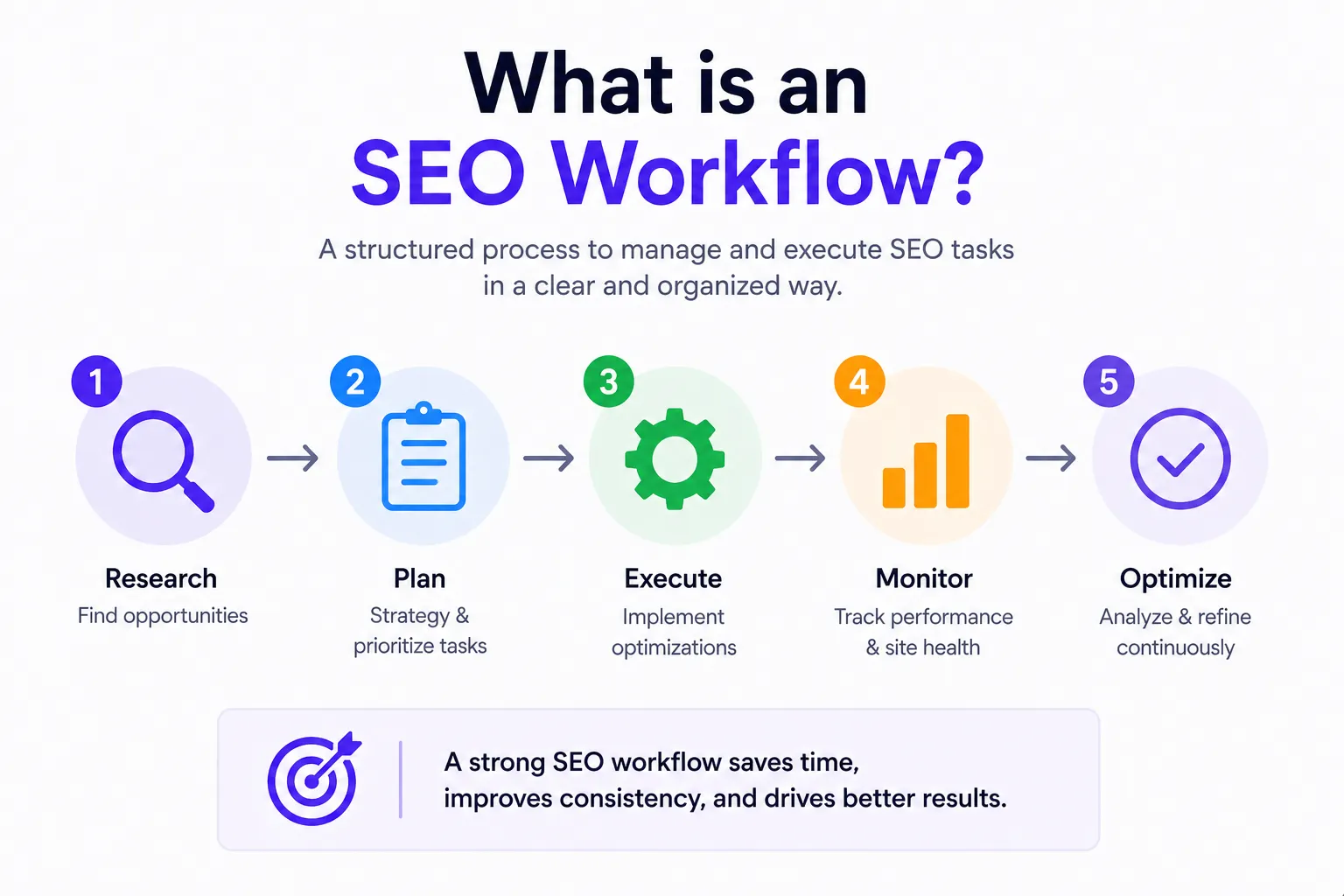
An SEO workflow is a structured process used to manage and execute SEO tasks in a clear and organized way. Instead of doing random SEO activities, a workflow provides a step-by-step system that helps teams plan, implement, andmonitor their SEO efforts efficiently. Many businesses also rely on professional SEO Services to streamline optimization strategies and improve long-term organic search performance, By following a defined workflow, businesses can ensure that every important SEO task from keyword research to performance tracking is completed in the right order.
Simple Definition of SEO Workflow
SEO Workflow vs SEO Strategy
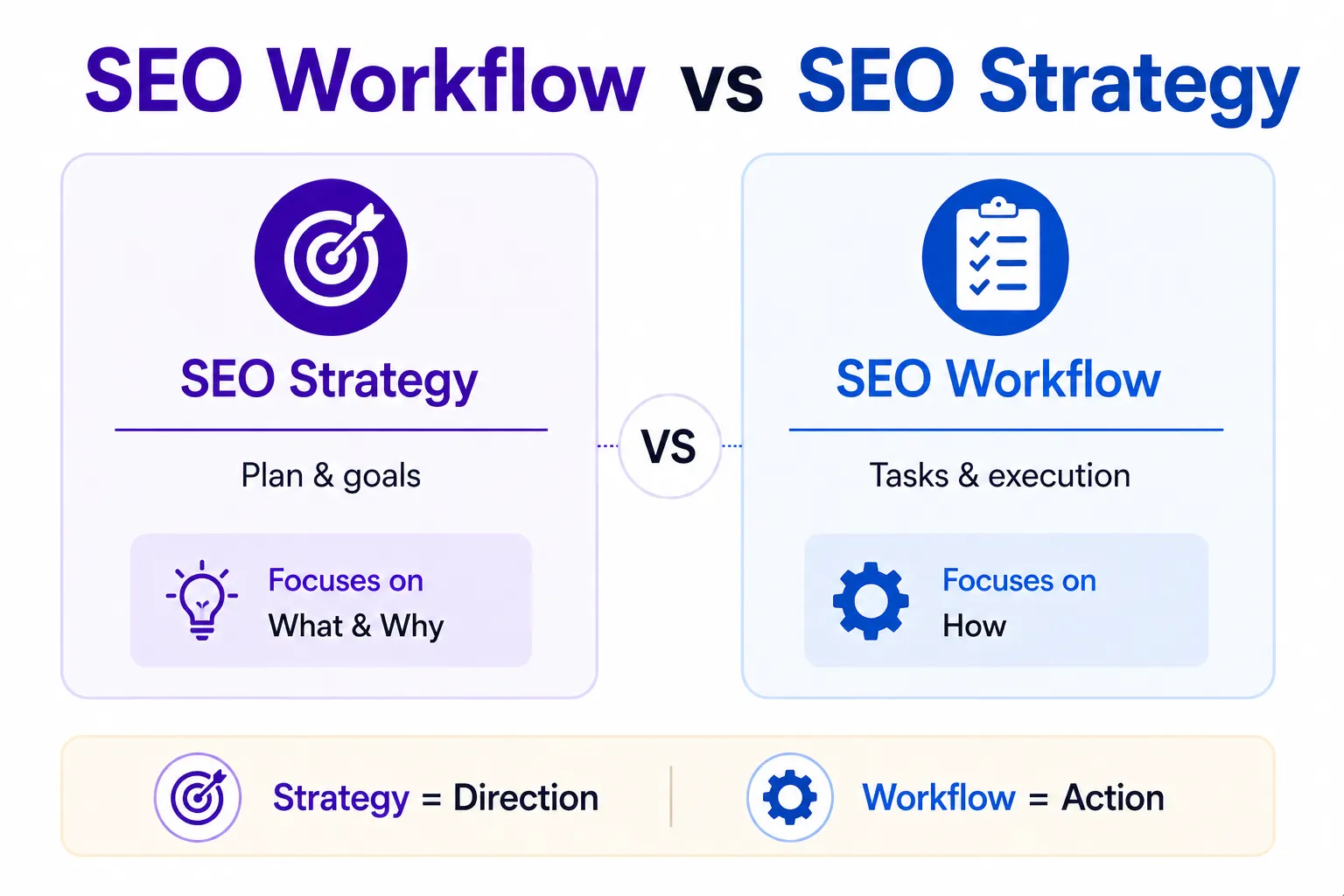
- SEO Strategy: The overall plan and direction for achieving long-term SEO goals. It focuses on what you want to achieve and why.
- SEO Workflow: The operational system used to execute that strategy through specific tasks and processes.
Example of a Basic SEO Workflow
A simple SEO workflow usually follows these main stages:
- Research – Identify keywords, analyze competitors, and understand search intent.
- Planning – Create a content plan, SEO roadmap, and optimization checklist.
- Optimization – Implement on-page SEO, technical improvements, and content optimization.
- Promotion – Build backlinks, share content, and improve authority.
- Tracking – Monitor rankings, traffic, and SEO performance to improve future efforts.
Why Businesses Need an SEO Workflow

An SEO workflow helps businesses manage their SEO efforts in a structured and organized way. Without a workflow, SEO tasks are often done randomly, which can lead to missed opportunities, inconsistent results, and wasted time.
A clear workflow ensures that every SEO activity from research to optimization and tracking is performed in the right order. This improves efficiency, keeps teams aligned, and helps businesses achieve better long-term results from their SEO campaigns.
Consistent SEO Results
One of the biggest advantages of an SEO workflow is consistency.
When teams follow a repeatable process, every SEO task is completed using the same standards and best practices. This reduces mistakes and ensures that important steps like keyword research, on-page optimization, and technical checks are never skipped.
As a result, businesses can achieve more predictable and stable SEO performance over time.
Better Team Collaboration
SEO often involves multiple team members such as content writers, SEO specialists, developers, and marketers.
An SEO workflow clearly defines who is responsible for each task. This improves communication between teams and makes it easier to manage projects.
When everyone understands their role in the workflow, tasks are completed faster and with fewer delays.
Scalable SEO Campaigns
As a business grows, its SEO needs also increase. Managing dozens or even hundreds of pages becomes difficult without a proper system.
An SEO workflow allows businesses to scale their SEO efforts efficiently. The same process can be applied to multiple pages, campaigns, or websites while maintaining quality and consistency.
This makes it easier for agencies and companies to handle large SEO projects.
Improved ROI from SEO
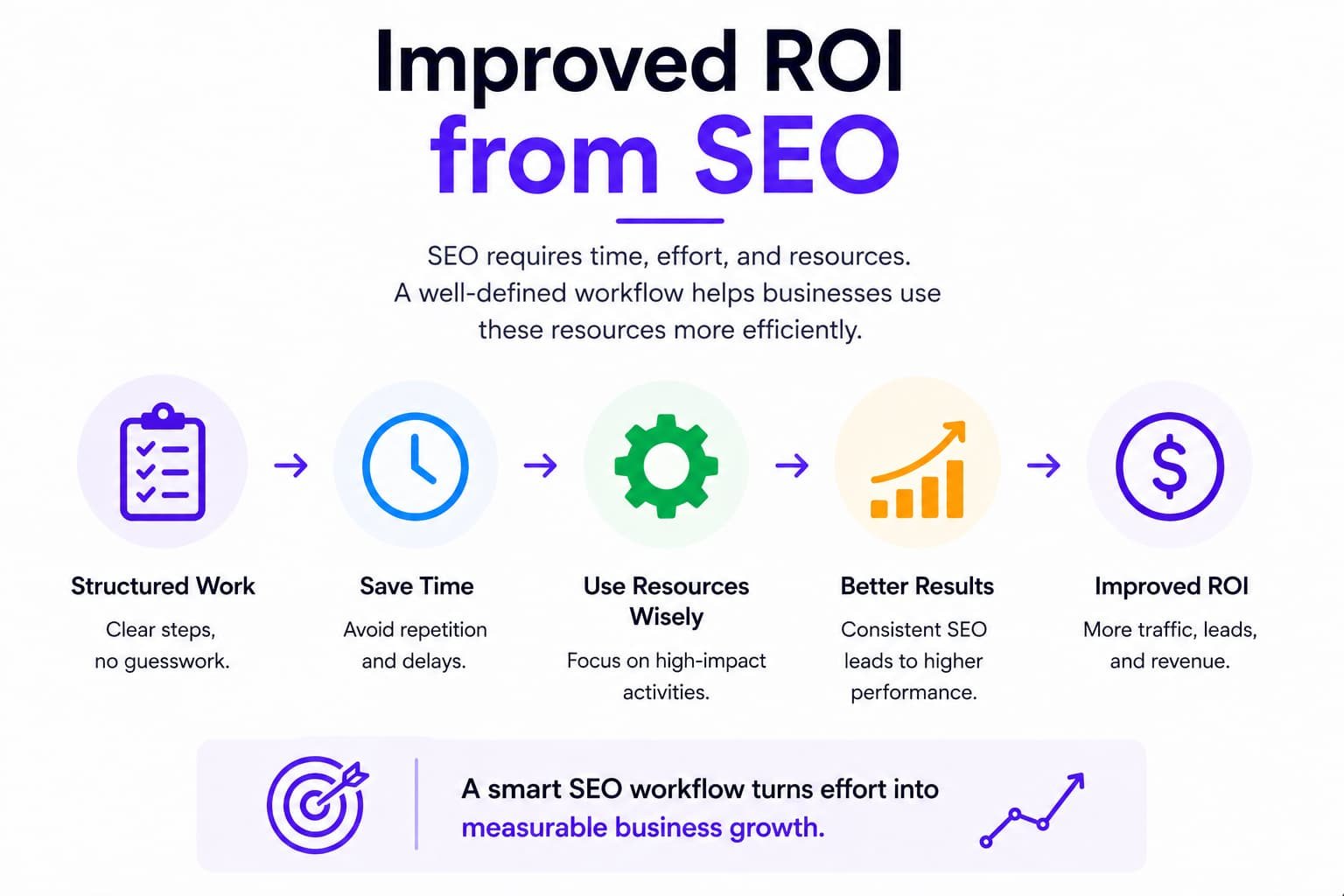
SEO requires time, effort, and resources. A well-defined workflow helps businesses use these resources more efficiently.
By following a structured process, teams can focus on the most impactful SEO tasks, reduce wasted effort, and track performance more effectively. This leads to better search rankings, increased organic traffic, and higher return on investment (ROI) from SEO activities.
Example:
An SEO workflow helps businesses manage their SEO efforts in a structured and organized way. Without a workflow, SEO tasks are often done randomly, which can lead to missed opportunities, inconsistent results, and wasted time.
A clear workflow ensures that every SEO activity from research to optimization and tracking is performed in the right order. This improves efficiency, keeps teams aligned, and helps businesses achieve better long-term results from their SEO campaigns.
1. Consistent SEO Results
One of the biggest advantages of an SEO workflow is consistency.
When teams follow a repeatable process, every SEO task is completed using the same standards and best practices. This reduces mistakes and ensures that important steps like keyword research, on-page optimization, and technical checks are never skipped.
As a result, businesses can achieve more predictable and stable SEO performance over time.
2. Better Team Collaboration
SEO often involves multiple team members such as content writers, SEO specialists, developers, and marketers.
An SEO workflow clearly defines who is responsible for each task. This improves communication between teams and makes it easier to manage projects.
When everyone understands their role in the workflow, tasks are completed faster and with fewer delays.
3. Scalable SEO Campaigns
As a business grows, its SEO needs also increase. Managing dozens or even hundreds of pages becomes difficult without a proper system.
An SEO workflow allows businesses to scale their SEO efforts efficiently. The same process can be applied to multiple pages, campaigns, or websites while maintaining quality and consistency.
This makes it easier for agencies and companies to handle large SEO projects.
4. Improved ROI from SEO
SEO requires time, effort, and resources. A well-defined workflow helps businesses use these resources more efficiently.
By following a structured process, teams can focus on the most impactful SEO tasks, reduce wasted effort, and track performance more effectively. This leads to better search rankings, increased organic traffic, and higher return on investment (ROI) from SEO activities.
Example: Many professional SEO agencies follow a structured workflow that includes keyword research, technical audits, content optimization, link building, and performance tracking.
Key Stages of the SEO Workflow Process
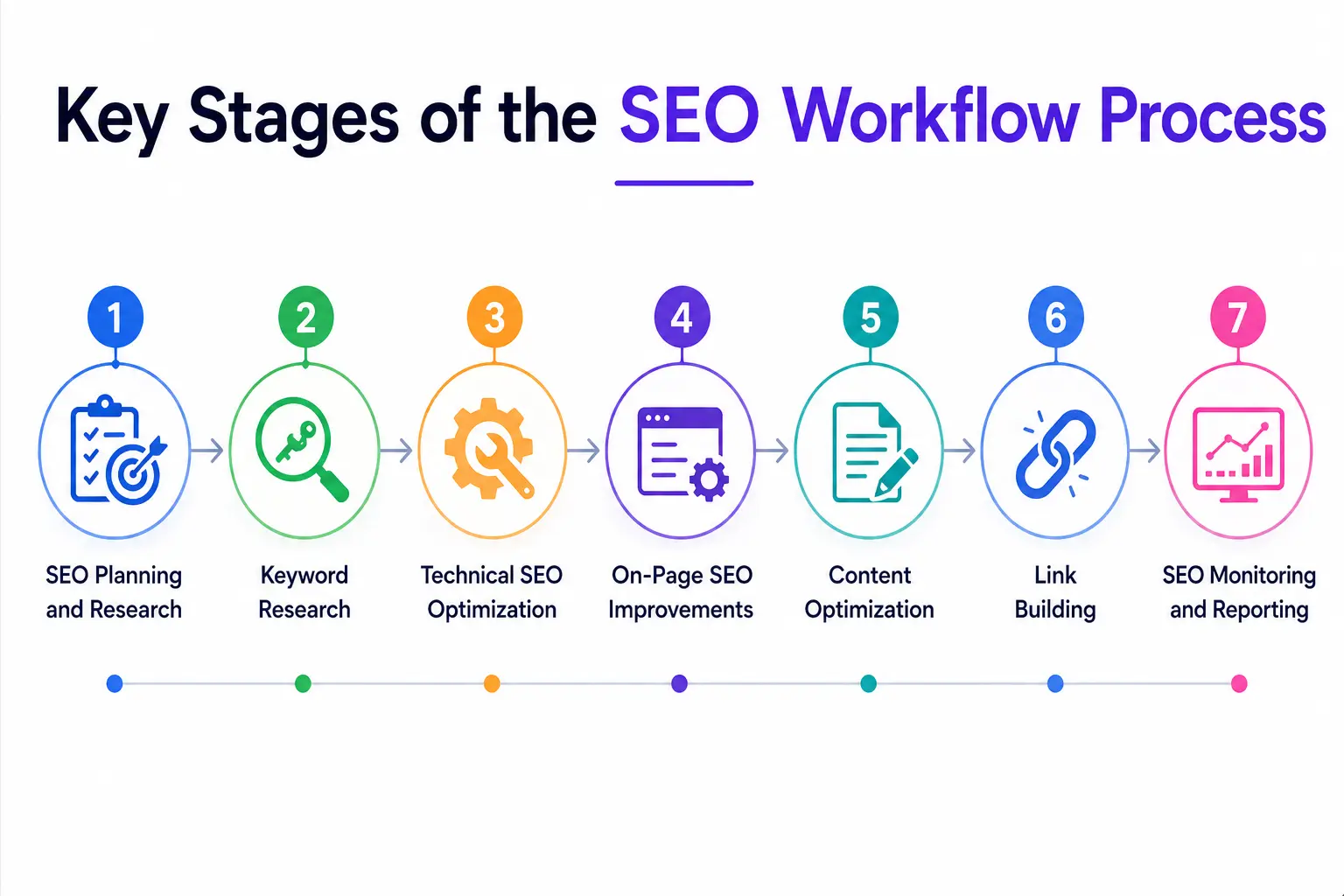
A successful SEO workflow is built around several key stages that guide the entire optimization process. Each stage focuses on a specific part of SEO, ensuring that all important activities are completed in the right order.
Most SEO workflows usually include the following stages:
1. SEO Planning and Research
This is the foundation of the entire SEO process. In this stage, businesses analyze their website, competitors, target audience, and overall SEO goals. Proper planning helps create a clear roadmap for future SEO activities.
2. Keyword Research
Keyword research identifies the search terms people use in search engines. By targeting the right keywords, businesses can create content that matches user intent and attracts relevant organic traffic.
3. Technical SEO Optimization
Technical SEO focuses on improving the website’s structure and performance. This includes fixing issues related to site speed, crawlability, indexing, mobile friendliness, and overall site architecture to ensure search engines can easily access and understand the website.
4. On-Page SEO Improvements
On-page SEO involves optimizing individual pages to make them more search engine friendly. This includes optimizing titles, meta descriptions, headings, internal links, and content structure.
5. Content Optimization
Content plays a major role in SEO success. In this stage, businesses improve existing content or create new content that targets specific keywords while providing valuable information to users.
6. Link Building
Link building focuses on acquiring high-quality backlinks from other websites. These links help increase website authority and improve search engine rankings. While buying backlinks may seem like a quick way to build links, businesses should prioritize relevant, high-quality placements that provide genuine value and align with search engine guidelines.
7. SEO Monitoring and Reporting
The final stage involves tracking SEO performance using metrics such as keyword rankings, organic traffic, and conversions. Regular monitoring helps identify what is working and what needs improvement in the SEO strategy.
SEO Keyword Research Workflow (Step-by-Step)
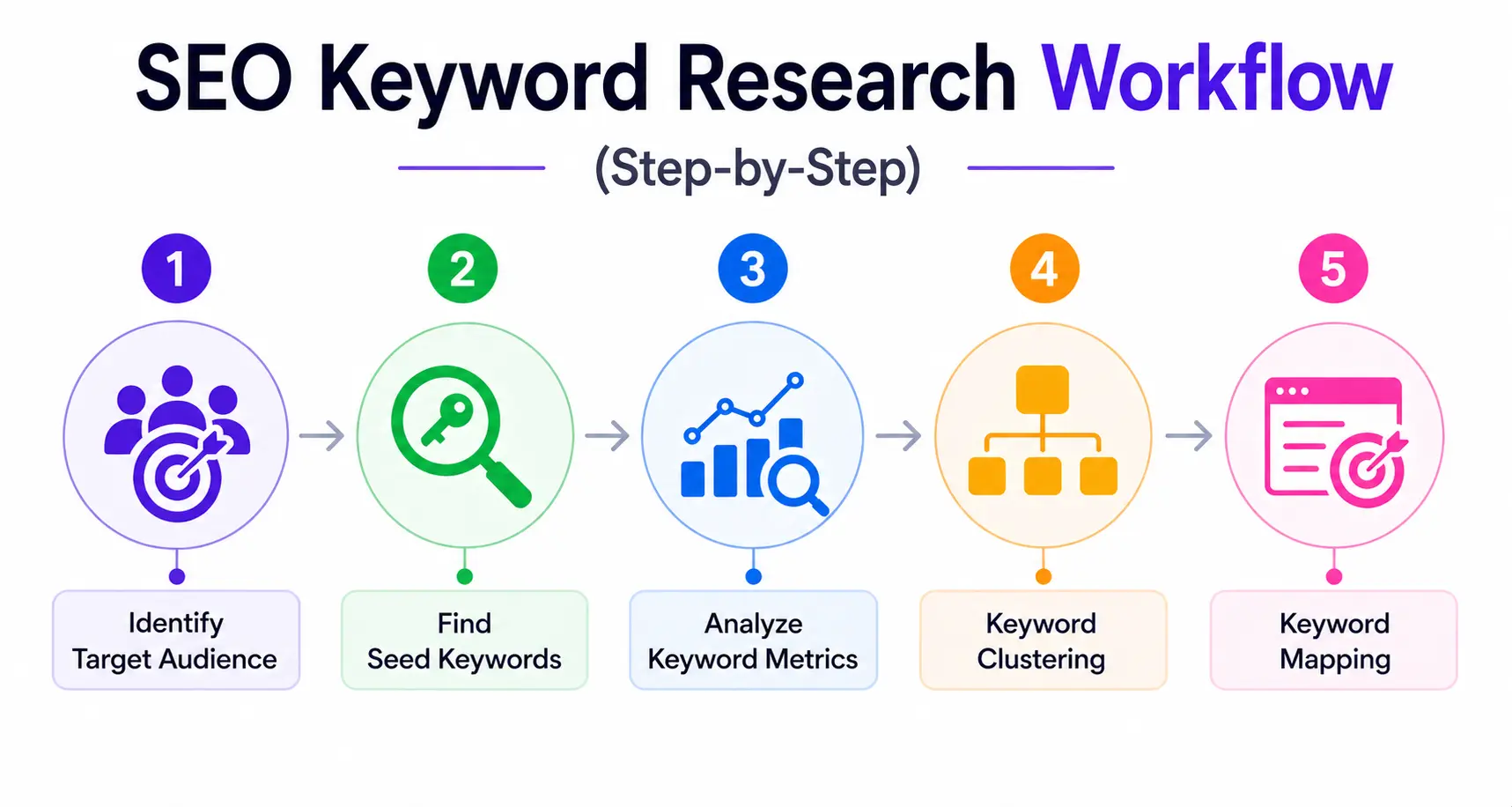
Keyword research is the foundation of any successful SEO strategy. It helps businesses understand what their target audience is searching for and which topics they should create content around.
A well-structured keyword research workflow ensures that you target the right keywords with the right intent, helping you attract relevant traffic and improve search rankings.
Below is a step-by-step keyword research workflow.
Identify Target Audience
The first step in keyword research is understanding who your audience is and what they are searching for online. This includes identifying their needs, problems, and search behavior.
By understanding your audience, you can create content that directly answers their questions.
Example:
If you run a fitness blog, users may search for topics such as:
- home workout plan
- weight loss exercises
- beginner fitness tips
These searches reflect the interests and goals of your target audience.
Find Seed Keywords
Seed keywords are basic topic ideas that form the starting point of your keyword research. These keywords help you discover more related keyword opportunities.
Example:
If your main topic is SEO, your seed keywords might include:
- SEO tools
- SEO workflow
- SEO strategy
From these seed keywords, you can expand into many related long-tail keywords.
Analyze Keyword Metrics
Once you have a list of keywords, the next step is evaluating their potential using SEO tools such as keyword research platforms.
Important metrics to analyze include:
- Search Volume – The number of times a keyword is searched each month.
- Keyword Difficulty – How hard it is to rank for the keyword.
- Search Intent – The purpose behind the user’s search.
- CPC (Cost Per Click) – The advertising value of the keyword.
These metrics help determine which keywords are worth targeting.
Keyword Clustering
Keyword clustering involves grouping similar or closely related keywords together. This helps you target multiple keywords within a single piece of content.
Example cluster:
- SEO workflow
- SEO process
- SEO steps
- SEO optimization process
Since these keywords have a similar intent, they can often be targeted in one comprehensive article.
Keyword Mapping
Keyword mapping is the process of assigning specific keywords to specific pages on your website.
This ensures that each page targets a clear keyword topic and prevents multiple pages from competing for the same keyword a problem known as keyword cannibalization
Technical SEO Workflow
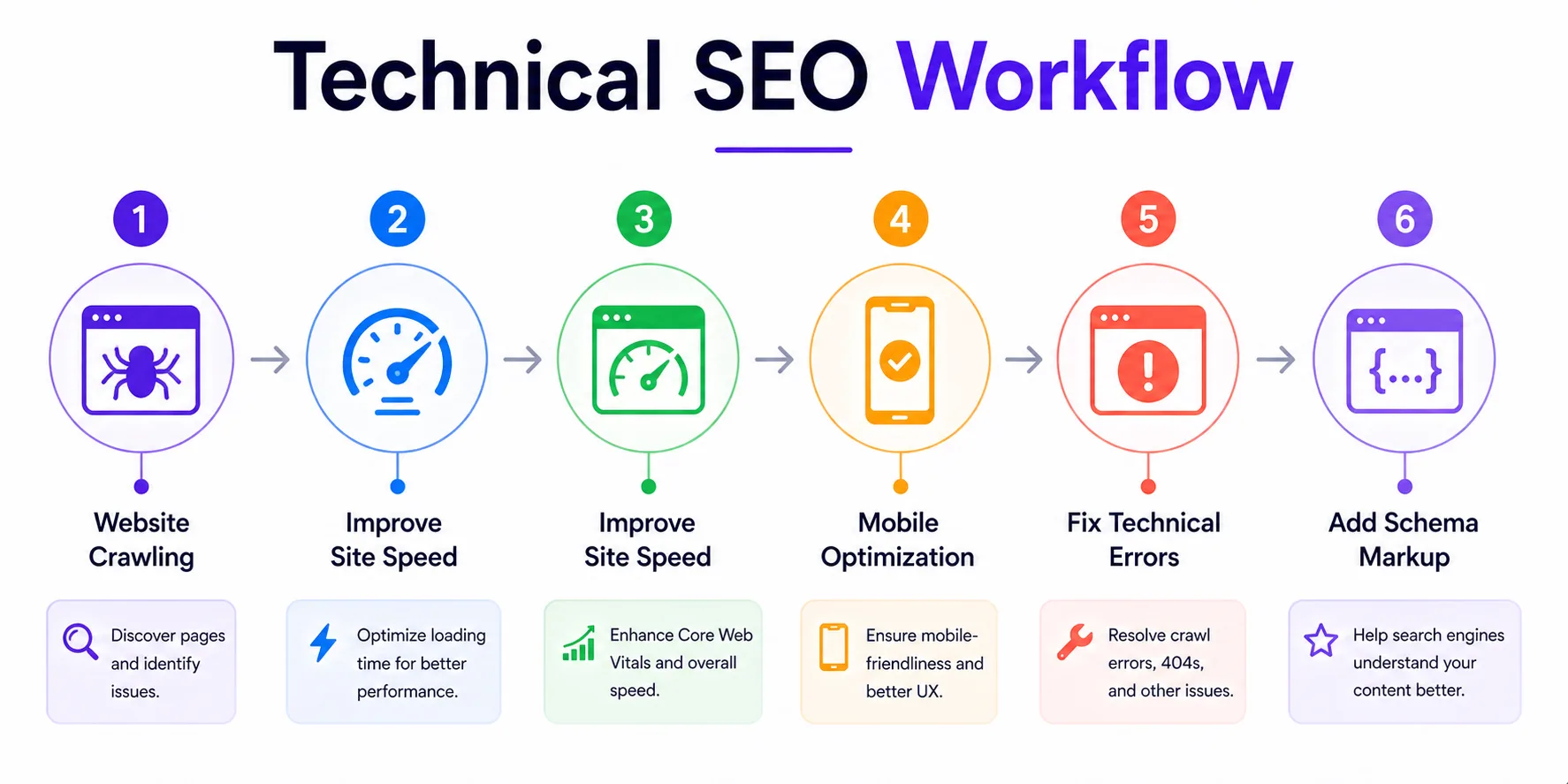
Technical SEO focuses on improving the technical foundation of a website so that search engines can easily crawl, index, and understand its content. Even high-quality content may struggle to rank if technical issues prevent search engines from accessing the site properly.
A structured technical SEO workflow helps identify and fix problems that can affect website performance and search visibility.
Website Crawling
The first step in technical SEO is crawling the website to analyze its structure and identify technical issues. Crawling tools scan your website in a similar way that search engine bots do.
These tools help detect issues such as broken links, missing metadata, duplicate pages, and indexing problems.
Common tools used for website crawling include:
- Screaming Frog
- Google Search Console
These tools provide valuable insights into how search engines view your website.
Improve Site Speed
Website speed is an important ranking factor and also affects user experience. Faster websites keep users engaged and reduce bounce rates.
One important concept related to site speed is Core Web Vitals, which are performance metrics used by Google to evaluate user experience.
Core Web Vitals mainly measure:
- Loading speed (Largest Contentful Paint – LCP)
- Interactivity (First Input Delay – FID)
- Visual stability (Cumulative Layout Shift – CLS)
Optimizing images, reducing unnecessary scripts, and using efficient hosting can significantly improve site speed.
Mobile Optimization
Google uses mobile-first indexing, meaning it primarily evaluates the mobile version of a website for ranking and indexing.
Because of this, websites must work smoothly on smartphones and tablets. Partnering with professionals for web design in Auckland can help ensure these requirements are properly implemented from the ground up.Teams can also use Rocket’s solve feature to research mobile user needs and turn the findings into a clear optimization plan.
- Responsive website design
- Fast loading speed on mobile devices
- Easy navigation and readable content
A mobile-friendly website improves both SEO performance and overall user experience.
Fix Technical Errors
Technical errors can prevent search engines from properly crawling and indexing your pages. Regular audits help identify and fix these issues.
Common technical SEO issues include:
- Broken links
- Duplicate pages
- Redirect errors
- Missing meta tags
Fixing these problems improves site health and helps search engines understand the website more effectively.
Add Schema Markup
Schema markup is a type of structured data that helps search engines better understand the content on a webpage.
By adding schema markup, websites can provide additional context about their content, such as articles, products, reviews, or FAQs.In some cases, structured data can also help pages appear with rich results in search engines, which may improve visibility and click-through rates.
On-Page SEO Workflow
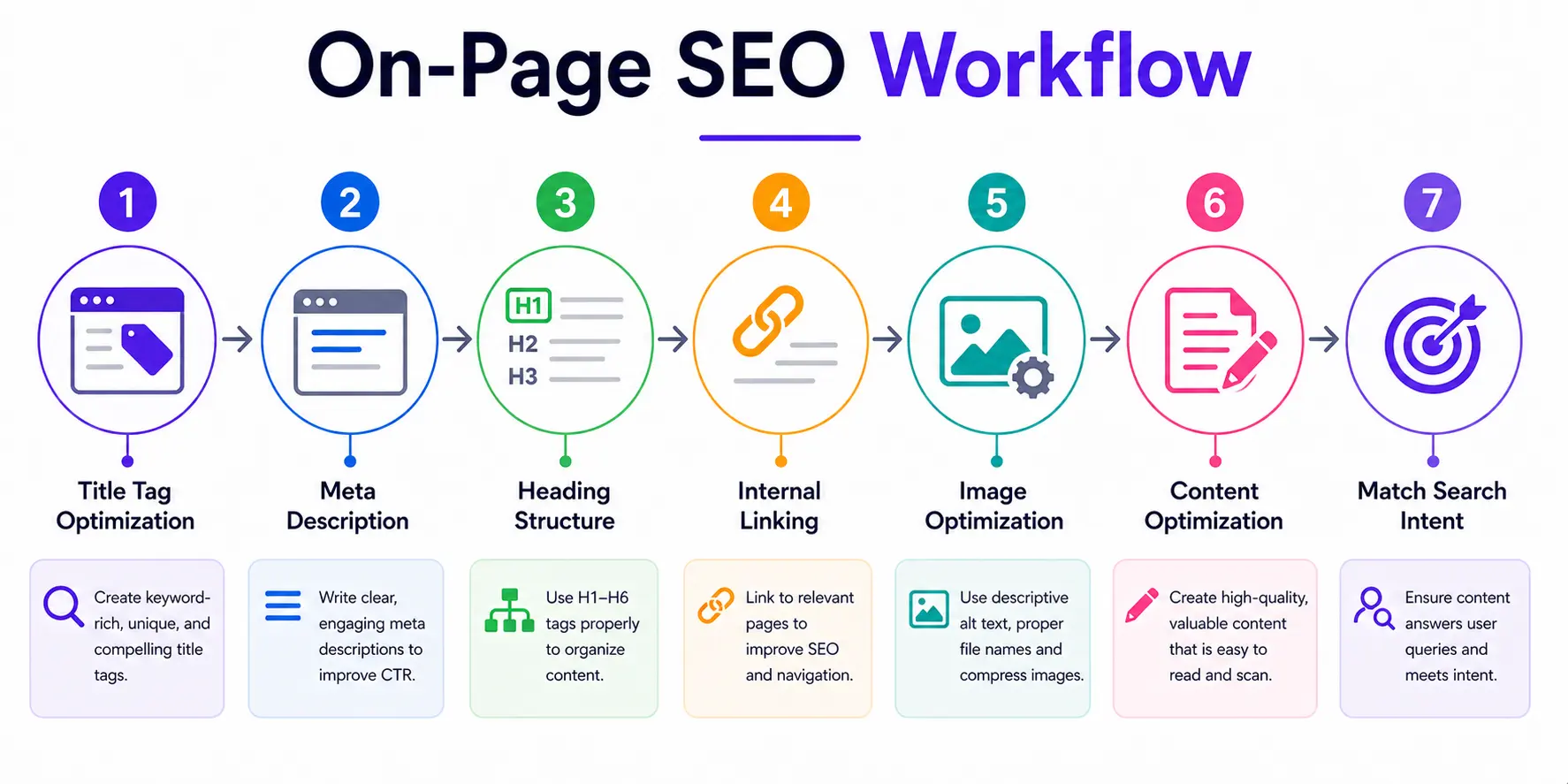
On-page SEO focuses on optimizing individual web pages so they can rank higher in search engines and provide a better experience for users. It involves improving elements on the page such as titles, headings, content, images, and internal links.
A well-structured on-page SEO workflow ensures that every page is properly optimized for both search engines and readers.
Title Tag Optimization
The title tag is one of the most important on-page SEO elements. It tells both search engines and users what the page is about.
A good title should include the main keyword naturally and clearly describe the content of the page.
Example:
Bad title:
SEO Guide
Good title:
Complete SEO Workflow Process (Step-by-Step Guide)
The optimized title is more descriptive and includes the target keyword.
Meta Description
A meta description is a short summary that appears in search engine results below the page title.
Although it is not a direct ranking factor, a well-written meta description can increase click-through rate (CTR) by encouraging users to click on your result.
The description should be clear, engaging, and relevant to the page content.
Heading Structure
Using headings correctly helps organize content and makes it easier for both users and search engines to understand the page.
A logical heading structure should look like this:
- H1 → Page title
- H2 → Main sections
- H3 → Subtopics
This structure improves content readability and helps search engines understand the hierarchy of information on the page.
Internal Linking
Internal linking means linking to other relevant pages within your website.
Benefits of internal linking include:
- Improves website navigation
- Distributes link authority across pages
- Helps search engines understand the site structure
It also encourages users to explore more content on your website.
Image Optimization
Images can enhance content, but using an image enhancer can help improve their quality while ensuring they are optimized for SEO and performance.
Important image optimization practices include:
- Adding alt text to describe the image
- Using compressed images to improve page speed
- Using descriptive file names instead of generic names
Proper image optimization helps search engines understand images and improves overall page loading performance.
Content Optimization Workflow
Content is the core of SEO because search engines rank pages that provide valuable and relevant information to users. A strong content optimization workflow ensures that your content is useful, well-structured, and aligned with what people are searching for.
Optimizing content helps improve search rankings, user engagement, and organic traffic.
Match Search Intent
One of the most important steps in content optimization is understanding search intent. Search intent refers to the reason behind a user’s search query what the user is actually looking for.
When your content matches the user’s intent, it is more likely to rank higher and satisfy the reader.
There are three main types of search intent:
- Informational Intent – The user is looking for information or answers to a question.
Example: “What is an SEO workflow?” - Transactional Intent – The user intends to take an action, such as buying a product or signing up for a service.
Example: Best SEO tools pricing - Navigational Intent – The user is trying to find a specific website or brand.
Example: “Ahrefs login”
By identifying the correct intent, you can create content that directly meets the needs of your audience and improves SEO performance
Create Content Briefs
Before writing or optimizing content, it is important to create a content brief. A content brief acts as a guideline that helps writers and SEO teams understand what the article should cover and how it should be structured.
A well-prepared content brief ensures that the content is focused, optimized for SEO, and aligned with the target search intent.
A typical SEO content brief should include:
- Target Keyword
The primary keyword the article aims to rank for. This keyword should appear naturally in the title, headings, and throughout the content. - Secondary Keywords
Related keywords or variations that support the main topic. Including these keywords helps the content rank for multiple search queries. - Competitor Analysis
Reviewing top-ranking pages to understand what type of content is already performing well. This helps identify content gaps and opportunities to create better or more comprehensive content. - Article Structure
A clear outline of the headings and sections that the article should include. A structured layout improves readability and ensures the content covers the topic thoroughly.
Write High-Quality Content
Creating high-quality content is essential for successful SEO. Search engines prioritize content that provides real value to users and answers their questions clearly.
When writing SEO content, the focus should always be on helping the reader, not just adding keywords.
Effective SEO content should be:
- Helpful – Provide useful information that solves the user’s problem or answers their query.
- Easy to Read – Use simple language, short paragraphs, and clear explanations so readers can understand the content easily.
- Well Structured – Organize the content with headings, subheadings, bullet points, and logical sections.
- Human-Focused – Write naturally for people first, while keeping search engine optimization in mind.
High-quality content improves user engagement, time on page, and search rankings.
Update Old Content
Updating existing content is an important part of the content optimization workflow. Over time, information can become outdated, and search rankings may decline if content is not refreshed regularly.
Refreshing old content helps keep it relevant, accurate, and competitive in search results.
Content updates may include:
- Adding new statistics to keep the information current and credible
- Improving headings to make the structure clearer and more SEO-friendly
- Including additional information to make the content more comprehensive and valuable for readers
Regular content updates can help improve rankings, increase organic traffic, and maintain content freshness.
Link Building Workflow
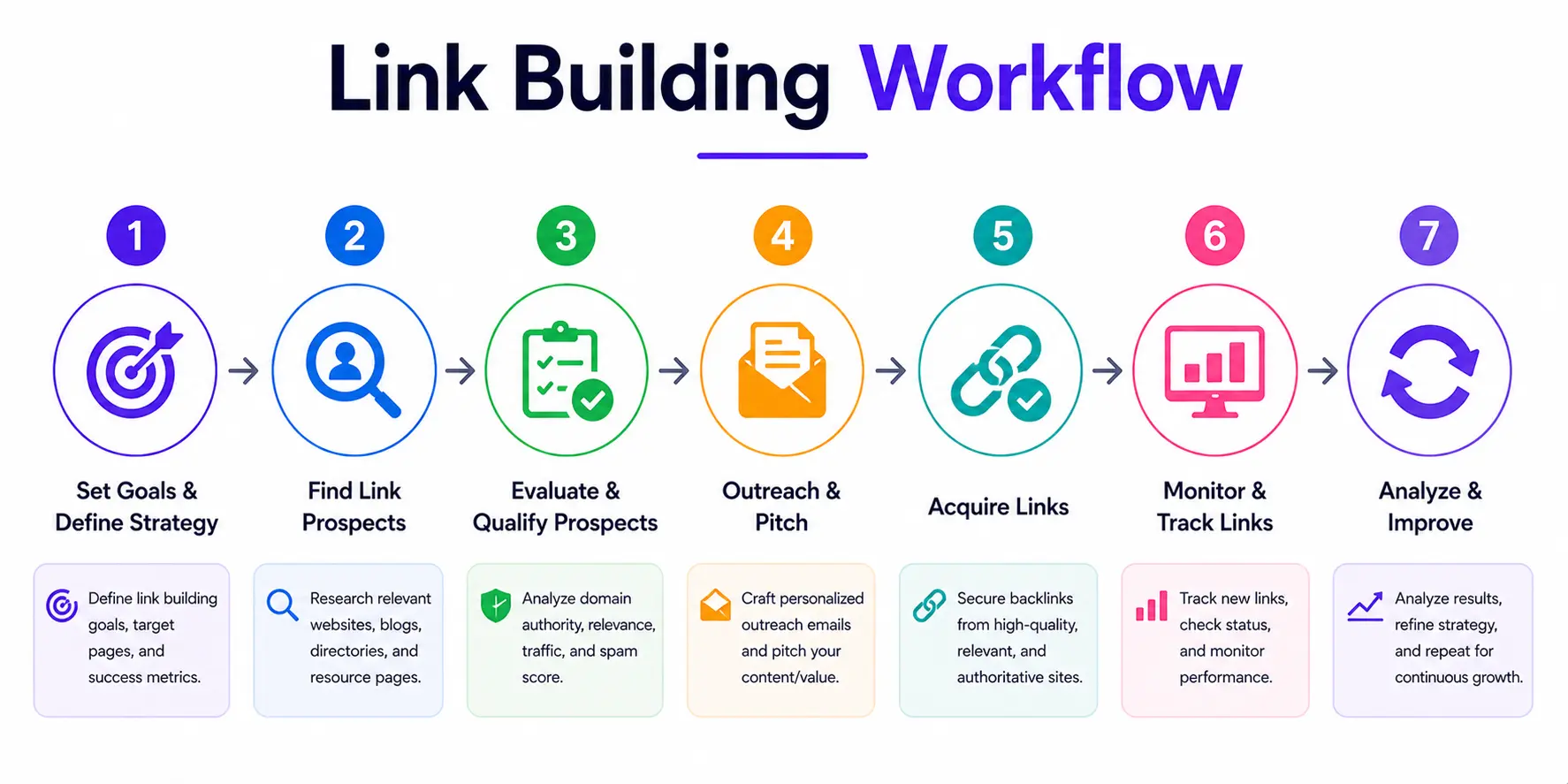
Link building is an important part of SEO because backlinks remain a major ranking factor for search engines. When other websites link to your content, it signals to search engines that your website is trustworthy and authoritative.
A proper link building workflow focuses on earning high-quality and relevant backlinks rather than using risky or spammy tactics.
Competitor Backlink Analysis
One of the best ways to find link opportunities is by analyzing competitor backlinks. This means checking which websites are linking to your competitors.
By studying competitor backlinks, you can discover websites that may also be willing to link to your content.
You can analyze competitor backlinks using SEO tools that show:
- Websites linking to your competitors
- The type of content earning backlinks
- High-authority domains in your niche
This analysis helps you identify potential link building opportunities and develop a more effective backlink strategy.
Outreach Campaigns
Outreach campaigns are an important part of the link building workflow. In this process, SEO professionals contact website owners, bloggers, or editors to request backlinks or collaboration opportunities.
The goal of outreach is to build relevant and high-quality backlinks that improve a website’s authority and search engine rankings. Successful outreach usually involves building genuine relationships with other websites in the same niche. Because those relationships take time to build, many companies outsource this stage to a specialist such as a SaaS Link Building Agency.
Common outreach methods include:
- Guest Posts – Writing and publishing an article on another website in exchange for a backlink to your site.
- Link Insertions – Adding your link naturally within an existing article on another website.
- Collaborations – Working with other website owners on content partnerships, mentions, or joint resources.
SEO Monitoring & Reporting
SEO does not end after publishing content or optimizing a website. To achieve long-term success, it is important to continuously monitor performance and analyze results.
SEO monitoring and reporting help businesses understand what is working, what needs improvement, and how their SEO efforts are contributing to overall growth.
Track Rankings
Tracking keyword rankings helps measure how well your website is performing in search engine results.
By monitoring keyword positions regularly, you can identify:
- Improvements in rankings
- Keywords that are losing positions
- Opportunities for further optimization
Rank tracking tools allow SEO professionals to evaluate the effectiveness of their optimization efforts.
Monitor Organic Traffic
Organic traffic refers to visitors who arrive at your website through search engines.
Using analytics tools, businesses can monitor how much traffic their SEO strategy is generating and whether it is increasing over time.
This data helps identify which pages attract the most visitors and where improvements are needed.
Track Conversions
SEO success is not only about traffic and rankings. It should also contribute to real business results.
Tracking conversions helps measure actions such as:
- Form submissions
- Product purchases
- Newsletter sign-ups
- Service inquiries
By analyzing conversions, businesses can determine how SEO efforts are impacting revenue and lead generation.
Perform Regular SEO Audits
Regular SEO audits help identify technical issues, content gaps, and optimization opportunities.
Many businesses perform monthly SEO audits to review website health and maintain strong performance in search results.
These audits ensure that the website remains optimized, competitive, and aligned with current SEO best practices.
Best SEO Workflow Tools
SEO workflows become much more efficient when the right tools are used. SEO involves many tasks such as keyword research, technical analysis, content optimization, and performance tracking. Using specialized tools helps automate these processes, improve accuracy, and save time.Professional SEO teams and agencies rely on different tools at each stage of the workflow to analyze data, identify opportunities, and measure results. Below are some of the most widely used SEO tools organized by category.
Keyword Research Tools
Keyword research tools help identify relevant keywords, search volume, and competition levels. They also provide keyword suggestions and insights into search trends.
Popular keyword research tools include:
- Ahrefs
- SEMrush
- Ubersuggest
These tools help SEO professionals find high-potential keywords and plan effective content strategies.
Technical SEO Tools
Technical SEO tools help analyze website structure and detect technical issues that may affect search engine crawling and indexing.
Common technical SEO tools include:
- Screaming Frog
- Sitebulb
These tools help identify problems such as broken links, duplicate pages, and crawl errors.
Content Optimization Tools
Content optimization tools help improve content quality and ensure that it is properly optimized for target keywords and search intent.
Popular content optimization tools include:
- Surfer SEO
- Clearscope
These tools provide suggestions for keyword usage, content structure, and topical coverage.
Analytics Tools
Analytics tools help track SEO performance, traffic growth, and user behavior.
Important analytics tools include:
- Google Analytics
- Google Search Console
These tools allow businesses to monitor organic traffic, keyword performance, and website health.
Frequently Asked Questions (FAQ)
Q: What is an SEO workflow?
A: SEO workflow is a structured process used to manage SEO tasks from research to monitoring.
Q: Why is an SEO workflow important?
A: It helps businesses organize SEO activities and improve search rankings efficiently.
Q: What are the steps in an SEO workflow?
A: Planning, keyword research, technical SEO, on‑page optimization, content creation, link building, and monitoring.
Q: What tools help manage SEO workflows?
A: Popular tools include Ahrefs, SEMrush, Screaming Frog, Surfer SEO, and Google Analytics.
Conclusion
SEO success does not come from random tactics or isolated efforts. It requires a clear and structured workflow that guides every stage of the optimization process. From keyword research and technical SEO to content optimization, link building, and performance tracking, each step plays an important role in improving search visibility.
By following a well-defined SEO workflow process, businesses can stay organized, maintain consistency, and focus on the activities that deliver the best results. Over time, this structured approach helps increase organic traffic, improve search rankings, and build sustainable growth in search engines.