Finding a good website to publish on takes longer than writing the article. You hunt for sites, check their traffic, dig up an editor’s email, negotiate, and then wait. A guest post and backlink marketplace tries to cut that work down by putting publishers, prices and metrics in one searchable place.
The catch is that a big catalog does not mean good placements. Some marketplaces list real publications with real readers. Others list sites that exist mainly to sell links. This guide shows you how to tell the difference, what the platforms on the shortlist offer, what a placement really costs, and where the Google rules draw the line.
Disclosure: If you are reading this on a marketplace’s own website, treat the platform recommendations with the same caution you would give any vendor’s comparison. The vetting checklist below works on every platform, including the one that published this page.
Best Guest Post and Backlink Marketplaces
1. LinkColab
LinkColab is a guest post and backlink marketplace relevant to buyers who want to explore publisher opportunities and compare potential placements. For SEO professionals, agencies, and link builders, a marketplace can simplify the process of discovering websites without requiring every prospect to be found through manual outreach.
When evaluating LinkColab, focus on the information available before you place an order. Check whether you can review individual website details, understand the pricing, and determine whether a publisher is relevant to your target niche. You should also investigate the platform’s ordering process, payment terms, and policies for placements that are delayed or removed.
Start by reviewing two or three potential listings rather than committing a large budget immediately. Compare their organic traffic estimates, content quality, audience relevance, and outbound link patterns using independent research where possible. This gives you a clearer idea of how well the available inventory matches your requirements.
Best approach: Treat publisher transparency, placement quality, and clear terms as more important than the number of websites listed.
2. LinkPublishers
LinkPublishers describes itself as an AI-powered guest post and link-building marketplace. Its positioning may appeal to agencies and SEO professionals who manage multiple campaigns and want a more organized way to discover publishers and arrange placements.
For agency teams, the practical value of a platform depends on how effectively it supports publisher discovery, campaign execution, and quality control. Before choosing LinkPublishers, investigate the available filters, the publisher information shown before ordering, and whether the platform supports the workflow your team needs.
Pay particular attention to the metrics displayed for individual websites. Traffic estimates, authority scores, and backlink information can vary between SEO tools, so compare the available data with independent sources such as Ahrefs or Semrush. Differences do not automatically indicate inaccurate reporting, but substantial discrepancies are worth investigating.
Also review the ordering process and any conditions associated with revisions, publication timelines, and link replacement. If you manage campaigns for multiple clients, confirm whether the platform offers the reporting and order-management features you require.
Best approach: Evaluate the platform based on the quality of its publisher information and its usefulness for your actual workflow, rather than relying on the AI-powered label alone.
3. Collaborator
Collaborator provides a marketplace where buyers can explore publisher opportunities and use available filters to narrow their search. This model can be useful when you want to compare multiple websites before deciding where to invest your link-building budget.
The main advantage of a searchable catalog is that it can make publisher discovery more systematic. Instead of evaluating websites individually from scratch, you can begin with a shortlist based on available information, such as topic, location, traffic indicators, or other listing details.
However, a large catalog does not automatically mean that every website is suitable for your campaign. A publisher may have an attractive authority score but cover unrelated subjects, receive traffic from the wrong countries, or publish content that does not match your audience.
Look beyond the headline price as well. Check whether additional platform charges apply, what the placement includes, and whether content creation is part of the order. Before making a final decision, review the publisher’s recent articles and verify important metrics independently.
Best approach: Use the available filters to build a shortlist, then manually evaluate the strongest candidates for relevance, traffic quality, and editorial standards.
4. WhitePress
WhitePress operates in the content marketing and publisher-placement space, with an international focus that can be useful for campaigns targeting multiple countries and languages. For businesses expanding into new markets, access to publishers in different regions can help support localized content and audience development.
International campaigns require more than selecting a website with the correct language. A publication may accept content in your target language without attracting a meaningful audience in the country you want to reach. This distinction matters when your objective is regional visibility, referral traffic, or reaching potential customers in a particular market.
Before ordering, investigate the publisher’s audience geography, editorial quality, and relevance to your target industry. Review whether the available content options support your language requirements and whether the publisher has clear standards for sponsored or contributed articles.
You should also compare the complete cost of a placement, including writing, translation, editing, or other services where applicable. These costs can affect the budget of a multilingual campaign, especially when you are purchasing placements across several markets.
Best approach: Prioritize genuine local audience relevance and editorial fit over simply finding websites that publish in your preferred language.
5. Adsy
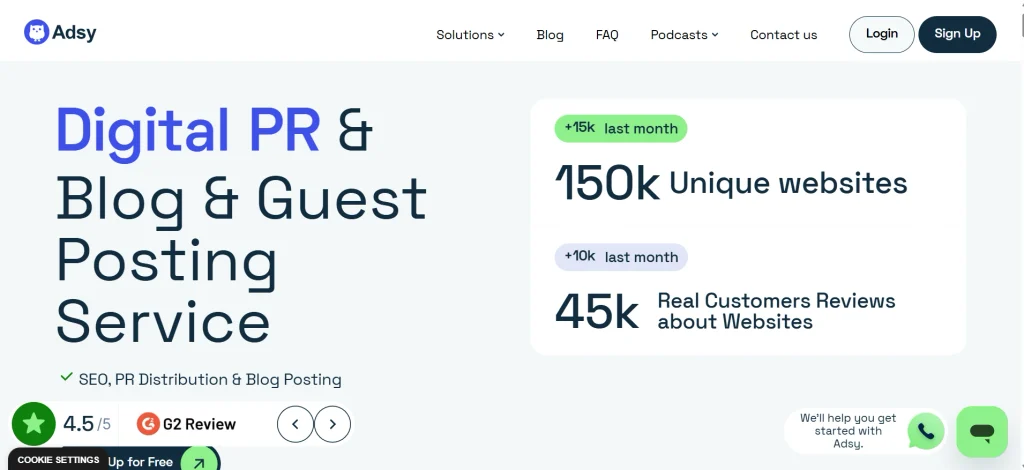
Adsy offers a searchable website catalog and content-related ordering options. This type of service can be useful for marketers who want to arrange placements without managing every part of the writing and publication process themselves.
For small businesses and SEO teams with limited writing resources, the availability of content services may reduce the amount of coordination required. However, the value of that convenience depends on the quality of the content, the clarity of the ordering requirements, and the amount of control you retain over the finished article.
Before placing an order, read the content guidelines carefully. Check whether you can specify the topic, target audience, destination URL, and preferred anchor text, and clarify how editorial revisions are handled. Find out whether the listed price includes content creation or whether additional services cost extra.
It is also worth reviewing examples of recently published articles from potential publishers. Look for natural writing, useful information, appropriate topical coverage, and a consistent editorial standard. A placement should make sense for the publication’s audience rather than existing solely to accommodate a backlink.
Best approach: Compare the convenience of the content workflow with the quality standards, revision policies, and total cost of each placement.
6. PRNEWS.IO
PRNEWS.IO focuses on sponsored content and press-style placements, making it relevant to businesses seeking media exposure, brand mentions, and opportunities to communicate with established audiences.
These placements can differ from traditional guest posts. A guest post may involve contributing an article to a niche publication, while a sponsored media placement typically involves publishing paid content under the publication’s commercial content policies. The distinction matters because the intended audience, editorial process, pricing, and link arrangements may be different.
Before ordering, consider whether the publication reaches the audience you want to influence. Review its subject coverage, geographic reach, content standards, and the nature of its existing sponsored articles. A well-matched media placement may support brand awareness or referral traffic even when it is not designed primarily around a backlink.
Pay particular attention to sponsorship disclosure and link attributes. Paid placements should be handled in accordance with applicable policies, including Google’s guidance on qualifying outbound links. Do not assume that every sponsored article provides a link with the same attributes or that a paid media mention guarantees an SEO benefit.
Best approach: Consider PRNEWS.IO when media exposure and audience reach are important campaign goals, and assess backlink considerations separately.
7. Linkhouse
Linkhouse is a link-building platform that can be considered by SEO professionals and agencies looking for publisher opportunities and ways to manage multiple placements.
For teams running several campaigns, operational details become increasingly important. You may need to coordinate article topics, destination URLs, publication dates, budgets, and reporting across multiple orders. A platform that makes these processes easier can help reduce administrative work, provided its actual features match your requirements.
Before choosing Linkhouse, investigate the types of placements available, the information provided about individual publishers, and how the ordering process works. Confirm whether you can review the publishing website before committing and whether the available information is sufficient for your quality-assurance process.
Ask how the platform handles publication delays, removed articles, and missing links. If you plan to manage a large number of placements, clear reporting and a reliable process for resolving issues are particularly valuable.
Best approach: Evaluate the platform’s ability to support repeatable campaign management without compromising your standards for publisher relevance and editorial quality.
8. Getfluence
Getfluence focuses on sponsored content opportunities involving media websites and can be relevant to brands seeking exposure through established publications.
This approach may be particularly useful when your campaign aims to reach a specific audience, strengthen brand visibility, or secure coverage in publications relevant to your industry. However, media placements can involve different editorial requirements and pricing structures from those found in general guest post marketplaces.
Before ordering, review the publication’s audience, content standards, and relevance to your brand. Determine whether the proposed article is suitable for the publication and whether the expected audience aligns with your campaign objectives.
You should also understand the terms governing paid content and links. Sponsored content may require explicit disclosure and appropriate link attributes. A placement should not be evaluated solely on whether it includes a backlink; its audience, editorial context, and potential business value also matter.
Best approach: Consider sponsored media placements when audience reach and brand visibility are important, and verify the publication terms before committing your budget.
9. Serpzilla
Serpzilla is associated with link-building products that include rental-style arrangements. Understanding the difference between rented and permanent placements is essential before choosing this type of service.
With a rental arrangement, the availability of a link may depend on ongoing payments or the terms of the placement. If payments stop, the link may be removed. A permanent-placement arrangement has different terms, although the word permanent should never be interpreted as a guarantee that a link will remain online indefinitely.
Before ordering, establish exactly what you are purchasing. Check the billing frequency, cancellation process, link-retention conditions, and what happens if a publisher removes the placement. Calculate the potential long-term cost rather than comparing only the initial payment.
Also consider the SEO implications of the placement model. Links purchased primarily to manipulate search rankings can create compliance risks regardless of whether they are rented or permanent. Review the publisher’s quality and the platform’s terms before proceeding.
Best approach: Understand the payment model and the consequences of ending the arrangement before evaluating whether a rental-based product suits your needs.
10. Loganix
Loganix offers managed link-building and SEO services rather than relying exclusively on a self-service marketplace model. This can appeal to businesses that prefer to delegate prospecting, coordination, or other parts of the campaign to an external provider.
A managed service may reduce the internal workload associated with identifying publishers, organizing content, and coordinating placements. However, the amount of work handled by the provider depends on the specific service package and agreement.
Before engaging Loganix, clarify the scope of work. Ask how publishers are selected, what information is shared before placements are approved, whether content creation is included, and what reporting you will receive. If publisher selection is important to your strategy, establish whether you can approve or reject proposed websites before an order proceeds.
You should also understand how the provider handles publication issues and whether any replacement terms apply. Evaluate the service based on its deliverables, communication, transparency, and suitability for your campaign rather than assuming that a managed approach automatically produces better outcomes.
Best approach: Consider a managed service when reducing operational workload is a priority, but confirm the provider’s responsibilities and your approval rights before signing an agreement.
What Is a Guest Post and Backlink Marketplace?
A guest post and backlink marketplace is an online platform where buyers browse websites that sell content placements and links. Buyers compare publishers, check site metrics and prices, then order a placement. Services, vetting standards and fees differ from one marketplace to the next.
In plain terms, it works like a catalog. The publisher lists a site and a price. The buyer picks a site, supplies an article or orders one, and the platform handles payment and delivery.
How a Guest Post Marketplace Works
Three parties are involved. Publishers own the websites. Buyers (advertisers) want a link or a mention. The marketplace sits between them, holds the payment, and usually sets the rules for delivery.
A typical order runs like this: you filter the catalog, pick a site, submit your article or request one, the publisher reviews it, and the post goes live. Some platforms also verify that the link is in place before they release payment to the publisher.
What Is a Backlink Marketplace?
The two terms overlap, but “backlink marketplace” is the wider one. It can include new guest posts, link insertions into articles that already exist (often called niche edits), and sponsored content on media sites. A backlink is simply a link from another website to yours.
So a guest post is one type of placement, and a backlink marketplace may sell several types. Check which ones a platform offers before you compare prices.
Guest Post Marketplace vs. Link-Building Agency vs. Direct Outreach
These three options solve the same problem in different ways. The table shows the general pattern. Individual providers vary, so treat it as a starting point.
| Factor | Marketplace | Managed agency | Direct outreach |
| Who picks the sites | Usually you | Usually the agency | You |
| Pricing | Per listing | Per project or retainer | Negotiated per site |
| Your control | High | Depends on the contract | High |
| Your time | Low to medium | Low | High |
| Content | Varies by platform | Often included | You manage it |
| Best for | Buyers who want to compare listed sites | Teams who want hands-off delivery | Teams with outreach skills and time |
Who Should Use a Guest Post Marketplace?
Freelancers and small agencies get the most from the speed. In-house teams use them to fill gaps when outreach stalls. Link resellers use them to source inventory for clients, and small businesses use them when they have no one to send outreach emails.
If you have a strong story, a data study, or a product journalists already like, outreach and digital PR will often beat a marketplace. If you need a steady stream of relevant placements and have a budget, a marketplace makes sense.
Best Guest Post and Backlink Marketplaces to Compare
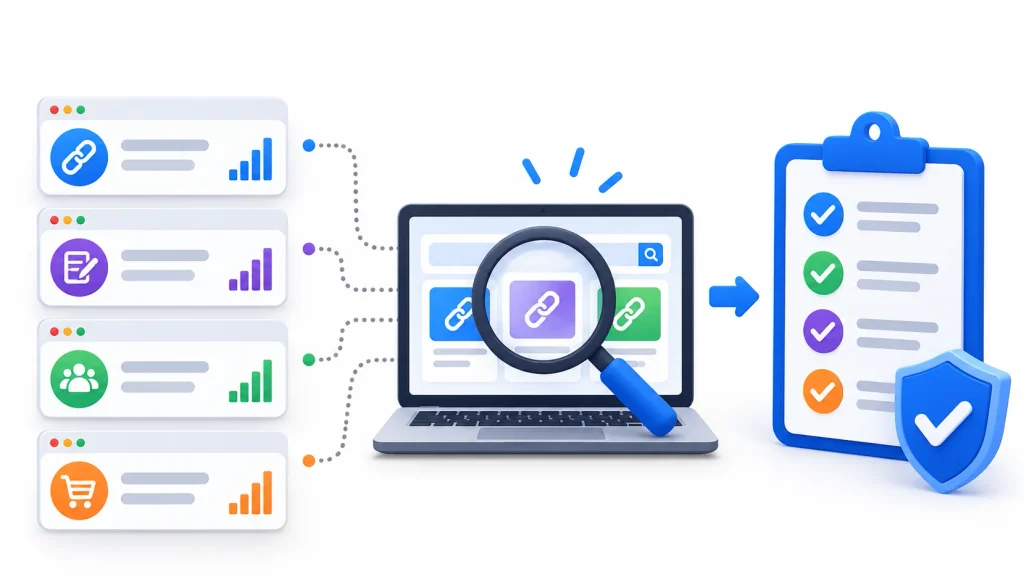
Here is a shortlist of platforms worth researching. It is a starting list, not a ranking. I describe each one the way it presents itself publicly, and the last column tells you what to confirm before you spend money.
| Platform | How it positions itself | Best fit | Confirm before ordering |
| LinkColab | Guest post and backlink marketplace | Buyers who want a catalog to filter | Current inventory, fees, publisher checks |
| LinkPublishers | Marketplace and link-building platform that calls itself AI-powered | Agencies buying at volume | Whether metrics shown match your own checks |
| Collaborator | Large catalog of sites with filters | Buyers who like to browse and compare | Fees on top of listed prices |
| WhitePress | Content marketing and link platform with international reach | Multi-country and multi-language campaigns | Local publisher quality in your market |
| Adsy | Site catalog with ordering and content options | Buyers working to a mid-range budget | Content rules and revision limits |
| PRNEWS.IO | Sponsored content and press placements | Brands wanting media-style mentions | Link attribute policy on each placement |
| Linkhouse | Link-building platform | Teams ordering several placements | Placement types and reporting |
| Getfluence | Sponsored content on media sites | Buyers targeting larger publications | Whether the link is marked as sponsored |
| Serpzilla | Known for link products including rentals | Buyers who understand the trade-offs | Permanent vs. rented links |
| Loganix | Managed link-building services | Teams who want someone else to run it | Scope, reporting, and what is outsourced |
How I compared them: I looked at how each platform describes itself, what kind of site data it shows before you buy, how it handles payment and problems, and who it seems built for. I did not run test orders on these platforms for this article, so I am not rating them or claiming results. Where a feature matters to your decision, verify it on the platform’s current pages.
How to Choose the Best Guest Post Marketplace for Your Needs
Start with your goal, not the platform. A brand wanting readers needs a different site than someone chasing search visibility. Write down what “success” means before you open a catalog.
1. Choose Based on Your Campaign Goal
If you want referral traffic, pick sites whose readers match your customers. If you want brand mentions, a smaller well-known publication in your niche can beat a bigger generic one. If you want search visibility, accept that a single link rarely moves rankings alone.
2. Look for Publisher Transparency
You should be able to see which website you are buying on before you pay. If a marketplace hides site names until after checkout, you cannot run your own checks. That alone is a reason to walk away.
3. Check Niche and Audience Relevance
Imagine you sell project management software. A post on a respected small-business operations blog makes sense. The same post on a general lifestyle site with a thousand unrelated topics does not, even if its authority score is higher.
4. Review Traffic and Its Trend
Look at organic traffic over the past year or two, not just today’s number. A steady line is a good sign. A sharp drop can mean the site lost rankings, and a sudden spike with no clear cause deserves a closer look.
5. Read the Backlink and Outbound Link Patterns
Open a few recent articles and look at who they link to. A site that links out to casino pages, loan offers and supplements in the same week is selling links to anyone. That is a poor home for your brand.
6. Compare Fees and Policies
Ask what is included. Writing, edits, platform commission, and payment fees can all change the final bill. Also read the policy on removal: how long the post must stay up and what you get if it comes down.
7. Check Reporting
A good platform gives you the live URL, the date, and some way to confirm the link is still there. If you have to chase those details, expect the same when something goes wrong.
How Much Does a Guest Post Backlink Cost?
There is no single market price. Cost depends on the publisher, the niche, the audience, whether you supply the article, and what the platform adds on top. Beware of any article that gives one “average price” without saying where the number comes from.
1. What Drives the Price
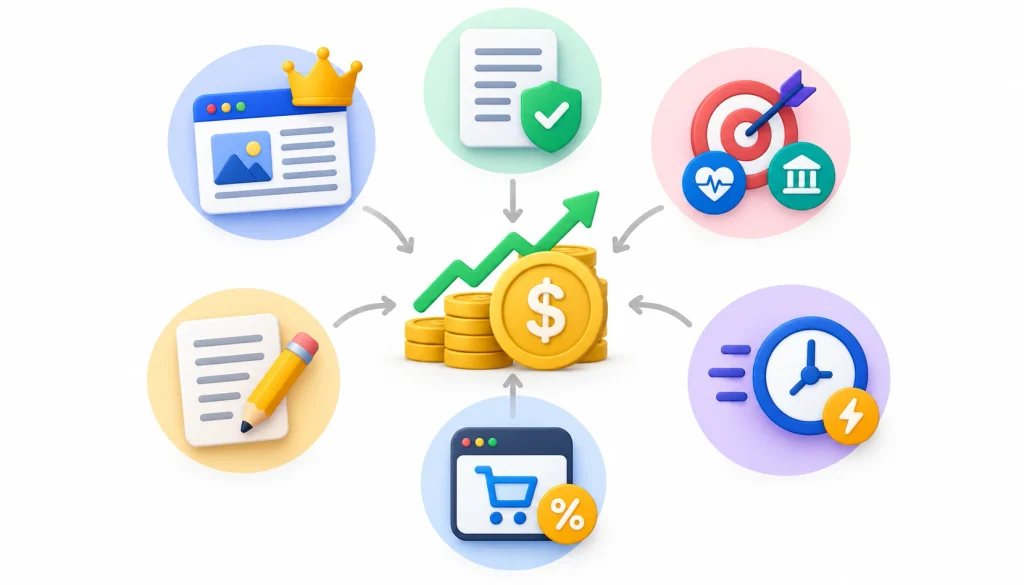
A publisher’s reputation and readership push the price up. So do strict editorial standards and tough niches such as finance or health. Content writing, rush delivery and platform fees add to the total.
2. Marketplace Pricing vs. Agency Pricing
On a marketplace you usually pay for a listing: one site, one post. An agency usually charges for a result or a monthly service, and that includes the people who find the sites, write the content and chase the publishers. You pay more per link on average at an agency, and you save a lot of your own time.
3. Hidden Costs
The sticker price on a listing is rarely the final number. Watch for these extras:
- Writing fees if you do not supply the article
- A platform commission or service charge
- Payment processing fees
- Charges for revisions
- Ongoing monitoring if you track links with paid tools
4. A Worked Example (Hypothetical)
Say an agency buys 10 placements listed at $100 each. That is $1,000 before extras. Now assume the platform adds a 15% service fee ($150) and the agency pays $40 per article for writing ($400). The total is $1,550, or $155 per link.
These numbers are invented to show the math. Your platform’s fees and your writing costs will differ, so run the same sum with real quotes. Also compare cost against quality: a $155 link on a relevant site with real readers can be better value than a $60 link on a site nobody reads.
How to Evaluate a Website Before Buying a Guest Post
This is the part that saves money. A marketplace can show you metrics, but the final judgment is yours.
Step by Step
- Confirm the site is real. It should have a clear name, an About page, and a history of regular articles.
- Check relevance. Does it cover topics your customers care about?
- Check organic traffic and trends. Use Ahrefs, Semrush or a similar tool. Estimates differ between tools, so use them as a guide.
- Check where the traffic comes from. A U.S. software brand gains little from a site whose readers are all elsewhere.
- Read recent posts. Look for original writing, a clear topic focus, and a normal publishing pace.
- Inspect outbound links. Look for clusters of unrelated commercial links.
- Review the backlink profile. Sudden jumps in referring domains or odd anchor text patterns are warning signs.
- Read the terms. Confirm link placement, anchor text, link attributes, and removal policy in writing. Learn more about developing a natural anchor text strategy to understand how anchor text influences link relevance and why overusing exact-match keywords can create risks.
- Look for a sponsored label. Some publishers add one by default. Know the setting before you pay.
- Compare with one alternative. Evaluate at least two candidate sites before you choose.
Why Authority Scores Are Not Enough
Scores such as Domain Authority (from Moz) and Domain Rating (from Ahrefs) are third-party estimates. Google does not use them as ranking scores. They help you spot patterns, but they can be inflated and they say nothing about whether a site has real readers.
Before committing your budget, read this guide to buying text links safely to understand how to assess link quality, evaluate publishers, and identify potential risks.
A Hypothetical Comparison
| Factor | Publisher A | Publisher B |
| Authority score | Higher | Lower |
| Organic traffic | Falling | Stable |
| Topic match | Weak | Strong |
| Recent content | Mixed quality | Consistent |
| Audience location | Poor fit | Good fit |
| Outbound links | Unrelated commercial links | Mostly relevant |
| My call | Investigate further | Stronger candidate |
This is an invented example. It shows why the site with the higher score is not automatically the better buy.
Guest Post Marketplaces vs. Other Link-Building Methods
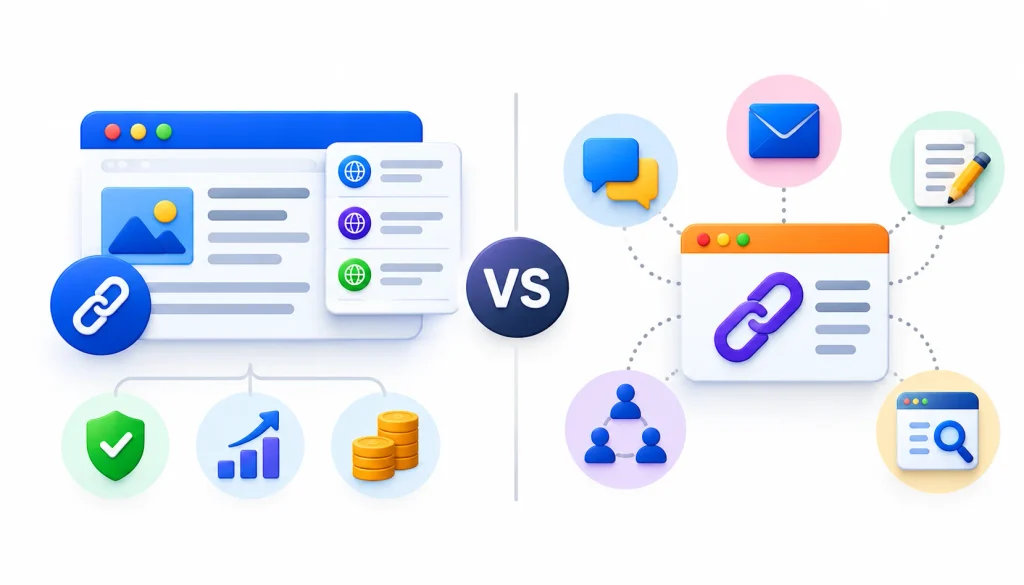
A marketplace is one tool. Sometimes another tool fits better. If you want to explore ethical alternatives to paid placements, review these white hat SEO link-building strategies to discover ways to earn relevant links through genuine outreach and valuable content.
- Direct blogger outreach. You get more control and often better relationships, but it takes time and many emails to get a reply.
- Niche edits. You add a link to an article that already exists. It is faster than a new post, but the page must be relevant and the context must make sense.
- Managed agencies. They handle the work. You pay for their time and accept less direct control.
- Digital PR. You earn coverage by giving journalists something worth reporting, such as original data. Results are less predictable, and the links often come from stronger publications.
When to Skip a Marketplace
Skip it when the platform hides site names, when the catalog is full of sites that all look the same, or when the terms are vague about removal and refunds. Also skip it when your goal is to earn press coverage, because paid placements do not build that kind of credibility.
If you want to see how working SEOs talk about this, the SEO community on Reddit is full of threads on whether paid guest posts are worth the money. Read them with the same skepticism you would apply to any anonymous advice, and note that opinions are mixed.
Are Guest Post and Backlink Marketplaces Safe for SEO?
It depends on how you use them. Buying a post is not illegal, but Google has clear rules about links that exist to manipulate rankings.
1. What Google Says About Paid Links
Google’s spam policies treat buying or selling links that pass ranking credit as link spam. They also list large-scale guest posting campaigns with keyword-rich anchor text as an example of link spam. Google’s goal is to rank pages on merit, so links bought to inflate rankings run against that goal.
2. When to Use rel=”sponsored” or rel=”nofollow”
Google asks that paid links be marked. Its guidance on qualifying outbound links recommends rel=”sponsored” for paid placements, and nofollow is also accepted when you cannot tell the exact relationship. The nofollow attribute tells search engines not to pass ranking credit through that link.
A sponsored link can still send you readers and brand exposure. That is a legitimate reason to buy a placement, and it is the safest way to think about the purchase.
3. No Marketplace Can Promise Rankings
Rankings depend on hundreds of factors, many outside anyone’s control. A platform can guarantee that a post goes live. It cannot guarantee that your page will climb. Be wary of anyone who promises otherwise.
4. Ways to Lower Your Risk
- Buy on relevant sites with real readers
- Use natural, varied anchor text and avoid stuffing keywords
- Agree on the link attribute in writing
- Keep your plan to a pace that looks normal for your site
- Judge each placement on referral traffic and brand value, not rankings alone
How to Buy a Guest Post Through a Marketplace
Here is the process I follow, in order.
- Set a goal. Decide whether you want referral traffic, brand mentions or something else you can measure.
- Set a budget and filters. Choose your niche, country, minimum quality bar and price range.
- Shortlist two or three platforms. Compare inventory, transparency and fees.
- Vet each publisher. Run the checklist from the previous section.
- Agree on the details. Topic, target URL, anchor text, link attribute and delivery date should all be in writing.
- Review the live post. Check that the page loads, the link works and the content matches what you approved.
- Monitor. Record the link and check on it periodically.
How to Measure the Value of a Guest Post
A live link is the start of the measurement, not the end.
- Track link status. Log the publisher, the live URL, your target URL, the date and any notes.
- Watch referral traffic. In Google Analytics 4, look at sessions and conversions from the publisher’s domain.
- Watch search performance. In Google Search Console, review impressions and clicks for the page you linked to. Its links report is a useful sample, though it is not a complete backlink database.
- Compare against your goal. If you wanted readers and got none, the placement did not do its job.
- Be careful with credit. If rankings rise after a guest post, other changes may explain it just as well.
A simple tracking table keeps this tidy:
| Publisher | Live URL | Target URL | Date | Status | Referral sessions | Notes |
Which Guest Post Marketplace Should You Choose?
There is no universal winner. The best fit depends on who you are and what you are trying to do.
| If you are… | Prioritize… | Verify… |
| A freelancer | Ease of use and low minimums | Fees and publisher transparency |
| A small business | Audience fit and clear policies | Traffic, quality and total cost |
| An SEO agency | Bulk ordering and reporting | Client reporting and replacement terms |
| A link reseller | Reliable delivery and reseller terms | Wholesale pricing and white-label rules |
| An international brand | Language and country coverage | Where readers actually live |
| A brand seeking media mentions | Editorial standards | Sponsorship labeling and audience |
| A team short on SEO staff | Managed execution | Scope, fees and who is accountable |
Marketplace size matters less than how well the platform fits the way you work.
Frequently Asked Questions
What is a guest post marketplace?
It is an online platform where publishers list websites that accept sponsored or guest content, and buyers browse and order placements. The platform usually handles payment and delivery.
What is the difference between a guest post marketplace and a backlink marketplace?
A guest post marketplace sells new articles on publisher sites. A backlink marketplace is broader and can also sell link insertions in existing articles and sponsored placements.
Which guest post marketplace is best for SEO agencies?
There is no single answer. Agencies should look for bulk ordering, clear reporting, publisher transparency and a replacement policy, then test two or three platforms with small orders.
How much does a guest post backlink cost?
It varies widely with the site, niche, content needs and platform fees. Get actual quotes from listings, add any writing and service fees, and compare the total.
Are guest post marketplaces safe for SEO?
They carry risk when links are bought to manipulate rankings. Google’s spam policies cover paid links, so use relevant sites, mark paid links with rel=”sponsored” or nofollow, and do not rely on rankings as the reason to buy.
How can you tell if a publisher website is trustworthy?
Look for a real identity, relevant topics, steady organic traffic, original recent articles and sensible outbound links. Check these yourself instead of trusting the platform’s numbers alone.
Final Verdict
A good guest post and backlink marketplace helps you find relevant publishers, see what you are buying, understand the full cost and manage orders without losing track. It does not replace your own judgment.
Three habits will serve you better than any ranking list. Judge each publisher, not just the platform. Put relevance, real readers and transparency ahead of authority scores. And read the Google guidance on paid links before you place your first order.
Start with two or three platforms from the shortlist, run a small test order on each, and keep what works for your goals.