A great product video does more than showcase features. It creates a feeling around the product. The lighting, camera movement, environment, sound design, and storytelling all work together to make viewers understand why a product matters.
In traditional advertising, creating cinematic product videos often requires a complete production setup with directors, cinematographers, actors, locations, lighting equipment, and post-production teams. While this approach still plays an important role, AI-powered creative workflows are making high-quality commercial video production more accessible for brands, marketers, and creators.
Today, AI can support different stages of product video creation, from developing concepts and storyboards to generating scenes, refining visuals, and editing the final output. However, creating a professional-looking commercial still requires creative direction and an understanding of cinematic storytelling.
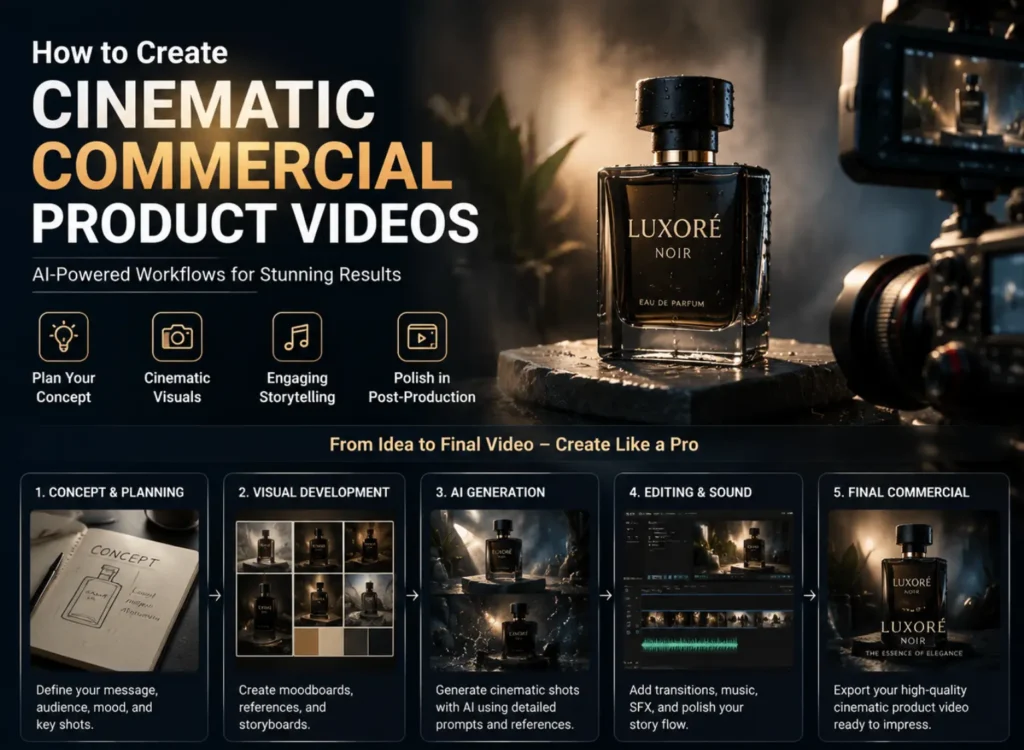
What Makes a Product Video Feel Cinematic?
A cinematic commercial is not simply a collection of product shots. It uses visual storytelling to create emotion and communicate value.
Several elements contribute to a cinematic product video:
Strong Visual Composition
Professional commercials carefully consider framing, camera angles, and movement. A close-up shot can highlight product details, while a wider shot can establish the environment and lifestyle connected to the product.
For example, a luxury watch commercial may focus on the texture of the material, reflections on the surface, and slow camera movements to create a premium feeling.
Intentional Lighting
Lighting can completely change how a product is perceived.
Soft lighting can make a product feel elegant and premium, while dramatic shadows can create a bold and powerful look. Commercial videos often use lighting to highlight important details and guide the viewer’s attention.
Storytelling Around the Product
The strongest product videos do not only explain what a product does. They show how it fits into a person’s life.
A skincare brand may focus on confidence and self-care. A technology brand may focus on innovation and productivity. The product becomes part of a larger story rather than the only subject.
The Importance of Planning Before Creating Product Videos
Many creators focus heavily on generation tools but overlook the planning stage. A cinematic commercial starts with a clear creative direction.
Before creating scenes, it helps to define:
- The target audience
- The product’s main message
- The emotional tone
- The visual style
- The key moments that need to be shown
A product video for a sports brand will require a different visual approach compared to a premium fragrance campaign.
Planning also helps maintain consistency across scenes, especially when creating AI-generated videos where every shot needs to feel like part of the same commercial.
Creating Cinematic Product Concepts With AI Workflows
AI has changed how creators approach commercial video production. Instead of starting with cameras and locations, many teams now begin with ideas, references, and creative direction.
AI workflows can help with:
- Developing commercial concepts
- Creating visual references
- Planning scenes
- Exploring different styles
- Generating early versions of shots
This allows creators to experiment with multiple ideas before investing in a full production process.
For more advanced projects, invideo Agent supports a complete creative workflow by helping transform ideas into structured video projects with scripting, scene planning, visual development, generation, editing, and post-production. This makes it useful for brands and creators who need to move from a product concept to a finished commercial more efficiently.
Building Better Product Video Prompts
The quality of AI-generated commercial videos depends heavily on how clearly the creative direction is described.
A strong product video prompt should include:
Product Details
Describe the product accurately:
- Shape and design
- Materials
- Colors
- Unique features
- Brand style
Environment
The setting influences how the product is perceived.
Examples:
- A luxury product on a marble surface
- A fitness product in an outdoor environment
- A technology product in a futuristic workspace
Camera Direction
Cinematic prompts often include details such as:
- Close-up shots
- Slow camera movements
- Tracking shots
- Macro details
- Wide establishing shots
Lighting and Mood
Adding visual direction helps create a stronger commercial style:
- Warm studio lighting
- Dramatic shadows
- Soft natural light
- Premium cinematic atmosphere
Instead of simply asking AI to create a product video, detailed prompts help establish the feeling and quality expected from professional advertising.
Maintaining Product Consistency Across Multiple Scenes
One challenge in AI-generated commercials is keeping the product identical throughout the video.
A product should maintain:
- Shape
- Color
- Branding elements
- Materials
- Size and proportions
A bottle, smartphone, vehicle, or fashion item that changes between shots can make the commercial feel unrealistic.
This is why reference images and consistent creative direction are important. By using the same product references across scenes, creators can maintain a more connected visual experience.
How AI Agents Improve Commercial Video Production
Creating a commercial involves managing many creative decisions at the same time. The product appearance, camera style, story structure, and visual direction all need to work together.
AI agents are helping simplify this process by supporting connected workflows rather than isolated generations.
With invideo Agent, creators can maintain project context while developing different parts of a commercial, helping keep elements such as visual style, scenes, and creative decisions aligned throughout production.
This approach is especially valuable for brands creating multiple product videos where consistency, speed, and creative control are important.
Using Cinematic Techniques to Make Products More Appealing
Even with AI tools, understanding traditional filmmaking techniques remains important.
Product Close-Ups
Close-up shots highlight important details such as textures, materials, buttons, packaging, or craftsmanship.
Slow Motion
Slow-motion visuals can make ordinary actions feel more dramatic and premium.
Examples:
- A beverage being poured
- A product opening
- Fabric moving in the wind
- Light reflecting on a surface
Camera Movement
Movement creates energy and keeps viewers engaged.
Common commercial movements include:
- Smooth tracking shots
- Rotating product shots
- Push-ins
- Cinematic pans
Lifestyle Scenes
Showing a product in use creates an emotional connection. Instead of only showing the object, lifestyle scenes help viewers imagine themselves using it.
The Role of Sound and Editing in Product Videos
Visual quality is only one part of a cinematic commercial. Editing and sound design strongly influence how viewers experience the video.
Important elements include:
Music
The right soundtrack establishes mood and brand personality.
Sound Effects
Small details such as product clicks, movement sounds, or environmental audio make videos feel more immersive.
Editing Rhythm
A premium commercial often uses carefully timed cuts, transitions, and pacing to maintain attention.
AI can support parts of the editing process, but creative decisions remain important for achieving the desired emotional impact.
Advanced AI Workflows for Professional Commercial Creation
As commercial video projects become more complex, creators need better ways to manage multiple scenes, references, and creative decisions.
Newer AI workflows are moving toward more collaborative systems that can understand larger projects. invideo Agent Two expands on this approach by supporting advanced creative workflows with project memory and specialized expert agents that can assist with areas such as cinematography, storyboarding, casting, and creating AI VFX.
For brands and creative teams producing campaigns with multiple videos, this type of workflow can help maintain consistency while allowing more room for experimentation.
Common Mistakes When Creating AI Product Videos
Focusing Only on the Product
A product video needs a story or emotional connection. Simply displaying a product from different angles may not create a memorable commercial.
Using Generic Prompts
Basic prompts often produce generic visuals. Adding creative direction, camera details, and lighting instructions leads to stronger results.
Ignoring Brand Identity
Every commercial should match the brand’s personality. A luxury brand, a gaming company, and a wellness brand require different visual approaches.
Creating Too Many Unrelated Shots
A cinematic commercial should feel like one connected story. Random scenes can make the final video feel inconsistent.
The Future of Cinematic Product Videos With AI
AI is changing how brands approach commercial video creation. It allows creators to explore concepts faster, test different visual directions, and produce professional-looking content with fewer production barriers.
However, the best results still come from combining AI capabilities with human creativity. Understanding storytelling, composition, lighting, and brand communication remains essential.
The future of product videos will not only be about generating visuals faster. It will be about creating smarter workflows where ideas, creative decisions, and production processes stay connected from the first concept to the final commercial.
With the right prompts, planning, and AI-powered workflows, brands can create cinematic product videos that capture attention and communicate their message effectively.
Frequently Asked Questions About Creating Cinematic Product Videos With AI
How can AI help create cinematic product videos?
AI can support multiple stages of product video production, including concept development, storyboarding, visual generation, editing, and post-production. It helps creators explore ideas faster while keeping the creative direction under control.
What makes a product video look cinematic?
Strong composition, intentional lighting, controlled camera movement, storytelling, sound design, and editing all contribute to a cinematic look. The product should also be presented within a visual story rather than shown through disconnected shots.
How do I write a good AI prompt for a product video?
A strong prompt should describe the product, environment, camera movement, lighting, mood, and desired visual style. Including specific details such as close-ups, tracking shots, dramatic shadows, or macro details can help produce more controlled results.
How do I keep a product consistent across AI-generated scenes?
Use consistent product references, descriptions, visual styles, and creative direction across scenes. Important details such as the product’s shape, color, branding, materials, and proportions should remain consistent.
Can AI create professional commercial product videos?
AI can help create high-quality commercial visuals and accelerate parts of the production process. However, professional results still depend on creative planning, storytelling, editing, brand direction, and human review.
What cinematic techniques work well for product videos?
Product close-ups, slow motion, smooth tracking shots, rotating product shots, push-ins, cinematic pans, lifestyle scenes, and carefully controlled lighting can make product videos feel more premium and engaging.
Is sound important in a cinematic product video?
Yes. Music, sound effects, environmental audio, and editing rhythm can significantly affect the emotional impact of a commercial. Strong visuals combined with appropriate sound can create a more immersive viewing experience.
Can AI agents help with commercial video production?
Yes. AI agents can support connected workflows involving planning, scripting, visual development, scene creation, editing, and post-production. This can help creators manage complex projects while maintaining consistency between different production stages.
Conclusion
Creating a cinematic product video with AI is about more than generating attractive visuals. A successful commercial combines strong storytelling, product consistency, intentional lighting, camera movement, sound design, and creative direction to create an emotional connection with the audience.
AI can make the production process faster and more accessible by helping with concepts, visual development, scene generation, editing, and post-production. However, human creativity remains essential for deciding what the commercial should communicate and how the product should be presented.
With thoughtful planning, detailed prompts, consistent references, and the right AI-powered workflow, brands and creators can produce cinematic product videos that look polished, communicate value, and capture attention across digital platforms.