
Keyword research is the process of finding what people search for on Google so you can create content that matches their needs. In 2026, SEO is not just about adding keywords it’s about understanding search intent and giving clear, helpful answers that users are looking for.
Many people only choose keywords, but they don’t analyze SERP results. Google already ranks the best content on the first page, so by studying these results, you can understand what type of content works, how it is structured, and what users expect.
you will learn how to do keyword research and analyze top SERP results step by step. This will help you create better content, rank higher on Google, and get more organic traffic.
What is Keyword Research?
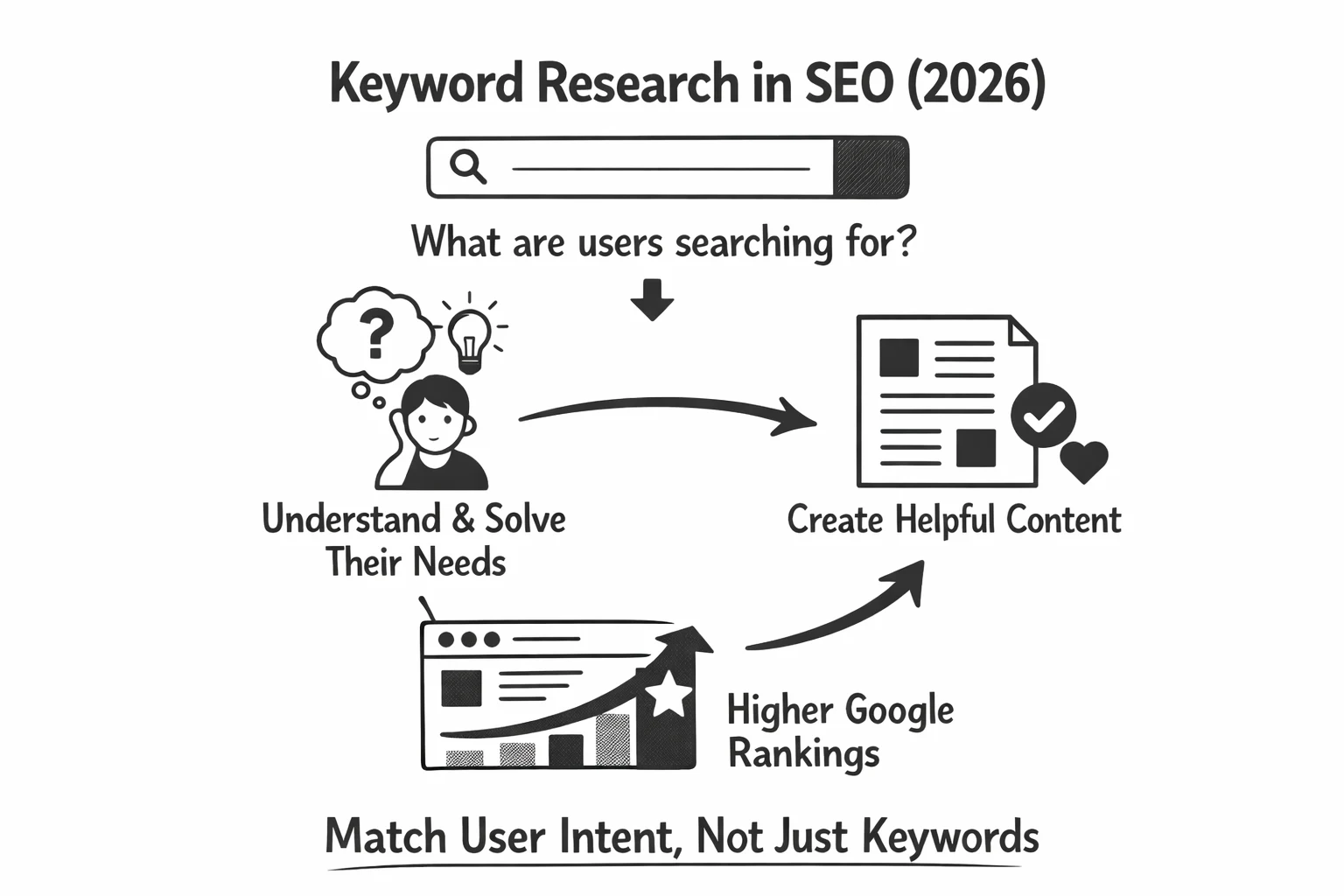
Keyword research is the process of finding the words and phrases people type into search engines like Google. It helps you understand what your audience is searching for so you can create content that matches their needs and answers their questions.
In SEO (2026), keyword research is not just about picking popular keywords. It’s about understanding what users really want and creating content that solves their problem clearly and quickly. When your content matches what people are looking for, Google is more likely to rank it higher.
Keywords vs Search Intent (Simple Difference)
Keywords are the exact words people search for, such as “best smartphones” or “learn SEO.”
Search intent is the reason behind those searches.
For example:
- “buy smartphone online” user wants to purchase (transactional intent)
- “what is SEO” user wants to learn (informational intent)
Types of Keywords
1. Short-Tail Keywords
Short-tail keywords are broad and general terms like “SEO” or “shoes.”
They have high search volume but also very high competition, which makes them harder to rank for.
2. Long-Tail Keywords
Long-tail keywords are more specific phrases like “best SEO tools for beginners” or “running shoes for flat feet.”
They have lower competition and are easier to rank, especially for new websites.
3. Transactional Keywords
Transactional keywords are used when users are ready to take action, like buying or signing up.
Examples include “buy laptop online” or “best hosting plans price.”
These keywords are important for conversions.
4. Informational Keywords
Informational keywords are used when users want to learn something.
Examples include “what is keyword research” or “how SEO works.”
These are great for blog posts and driving organic traffic.
Why Analyzing Top SERP Results is Critical
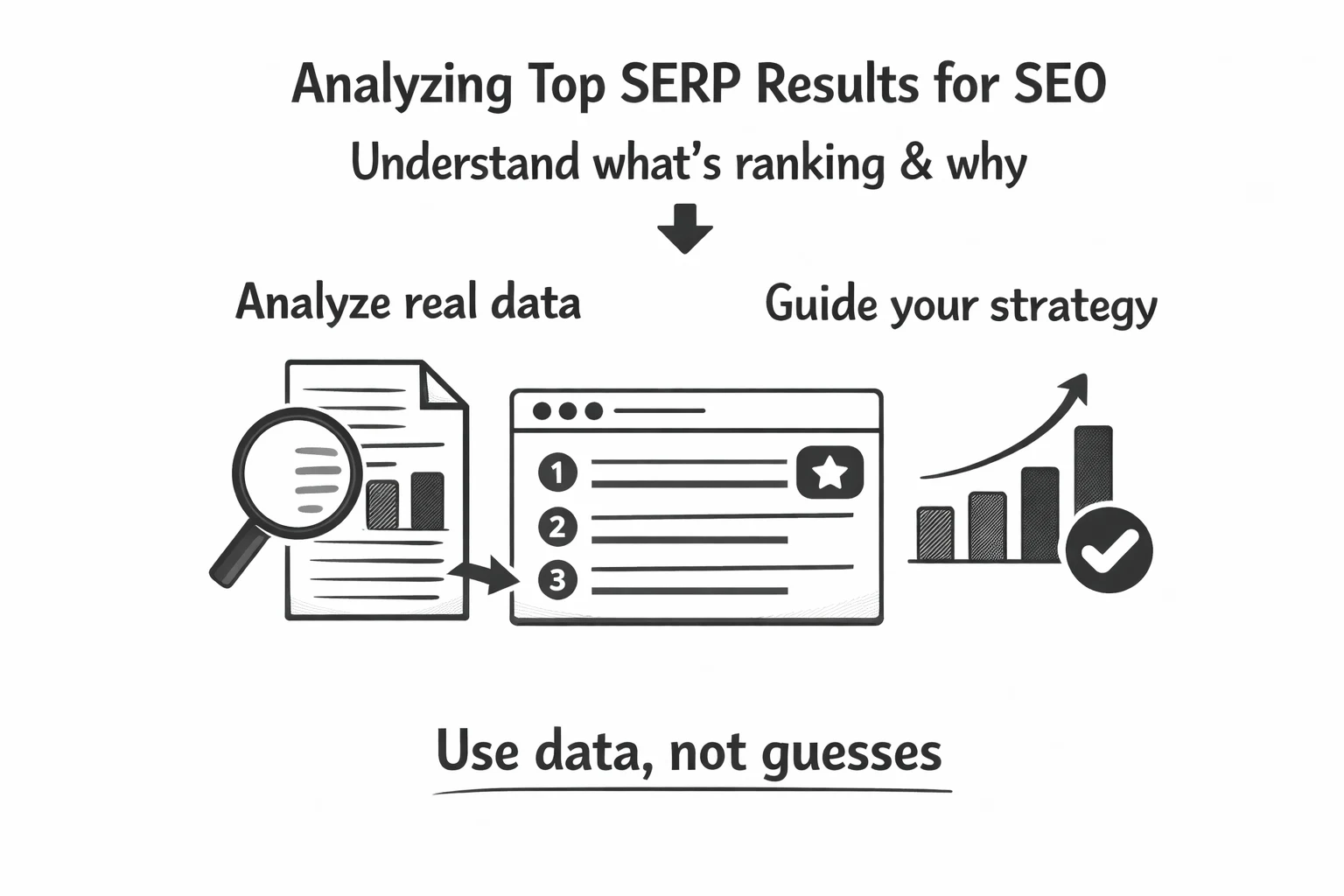
Analyzing top SERP (Search Engine Results Page) results is a key part of keyword research and modern SEO. It helps you understand what Google is already ranking for a specific keyword and why those pages are performing well. Instead of guessing what might work, you use real data to guide your content strategy.
Google Ranks Pages, Not Just Keywords
Many beginners think adding keywords is enough to rank, but Google actually ranks web pages based on quality, relevance, and usefulness.
This means:
- Google looks at the entire content, not just keywords
- It checks if the page satisfies search intent
- It compares your page with other top-ranking pages
Understanding What’s Already Working
The first page of Google is full of content that is already tested and proven. By analyzing these results, you can clearly see:
- What type of content ranks (blog, guide, product page)
- How content is structured (lists, tutorials, comparisons)
- What topics and subtopics are covered
- How detailed and updated the content is
How SERP Analysis Improves Ranking Chances
When you analyze SERP results, you can create content that is better aligned with Google’s expectations. It helps you:
- Match the correct search intent
- Improve content depth and quality
- Identify missing information in competitor content
- Use the right format and structure
Real-World Example
For example, if you search “best SEO tools,” you will notice that most top results are list-based articles with detailed explanations of each tool.
If you write a short article without a list or proper structure, it will not match what users and Google expect. But if you create a more detailed list, add updated tools, include pros and cons, and improve readability, your content becomes more competitive.
Understanding Search Intent (The #1 Ranking Factor)
Search intent means the reason behind a user’s search query. It explains what the user wants to achieve when they type something into Google. In 2026, understanding search intent is one of the most important factors for ranking because Google focuses on showing results that best match user needs.
If your content matches the intent, it can rank higher even with low backlinks. But if it doesn’t match, ranking becomes very difficult.
Types of Search Intent
1. Informational Intent
Users want to learn something or get answers.
Examples: “what is SEO”, “how keyword research works”
2. Navigational Intent
Users want to find a specific website or brand.
Examples: “YouTube login”, “Ahrefs site”
3. Transactional Intent
Users are ready to take action like buying or signing up.
Examples: “buy hosting online”, “best laptop under 50000”
4. Commercial Investigation
Users are comparing options before making a decision.
Examples: “best SEO tools”, “Ahrefs vs SEMrush”
How to Identify Search Intent from SERP
The easiest way to understand intent is by analyzing the top Google results:
- If you see blog posts and guides → Informational intent
- If you see brand websites → Navigational intent
- If you see product pages or pricing pages → Transactional intent
- If you see listicles or comparison articles → Commercial intent
Matching Your Content with Intent
To rank higher, your content must match the intent exactly:
- Choose the right content type (blog, list, product page)
- Follow the same format as top-ranking pages
- Provide clear and direct answers
- Add extra value to make your content better
If your content matches intent and provides more value than competitors, your chances of ranking increase significantly.
5. Step-by-Step: How to Analyze Top SERP Results
Analyzing top SERP results is an essential step in keyword research. It helps you understand what type of content Google ranks for your target keyword and what you need to do to compete. Instead of guessing, you follow a data-driven approach based on real ranking pages.
By studying the first page of Google, you can identify patterns in content type, structure, keywords, and quality—allowing you to create better and more optimized content.
1 Search Your Target Keyword
The first step is to search your target keyword on Google and review the results carefully.
- Use Google manually to see real-time rankings
- Open the search in incognito mode to avoid personalized results influenced by your browsing history, location, or previous searches
2 Analyze Top 10 Results
Focus on the top 10 results on the first page, as these are the pages Google considers most relevant.
Pay attention to:
- Content type: Is it a blog post, product page, landing page, or in-depth guide?
- Content format: Are the results listicles (Top 10), how-to guides, reviews, or comparisons?
- Content depth: How detailed is the content? What is the approximate word count? How thoroughly does it cover the topic?
3 Check Competitors’ Content Structure
Next, analyze how competitors organize their content to improve readability and SEO.
- Review heading structure (H1, H2, H3) to understand how information is divided
- Check topic coverage to see which subtopics are included
- Look for FAQ sections, tables, lists, or additional elements that enhance the content
4 Analyze Keywords Used by Competitors
Top-ranking pages often use a mix of keywords to strengthen their SEO.
Identify:
- Primary keyword used in titles and headings
- Secondary keywords that support the main topic
- Semantic keywords (LSI) that provide context and improve relevance
5 Evaluate Content Quality
Finally, assess the overall quality of the top-ranking pages.
Ask these questions:
- Is the content easy to read with clear formatting?
- Does it fully answer the user’s query and provide value?
- Is the content engaging, updated, and useful?
- Are there visuals, examples, or practical insights included?
Tools to Analyze SERP and Keywords
Using the right tools makes keyword research and SERP analysis faster, more accurate, and more data-driven. Instead of guessing, these tools help you find the right keywords, understand what your competitors are doing, and analyze what type of content is already ranking on Google. This allows you to create better, more optimized content that has a higher chance of ranking.
Free Tools
1. Google Search
Google itself is the most powerful and reliable free tool for SERP analysis because it shows real-time ranking results.
- Analyze top-ranking pages for your target keyword
- Check content type, format, and structure used by competitors
- Explore People Also Ask, featured snippets, and related searches for more keyword ideas
- Identify search intent by observing what kind of content ranks
.
2. Google Keyword Planner
Google Keyword Planner is a useful tool for finding keyword ideas and basic SEO data.
- Discover new keyword opportunities related to your topic
- Check search volume, competition level, and trends
- Identify keywords that have potential for traffic
- Helps in building a basic keyword strategy
3. Ubersuggest
Ubersuggest is a simple and beginner-friendly SEO tool that provides useful keyword insights.
- Provides keyword suggestions and SEO difficulty scores
- Shows top-ranking pages, backlinks, and estimated traffic
- Helps analyze basic competitor strategies
- Offers content ideas based on popular topics
Paid Tools
1. Ahrefs
Ahrefs is one of the most powerful SEO tools for deep keyword research and competitor analysis.
- Provides detailed keyword data, including difficulty and traffic potential
- Offers backlink analysis to understand why competitors rank
- Shows complete SERP overview with metrics
- Helps find content gaps and ranking opportunities
2. SEMrush
SEMrush is an all-in-one SEO and digital marketing tool with a wide range of features.
- Advanced keyword research with intent and trends
- Detailed competitor analysis and domain comparison
- Identifies content gaps and ranking opportunities
- Tracks keyword rankings and performance over time
3. Surfer SEO
Surfer SEO focuses on optimizing content based on real SERP data.
- Analyzes top-ranking pages for your keyword
- Suggests ideal content length, structure, and keyword usage
- Provides real-time optimization score
- Helps improve on-page SEO performance
When to Use Which Tool
Choosing the right tool depends on your goal and experience level:
- Use Google Search to understand real SERP results and user intent
- Use Google Keyword Planner for basic keyword ideas and search volume data
- Use Ubersuggest for quick research, content ideas, and beginner-level analysis
- Use Ahrefs or SEMrush for deep keyword research, competitor analysis, and strategy building
- Use Surfer SEO when creating or optimizing content to improve rankings
Finding Keyword Gaps (Golden Opportunity)
Keyword gaps are one of the most effective ways to gain a competitive advantage in SEO. A keyword gap refers to topics, questions, or keywords that your competitors have not fully covered or have completely missed. By identifying these gaps, you can create content that fills those missing areas and provides more value to users, increasing your chances of ranking higher on Google.
What Competitors Missed
Even top-ranking content is not always complete. Many competitors fail to cover important subtopics, skip user questions, or provide outdated and shallow information. Some articles may rank well but still lack depth or clarity. By carefully analyzing these weaknesses, you can identify opportunities to create more comprehensive and useful content that better satisfies user intent.
Common gaps include:
- Missing important subtopics or sections
- Ignoring user questions and FAQs
- Providing outdated information
- Lack of depth or detailed explanations
- Poor content structure and readability
How to Find Untapped Keywords
Finding untapped keywords requires a combination of research and analysis. You can start by reviewing top-ranking pages and identifying missing sections or weak content areas. Google features like “People Also Ask” and related searches are excellent sources for discovering additional keyword ideas. SEO tools such as Ahrefs, SEMrush, and Ubersuggest can also help you uncover keyword gaps and low-competition opportunities. Focusing on long-tail keywords is especially effective, as they are more specific and often easier to rank for.
Ways to find keyword gaps:
- Analyze top SERP results for missing content
- Check People Also Ask and related searches
- Use tools like Ahrefs, SEMrush, Ubersuggest
- Look for long-tail keywords with low competition
- Identify keywords competitors are not targeting
Adding Unique Value to Outrank Competitors
Once you identify keyword gaps, the next step is to create content that stands out. Instead of repeating what competitors have already written, focus on adding unique value. This can include providing deeper explanations, adding real examples, updating outdated information, and improving content structure. Clear formatting, better readability, and more complete answers make your content more useful for users and more favorable for search engines. By delivering higher-quality and more comprehensive content, you increase your chances of outranking existing pages.
How to add unique value:
- Provide in-depth explanations
- Add real examples or case studies
- Update content with latest data
- Improve structure and formatting
- Make content more engaging and easy to read
Creating Better Content Than Competitors
To rank higher on Google, your goal should not be to copy competitors but to create content that is better, more useful, and more complete. Google rewards content that provides real value and satisfies user intent. By improving what already exists, you can increase your chances of outranking top pages.
The “Skyscraper Technique” (Simple Explanation)
The Skyscraper Technique is a popular SEO strategy where you find top-ranking content and create something better than it. Instead of starting from scratch, you analyze what is already working and improve it.
Basic idea:
- Find high-ranking content for your keyword
- Identify its weaknesses or missing points
- Create a more detailed, updated, and valuable version
How to Create Better Content
To outperform competitors, focus on improving key areas of your content:
- Better structure
Use clear headings (H1, H2, H3), short paragraphs, and organized sections to improve readability - Updated information
Add the latest data, trends, and insights to keep your content fresh and relevant - Clear examples
Include real-life examples or simple explanations to make your content easier to understand - Visual elements
Use images, charts, or infographics to make content more engaging and user-friendly
Writing for Humans First, Google Second
While SEO is important, your main focus should always be the reader. Content that is easy to read, helpful, and engaging performs better in search results.
Best practices:
- Write in simple and clear language
- Avoid keyword stuffing and robotic phrasing
- Focus on solving the user’s problem
- Keep paragraphs short and easy to scan
On-Page SEO Optimization
On-page SEO optimization focuses on improving different elements within your content to help search engines understand it better and rank it higher. Proper on-page SEO ensures your content is well-structured, relevant, and user-friendly, which directly impacts your rankings and organic traffic.
Keyword Placement
Using keywords correctly is essential for SEO, but they should be placed naturally without overstuffing.
- Title
Include your primary keyword in the title and keep it clear, engaging, and under 60 characters - Meta Description
Add the main keyword and write a compelling description (150–160 characters) to improve click-through rate - Headings (H1, H2, H3)
Use keywords in headings to structure your content and make it easier for search engines to understand - URL
Keep the URL short, clean, and include your main keyword (e.g., /keyword-research-guide)
Internal Linking Strategy
Internal linking helps search engines discover your pages and improves user navigation.
- Link to relevant pages within your website
- Use descriptive anchor text (not generic like “click here”)
- Distribute link authority across important pages
- Help users find more useful content easily
Image Optimization
Optimizing images improves both SEO and user experience.
- Use relevant images related to your content
- Add alt text with keywords to describe images
- Compress images to improve page speed
- Use proper file names (e.g., keyword-research.png)
Readability and Formatting
Well-formatted content keeps users engaged and improves SEO performance.
- Write short paragraphs (2–3 lines)
- Use bullet points and lists for easy reading
- Add headings and subheadings for structure
- Keep language simple and clear
- Avoid long, complex sentences
Common Mistakes to Avoid
When working on keyword research and SEO content, avoiding common mistakes is just as important as applying the right strategies. Many websites fail to rank not because of lack of effort, but because they overlook basic SEO principles. Understanding these mistakes can help you create better content, improve user experience, and increase your chances of ranking higher on Google.
Keyword Stuffing
Keyword stuffing is one of the most common SEO mistakes, where the same keyword is used repeatedly in an unnatural way. While keywords are important, overusing them can make your content look spammy and reduce readability.
Search engines today are smart enough to detect unnatural keyword usage. Instead of helping your rankings, keyword stuffing can actually harm your SEO performance. It also creates a poor experience for readers, making your content difficult to understand.
Ignoring Search Intent
Search intent is the reason behind a user’s query, and ignoring it can significantly impact your rankings. Even if your content is well-written and optimized with keywords, it will not rank if it does not match what users are looking for.
For example, if users are searching for a product comparison and you provide a general informational article, your content will not satisfy their needs. Google prioritizes content that directly answers user queries.
Copying Competitors Blindly
Analyzing competitors is an important part of SEO, but copying their content without adding value is a major mistake. Many websites simply rewrite existing content, which results in duplicate or low-quality pages.
This approach does not help you stand out in search results. Instead, you should focus on improving what already exists by adding more depth, updated information, and better explanations.
Writing Robotic Content
Content written only for search engines often sounds unnatural and lacks a human touch. This type of writing reduces engagement, increases bounce rate, and makes it harder to build trust with your audience.
Modern SEO is focused on user experience. Google prefers content that is clear, helpful, and easy to read. Writing in a natural tone not only improves readability but also keeps users engaged for longer.
Not Updating Content
SEO is not a one-time process. Content that is not updated regularly can become outdated and lose its ranking over time. Information changes, new trends emerge, and competitors may publish better content.
If your content is outdated, users may not find it useful, and search engines may replace it with fresher results. Regular updates help maintain relevance and improve performance.
Pro Tips to Rank Faster
Ranking on Google can take time, but by using smart SEO strategies, you can improve your chances of ranking faster. Instead of targeting highly competitive keywords right away, focusing on the right approach helps you gain quick visibility and steady organic traffic. These proven tips can help you rank your content more efficiently.
Focus on Long-Tail Keywords First
Long-tail keywords are more specific search phrases that usually have lower competition and higher intent. Instead of targeting broad keywords like “SEO,” it is better to target phrases like “keyword research for beginners.”
These keywords are easier to rank for, especially if your website is new or has low authority.
Target Low Competition Keywords
Choosing low competition keywords increases your chances of ranking faster. High competition keywords are often dominated by authority websites, making it difficult for new content to rank.
By targeting keywords with lower competition, you can:
- Rank faster
- Get consistent traffic
- Build domain authority over time
Use FAQs for Featured Snippets
Adding a FAQ section to your content is a powerful way to target featured snippets and improve visibility.
FAQs help you:
- Answer common user questions clearly
- Increase chances of appearing in Position #0
- Improve content coverage and relevance
Optimize for Voice Search
With the rise of voice assistants, optimizing for voice search is becoming increasingly important. Voice searches are usually longer and more conversational.
To optimize for voice search:
- Use natural and simple language
- Focus on question-based queries
- Provide clear and direct answers
FAQ Section
What is the best tool for keyword research?
Google Keyword Planner and Ubersuggest are good for beginners, while Ahrefs and SEMrush are best for advanced analysis.
How long does it take to rank?
It can take a few weeks for low competition keywords and several months for competitive ones.
Can I rank without backlinks?
Yes, especially for low competition keywords, but backlinks help improve rankings faster.
How many keywords should I target per article?
Focus on one main keyword and a few related keywords for better results.
Conclusion
Keyword research and SERP analysis are essential steps to rank higher on Google. By understanding search intent, analyzing top results, finding keyword gaps, and creating better content, you can improve your chances of success.
SEO is not a one-time task it requires consistency, updates, and continuous improvement. The more you analyze and optimize your content, the better your results will be over time.