
We evaluate your page content, keyword placement, header distribution, and media optimization to maximize relevance signals for modern search engines.
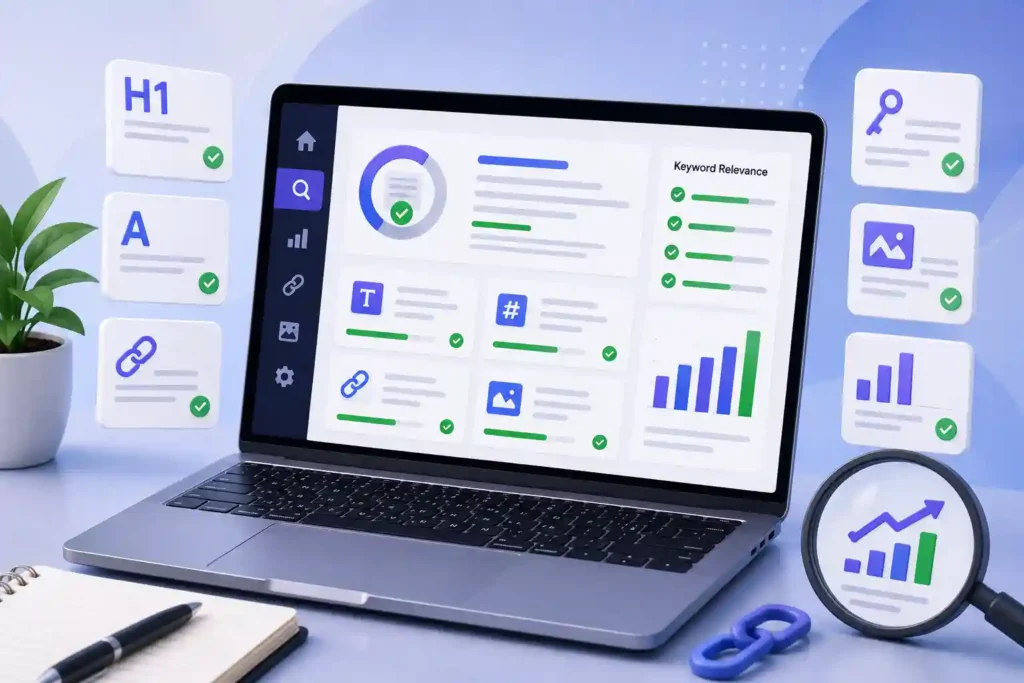
We analyze page-level optimization factors against real-time search engine scoring rules. By auditing header placement, keyword density, internal links, and image accessibility, we ensure your page copy sends strong, clear relevance signals that push your content to the top of search engine results pages.
Deeply analyze website structure to fix indexing issues.
Fix complex server redirects, canonicals, and indexation errors.
Discover keyword gaps and optimize content for traffic.
Eliminate performance bottlenecks to maximize core web vitals.
Audit reading structures and eliminate duplicate content risks.
Export enterprise-ready reports with actionable search data insights.
An On-Page SEO Checker is a technical diagnostic tool that inspects single web pages to evaluate keyword placement, content depth, HTML tags, and readability for search engine optimization.
On-page SEO deals with elements directly on your website (content, HTML tags, internal links), while off-page SEO focuses on external signals like backlinks and brand mentions.
Your primary keyword should appear in the page URL, title tag, main H1 heading, within the first 100 words of copy, and naturally inside a few H2 subheadings.
Alt text helps search engine bots understand image content for search indexing, while improving web accessibility for visually impaired users using screen readers.
Word count itself is not a direct ranking factor, but longer, more detailed content tends to cover topics more thoroughly, which satisfies user search intent better.
Every page should have exactly one H1 tag that clearly states the main topic of the page to both users and search engine crawlers.
Keyword density is the ratio of target keywords to total word count. While forced repetition is harmful, natural placement (around 1–2%) ensures strong topical relevance.
Internal links guide visitors to related content, help search bots crawl new pages, and pass authority (link equity) across different sections of your site.
Search-friendly URLs are short, lowercase, hyphen-separated, and contain your target keyword without unnecessary numbers, parameters, or dates.
Content freshness refers to updating old pages with new facts, updated dates, and revised statistics, signaling to search engines that your page remains relevant.
Yes. Broken internal or external links hurt user experience, increase bounce rates, and signal to search engine crawlers that a page may be unmaintained.
Perform an on-page check whenever you publish new landing pages, update existing content, or notice a drop in rankings for key target terms.