
We discover untapped organic keyword gaps, evaluate search intent parity, and deliver data-driven optimization strategies to position your brand directly in front of ready-to-convert audiences.
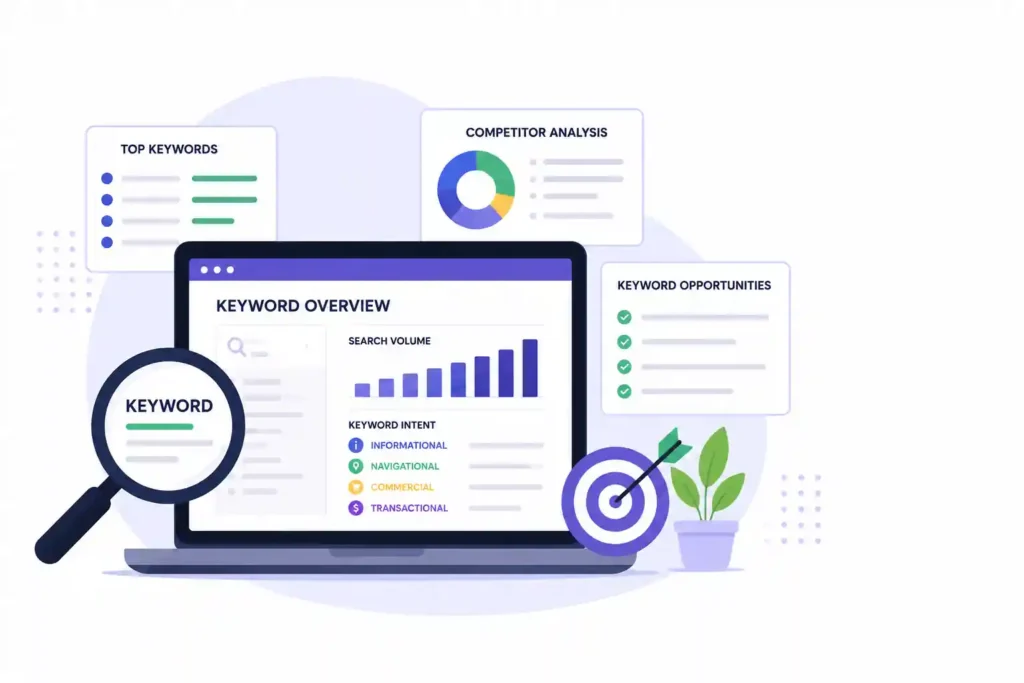
We combine competitive search query analysis, algorithmic density evaluation, and semantic grouping to ensure your landing pages perfectly satisfy modern search engine models. By shifting from simple phrase-matching to deep topical authority, we ensure every piece of your on-page content works to attract qualified leads.
Deeply analyze website structure to fix indexing issues.
Fix complex server redirects, canonicals, and indexation errors.
Eliminate performance bottlenecks to maximize core web vitals.
Audit reading structures and eliminate duplicate content risks.
Export enterprise-ready reports with actionable search data insights.
Instantly test domain health, detect technical errors, and boost performance.
Inspect meta titles, descriptions, and social tags to eliminate truncation and boost CTR.
Search intent is the primary goal a user has when typing a query into a search engine. Aligning your content with the exact intent (informational, commercial, or transactional) ensures your page satisfies the algorithm and retains visitors.
Cannibalization occurs when multiple pages on your website target the exact same keyword phrase. This forces search engines to choose between them, which dilutes your link equity and lowers rankings for both pages.
We look at a balance of high search volume, realistic keyword difficulty, and strong business relevance to prioritize terms that will drive meaningful revenue, rather than just empty traffic.
Long-tail keywords are highly specific, multi-word search phrases. While they have lower individual search volumes, they carry incredibly high conversion intent and face much lower competition.
Depending on your website's existing domain authority and competition levels, optimized pages can begin seeing initial movement within a few weeks, while highly competitive terms take months of consistent authority building.
Semantic SEO focuses on optimizing content around entire topics and user concepts rather than individual, repetitive keyword phrases, matching how modern AI-driven search models understand text.
A keyword difficulty score is an estimation of how hard it will be to rank on the first page of search results for a specific term, calculated based on the domain authority and link profiles of existing competitors.
We recommend reviewing your top-performing and declining pages quarterly. Refreshing them with new secondary keywords and missing topical context prevents content decay and maintains visibility.
Short-tail keywords are broad, 1–2 word terms with high volume and fierce competition. Long-tail keywords are longer, niche phrases with lower volume but a much clearer route to conversion.
For maximum impact, your primary keyword must be seamlessly placed inside the URL slug, the meta title tag, the main H1 heading, within the first 100 words of body copy, and at least one H2 subheading.
LSI refers to conceptually related terms and synonyms that search engine algorithms look for to establish the overall context, depth, and topical authority of a piece of content.
We optimize for humans first and algorithms second. By avoiding forced keyword stuffing and integrating targeted terms naturally into structured, high-quality answers, we fulfill both user experience and technical requirements.