Imagine getting visitors to your website every day without spending money on ads. That’s the power of organic SEO ranking. When your website appears higher in search engine results, more people can naturally discover your content, products, and services, leading to consistent traffic and greater online visibility.
Many businesses depend on paid advertising to attract visitors, but traffic often stops as soon as the advertising budget runs out. Organic SEO offers a more sustainable solution by helping your website attract qualified visitors over the long term. This makes it one of the most cost-effective digital marketing strategies available.
Modern SEO is about much more than simply adding keywords to a webpage. Search engines now prioritize content that is relevant, helpful, and trustworthy. Websites that consistently provide valuable information are more likely to rank higher and earn the trust of both users and search engines.
As AI-powered search platforms such as ChatGPT, Gemini, Claude, and Perplexity continue to grow, businesses must optimize their content not only for traditional search engines but also for answer engines and generative AI systems. In this guide, you’ll learn how organic SEO ranking works and discover proven strategies that can help your website grow steadily and attract more organic traffic over time.
What Is Organic SEO Ranking?
Organic SEO ranking refers to a website’s position in unpaid search engine results.
When users search for information, products, or services, search engines evaluate millions of web pages and rank them according to relevance, quality, authority, and user experience. The higher your page ranks organically, the more visibility and traffic it receives.
Unlike paid advertising, organic rankings are earned through effective SEO practices rather than purchased placements.
Example
If someone searches for:
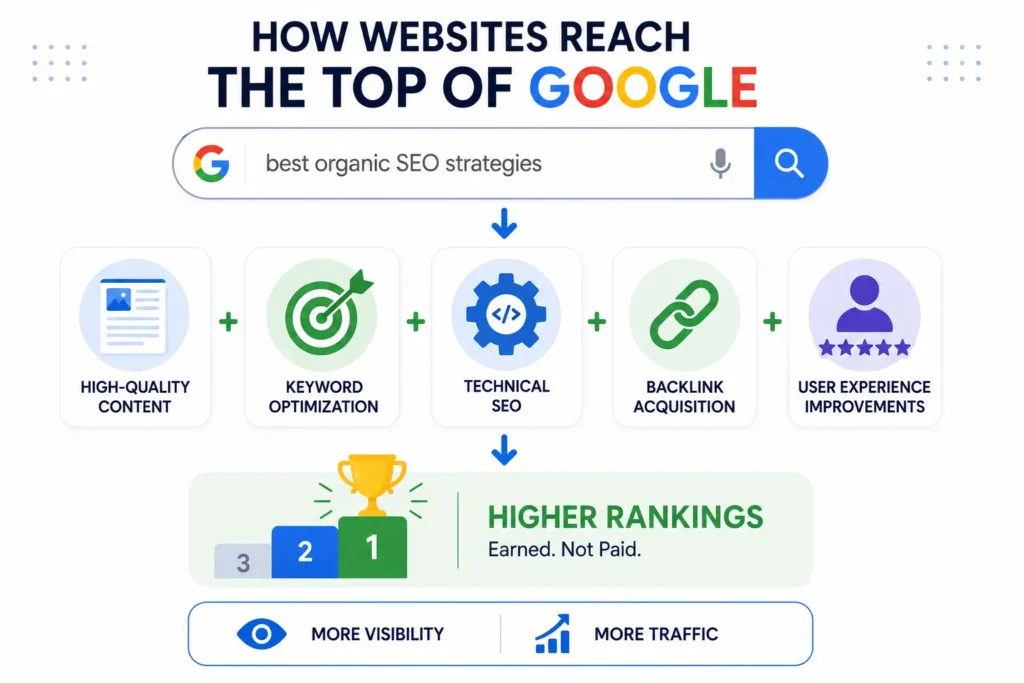
“best organic SEO strategies”
The websites appearing at the top of Google’s organic results have likely invested in:
- High-quality content
- Keyword optimization
- Technical SEO
- Backlink acquisition
- User experience improvements
These factors collectively influence organic search rankings.
Why Organic SEO Ranking Matters
Many businesses underestimate the value of organic traffic until they compare it to paid advertising costs.
Higher organic rankings deliver several benefits:
1. Increased Website Traffic
The first page of Google receives the vast majority of clicks. Websites ranking in top positions consistently attract more visitors.
2. Better Trust and Credibility
Users generally trust organic results more than advertisements because they view them as earned recommendations.
3. Long-Term ROI
Unlike paid campaigns that stop generating traffic when budgets run out, organic rankings continue delivering results over time.
4. Improved Brand Authority
Ranking consistently for industry-related topics positions your business as a trusted source of information.
5. Higher Conversion Potential
Organic visitors often have strong search intent, making them more likely to convert into customers.
How Search Engines Determine Organic Rankings
Search engines use complex algorithms to evaluate web pages.
While ranking factors evolve constantly, several core elements remain important.
1. Content Relevance
Search engines prioritize content that directly answers user queries.
Pages that thoroughly address a topic tend to rank higher.
2. Authority and Trust
Websites earning backlinks from reputable sources gain stronger authority signals.
3. User Experience
Factors such as page speed, mobile responsiveness, and navigation influence rankings.
4. Search Intent Matching
Successful pages align with what users actually want when searching.
5. Technical SEO Health
Search engines need to crawl, understand, and index your content efficiently.
Core Factors That Improve Organic SEO Ranking

1. Create High-Quality Content
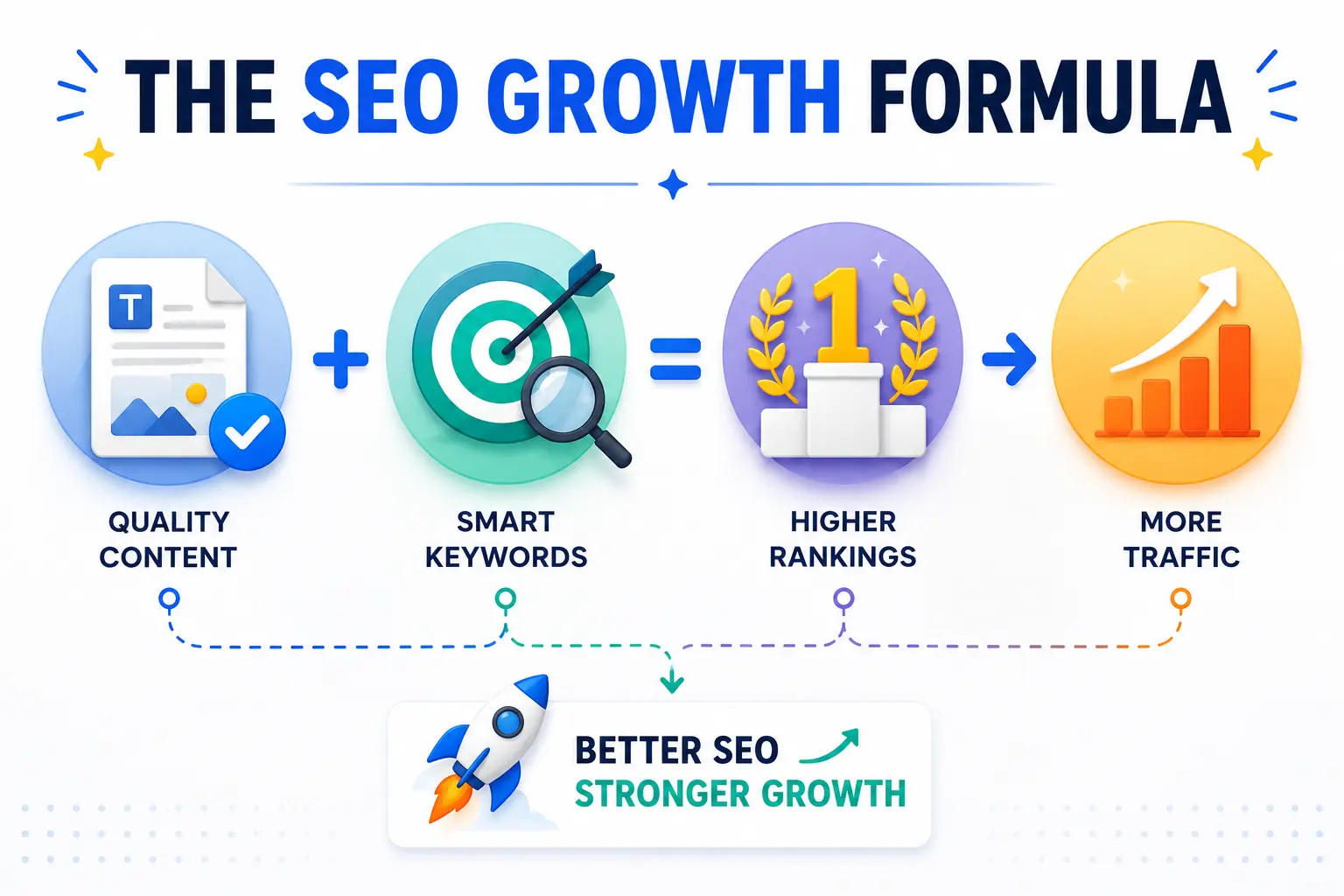
Content remains the foundation of SEO success.
The best-performing pages provide:
- Comprehensive information
- Original insights
- Accurate data
- Clear structure
- Practical solutions
Instead of targeting search engines alone, focus on helping users accomplish their goals.
Example
A 2,000-word guide that answers every question about SEO ranking will typically outperform a shallow 500-word article.
2. Target the Right Keywords
Keyword research helps identify topics your audience actively searches for.
Focus on:
Primary Keywords
Main target phrase:
- Organic SEO ranking
Secondary Keywords
Related phrases:
- Improve SEO rankings
- Organic search rankings
- Search engine optimization
- SEO best practices
- Website ranking strategies
Long-Tail Keywords
Specific searches with lower competition:
- How to improve organic SEO ranking
- Best organic SEO strategies for small businesses
- Organic ranking factors in Google
Long-tail keywords often drive highly targeted traffic.
3. Optimize On-Page SEO
On-page optimization helps search engines understand your content.
Important elements include:
Title Tags
Include the target keyword naturally.
Example:
Organic SEO Ranking: Proven Strategies for Higher Visibility
Meta Descriptions
Write compelling descriptions that encourage clicks.
Headers
Use structured headings:
- H1
- H2
- H3
This improves readability and crawlability.
Internal Links
Connect related pages throughout your website.
Image Optimization
Use descriptive filenames and alt text.
Technical SEO and Organic Ranking
Even exceptional content can struggle if technical SEO issues exist.
1. Improve Website Speed
Fast-loading pages enhance both user experience and rankings.
Best practices:
- Compress images
- Enable caching
- Minimize code
- Use a CDN
2. Mobile Optimization
Google uses mobile-first indexing.
Your website should function seamlessly on smartphones and tablets.
3. Secure Your Website
HTTPS encryption is essential for user trust and SEO performance.
4. Fix Crawl Errors
Regularly monitor:
- Broken links
- Redirect chains
- Indexing issues
- Duplicate content
The Role of Backlinks in Organic SEO Ranking
Backlinks remain one of the strongest ranking signals.
When authoritative websites link to your content, search engines view it as a vote of confidence.
Effective Link-Building Strategies
Publish Original Research
Unique statistics naturally attract citations.
Create Linkable Assets
Examples include:
- Industry reports
- Infographics
- Interactive tools
- Comprehensive guides
Guest Posting
Contributing expert content to reputable websites can generate valuable backlinks.
Digital PR
Newsworthy content often earns coverage from high-authority publications.
AEO: Optimizing for Answer Engines
Answer Engine Optimization (AEO) focuses on helping search engines provide direct answers to users.
This is increasingly important due to:
- Featured snippets
- Voice search
- AI-generated responses
How to Optimize for AEO
Answer Questions Directly
Provide concise answers immediately below question-based headings.
Use FAQ Sections
Structured Q&A content helps search engines extract answers.
Implement Schema Markup
Structured data improves content understanding.
Write Clearly
Avoid unnecessary complexity.
Search engines favor straightforward explanations.
GEO: Optimizing for Generative AI Search
Generative Engine Optimization (GEO) prepares content for AI-powered platforms like ChatGPT, Gemini, Claude, and Perplexity.
These systems often summarize information rather than displaying traditional search results.
GEO Best Practices
Build Topical Authority
Create multiple interconnected articles around a core topic.
Include Expert Insights
Original perspectives increase citation potential.
Use Fact-Based Content
AI models prioritize trustworthy information.
Structure Content Logically
Clear headings and concise explanations help AI systems interpret content.
Add Quotable Statements
AI platforms often reference memorable insights.
Example:
“Organic SEO ranking is not earned through shortcuts; it is built through consistent value, relevance, and trust.”
Content Strategy for Higher Organic Rankings
Successful SEO requires a long-term content strategy.
Create Topic Clusters
Instead of publishing isolated articles, build content ecosystems.
Example cluster:
Pillar Page:
- Organic SEO Ranking
Supporting Articles:
- Keyword Research Guide
- Technical SEO Checklist
- Link Building Strategies
- SEO Content Writing Tips
- Search Intent Optimization
This structure strengthens topical authority.
Update Existing Content
Freshness can positively influence rankings.
Review content regularly to:
- Update statistics
- Improve examples
- Add new sections
- Fix outdated information
Many websites achieve ranking gains without publishing new content simply by improving existing pages.
Common Mistakes That Hurt Organic SEO Ranking
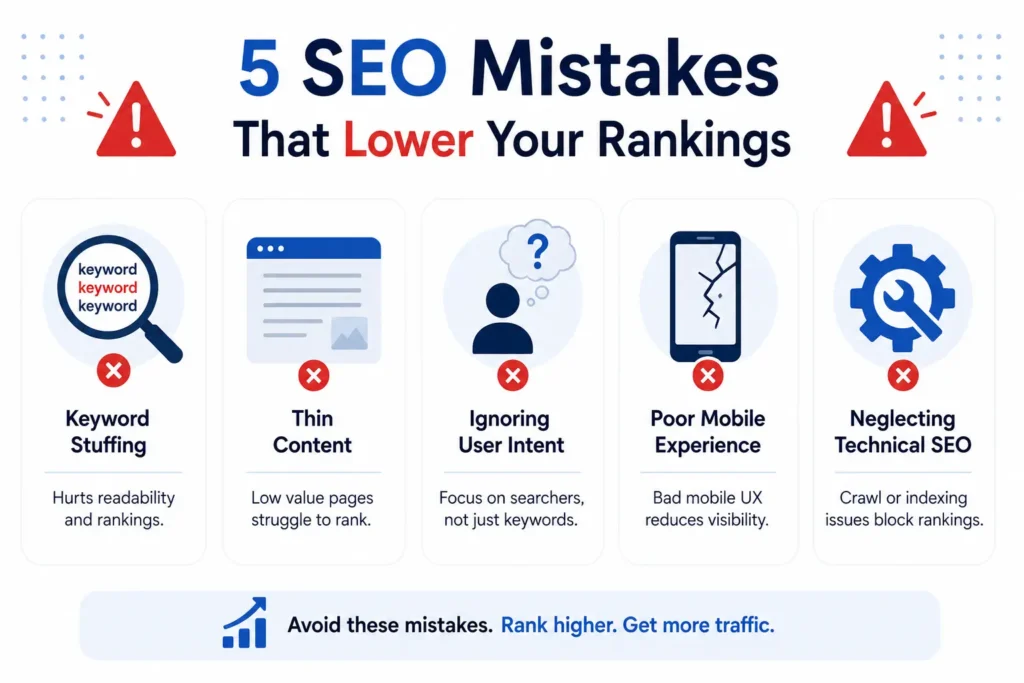
Avoid these frequent errors:
Keyword Stuffing
Overusing keywords reduces readability and may harm rankings.
Thin Content
Short, low-value pages struggle to compete.
Ignoring User Intent
Ranking depends on satisfying searchers, not merely matching keywords.
Poor Mobile Experience
Mobile usability issues can reduce visibility.
Neglecting Technical SEO
Indexing and crawlability problems can prevent rankings entirely.
Measuring Organic SEO Success
Track key performance indicators consistently.
Important SEO metrics include:
A. Organic Traffic
Measure visitors arriving from search engines.
B. Keyword Rankings
Monitor target keyword positions.
C. Click-Through Rate (CTR)
Evaluate how effectively search listings attract clicks.
D. Bounce Rate
Assess user engagement.
E. Conversion Rate
Track leads, sales, and business outcomes.
SEO success is not solely about rankings—it is about generating meaningful results.
Future Trends in Organic SEO Ranking
The SEO landscape continues evolving rapidly.
Key trends include:
AI-Powered Search
Generative AI is reshaping search experiences.
User Experience Signals
Engagement metrics will continue growing in importance.
E-E-A-T Principles
Experience, Expertise, Authoritativeness, and Trustworthiness remain critical.
Entity-Based Search
Search engines increasingly understand concepts rather than individual keywords.
Conversational Search Queries
Users are searching with natural language and complete questions.
Businesses that adapt early will gain competitive advantages.
FAQ
What is organic SEO ranking?
Organic SEO ranking is the position that a webpage gets in search engine results when people search for something. It is not a paid ad. This position is based on how relevant the webpage’s how good it is, how much people trust it and what people think of it when they use it.
How long does it take to get organic SEO rankings?
Most websites start to see improvements in their organic SEO rankings within three to six months.. If the business is in a very competitive field it can take longer to get better rankings.
What is the important thing for SEO ranking?
There is not one thing that makes a webpage rank high.. Some things that are very important are having good content getting links from other websites making sure people have a good experience when they use the webpage and making sure the webpage is what people are looking for.
Can I get a ranking without links from other websites?
It is possible to get a ranking if not many people are searching for the same thing.. If a lot of people are searching for the same thing having links from other websites really helps to get a better ranking.
How is GEO different from the way of doing SEO?
The usual way of doing SEO is about getting a webpage to rank high in search engines.. Geo is about making content that works well with artificial intelligence that can answer questions and show information in a new kind of search platform.
Is SEO better than paying for ads?
Organic SEO is good because it can bring people to a webpage, for a time. Paying for ads can bring people to a webpage away but it does not last. The best way to market something is often to use both SEO and paid ads.
conclusion
Organic SEO ranking is a lot more than just getting your website to the top of Google. These days businesses need to make content that’s useful to people and also easy for search engines and other platforms to understand, like Google.
Organic SEO ranking is important for businesses. A good Organic SEO strategy has a key parts, including good content, strong technical Organic SEO trusted backlinks and optimization for traditional search results and answers that are generated by AI.
All these parts work together to make your website more visible online. When you do Organic SEO correctly it can bring a flow of visitors leads and customers to your website without needing to spend a lot on paid ads. Organic SEO is a good long-term investment for digital marketing.
The websites that do well are the ones that focus on giving people helpful and accurate information. These websites consistently answer peoples questions better than websites, which helps them keep their rankings high and grow over time.
By doing Organic SEO businesses can achieve lasting success, with their website and get more visitors and