You’ve published a well-researched blog post. You’ve nailed your on-page SEO. You’ve even shared it on social media. But weeks later, the rankings haven’t moved. Sound familiar? Here’s the uncomfortable truth: content alone is rarely enough. To rank at the top of Google in 2026, you need other trusted websites to vouch for yours. That’s exactly what backlinks do.
you’ll learn exactly how to build high-quality backlinks that actually move the needle not just collect links that sit there doing nothing. We’ll cover what makes a backlink genuinely valuable, 10 proven strategies that still work in 2026, the tools you need, and the mistakes that can get your site penalized. the rules of link building have shifted. Google’s AI-powered algorithms including AI Overviews now evaluate links through the lens of authority, relevance, and real-world trust. Chasing raw link count is a 2015 strategy. Let’s talk about what actually works today.
What Are High-Quality Backlinks? (And Why They Still Matter)
A backlink is simply a link from one website pointing to yours. Think of it as a vote of confidence. When a trusted website links to your content, it’s essentially telling Google: “This page is worth reading.” The more credible the voter, the more weight that vote carries. But not all backlinks are created equal. A link from a relevant, high-traffic, authoritative website is worth far more than ten links from random low-quality sites. In fact, irrelevant or spammy links can actively hurt your rankings.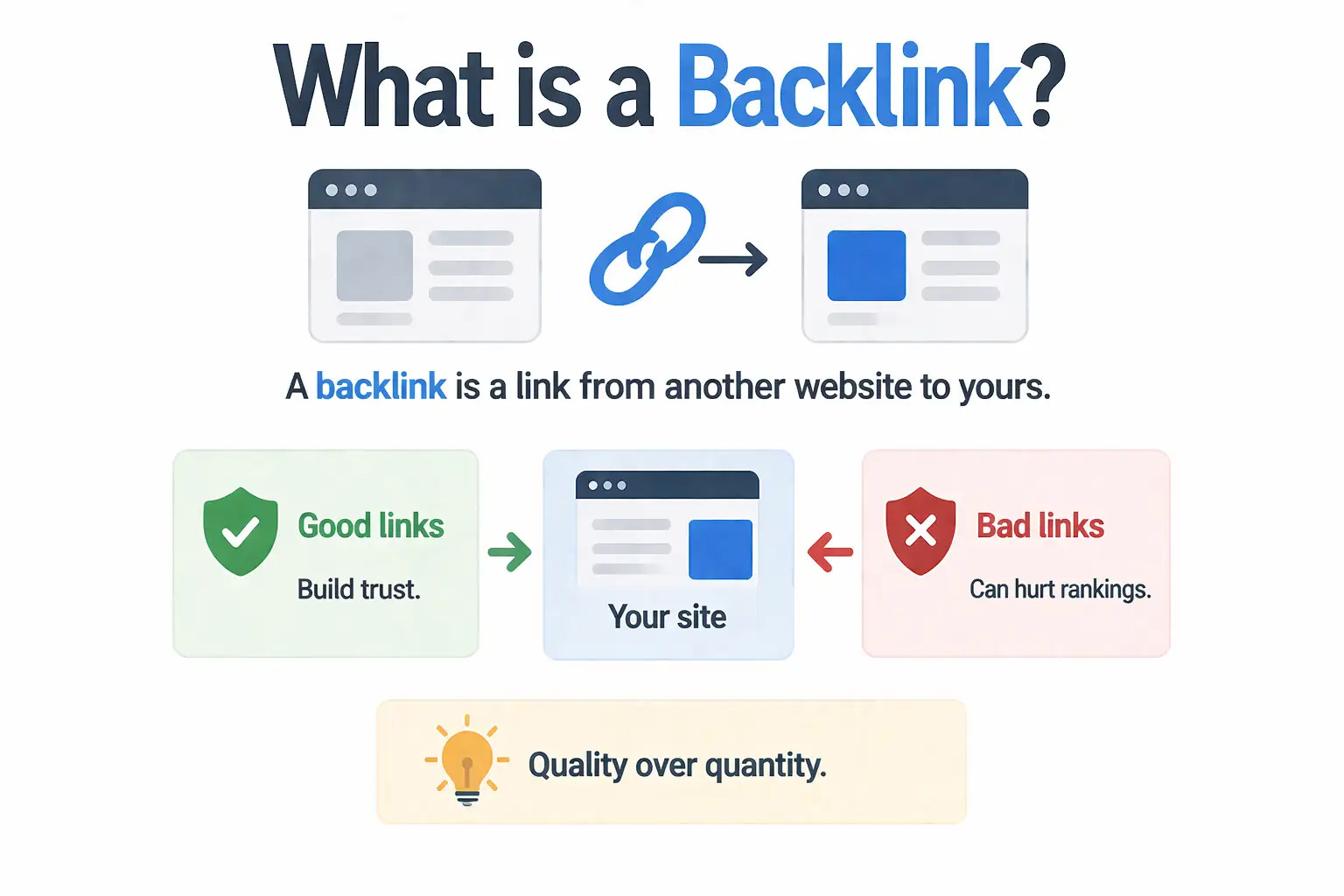
5 traits of a high-quality backlink in 2026:
- Relevance: The linking site covers your niche or a closely related topic. A DR 35 site in your industry often outranks a DR 70 site that has nothing to do with your space.
- Real traffic: The linking page actually gets visitors. A site with zero traffic is a risk, not an asset.
- Contextual placement: The link appears naturally within the body content not buried in a footer or sidebar.
- Natural anchor text: The clickable words feel organic, not forced. Over-optimized anchors like “best cheap SEO backlinks buy now” are a red flag.
- Clean link neighborhood: The site doesn’t link out to spammy or low-quality websites.
Dofollow vs. Nofollow what actually matters:
Dofollow links pass “link equity” (ranking power) from one site to yours. Nofollow links don’t pass equity directly, but they still drive real traffic and help build a natural-looking link profile. A backlink strategy that includes both is healthier than one that chases only dofollow links.
Backlinks in the age of AI search: Google’s AI Overviews and LLM-powered search engines use backlinks as credibility signals when deciding which sources to cite. Pages with strong, relevant link profiles consistently appear in AI-generated answers. Building quality links today also means building visibility in tomorrow’s search landscape.
Get Your Site Ready Before You Start Building Links
Here’s something most link-building guides skip: your site needs to be “link-ready” before you start reaching out. If your pages are slow, your content is thin, or your internal linking is a mess, even great backlinks will underperform.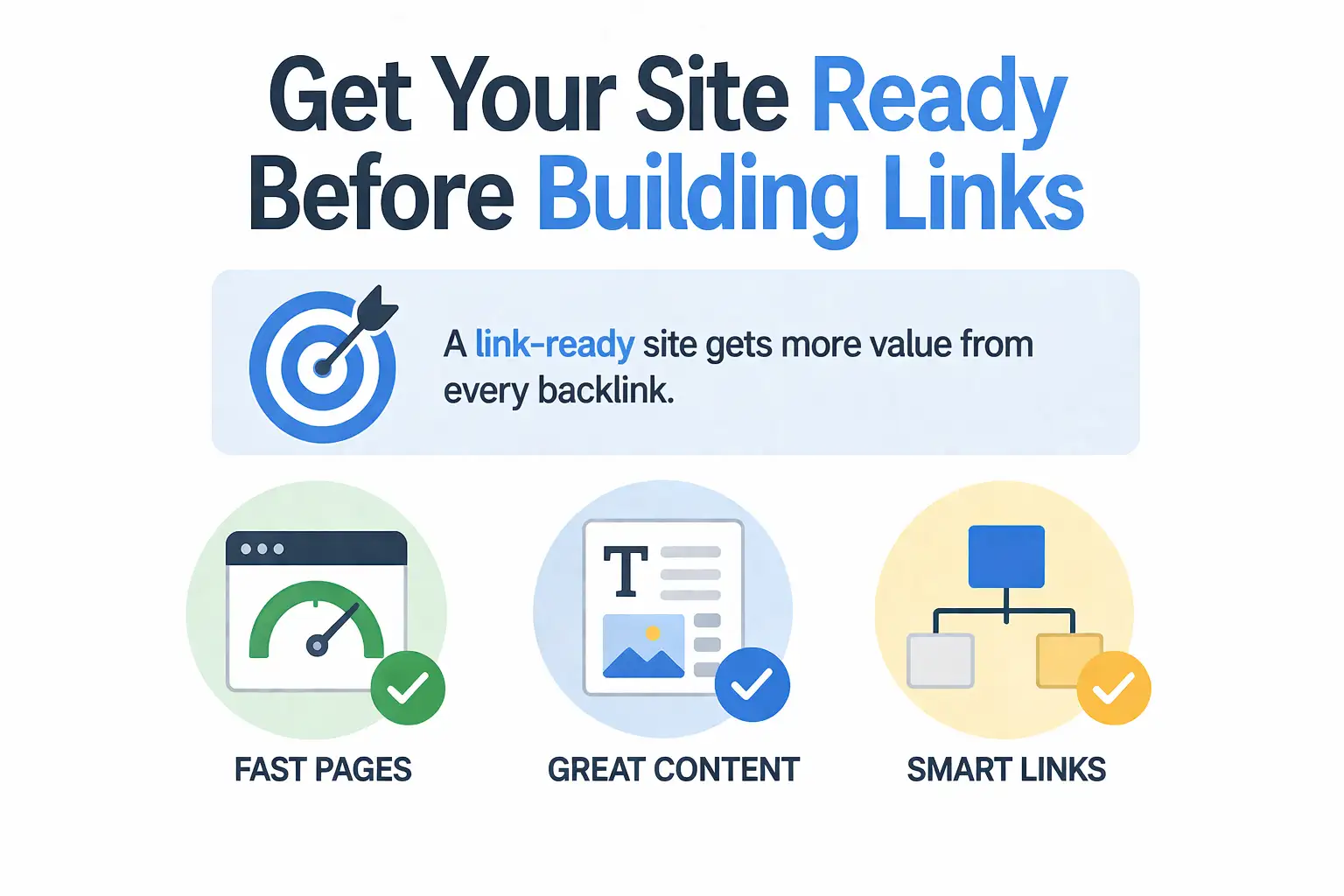
Your pre-link-building checklist:
- Fix the technical basics: Resolve 404 errors, ensure fast page loading, make the site mobile-friendly, and implement HTTPS.
- Create linkable assets first: These are pages that naturally attract links original data, free tools, comprehensive how-to guides, or unique infographics. If there’s nothing worth linking to, outreach won’t get far.
- Build out your E-E-A-T signals: Add clear author bios, cite your sources, and make it easy for readers (and Google) to understand why you’re a credible source.
- Strengthen internal linking: Make sure your best pages are connected to each other. Internal links help Google discover your content and distribute link equity across your site.
10 Proven Strategies to Build High-Quality Backlinks in 2026
These are the strategies that consistently work not the outdated shortcuts that Google has already cracked down on.
1. Guest Posting (Done the Right Way)
Guest posting still works in 2026, but the bar is higher. Cranking out a generic 500-word article and dropping a keyword-rich link no longer flies. Google ignores most of those links, and AI tools don’t trust them either.
What actually works: writing genuinely helpful, in-depth content for relevant websites that have real audiences. Focus on sites where your target readers actually hang out, not just any site that has a “Write for Us” page.
How to do it right: Use Ahrefs or SEMrush to identify niche sites with real traffic (not just high DR). Pitch original angles not topics they’ve already covered ten times. Write like a guest, not like someone trying to sneak in a link.
2. Digital PR and Original Research
Journalists need data. If you create it, they’ll cite it — and cite it with a link from a high-authority news outlet.
This is one of the highest-ROI strategies in 2026. Publishing an original study, survey, or industry report gives you an asset that earns links passively for months or years. Titles like “2026 State of [Your Industry]: Key Findings from Our Survey” tend to attract backlinks from bloggers, journalists, and researchers.
Quick start: Survey 200–500 people in your niche using a free tool like Typeform. Write up the findings with clear data visualizations. Promote it to journalists covering your topic via email outreach.
3. Broken Link Building
This technique involves finding dead links on relevant websites and offering your content as a replacement. It’s a win-win: you help the site owner fix a broken page, and you earn a contextual backlink.
Step-by-step: Use Ahrefs’ Broken Backlinks report or Screaming Frog to find broken outbound links on sites in your niche. Check if you have (or can create) content that matches the original resource. Reach out politely, pointing out the broken link and suggesting your page as a replacement. Keep the email short and focused on helping them.
4. HARO and Expert Platforms
HARO (Help a Reporter Out) has evolved into a broader ecosystem. Platforms like Featured.com, Qwoted, and Terkel connect journalists with expert sources. When you respond to a relevant query with a sharp, insightful quote, you often get cited with a backlink from a major publication.
Pro tip: Speed matters here. Reporters often go with the first few good responses they receive. Set up email alerts for queries in your niche and keep your pitches concise — two or three sentences of genuine insight beats a paragraph of filler every time.
5. Resource Page Link Building
Many websites maintain “resources” or “useful links” pages that curate the best content in their niche. Getting your content listed on these pages is one of the cleanest, most natural ways to build high-quality backlinks.
How to find them: Use search operators like intitle:”resources” + [your keyword] or “useful links” + [your topic] in Google. Evaluate each page to make sure it’s relevant and maintained. Then pitch your content by explaining exactly why it belongs on their list and what value it adds for their readers.
6. Create Linkable Assets
Some content earns links passively just by being genuinely useful. Think: free templates, calculators, comprehensive comparison guides, original infographics, or glossaries. When other writers reference these resources, they link to them often without any outreach on your part.
The key: host your asset on a dedicated, well-optimized page. State clearly that others can use it (with attribution). Promote it once to relevant communities and journalists. Then let it compound.
7. The Skyscraper Technique
Find content in your niche that has already earned a lot of backlinks, create something noticeably better (more current, more detailed, better designed), and then reach out to everyone linking to the original to let them know your updated version exists.
This works because you’re not cold-pitching you’re reaching out to people who have already demonstrated they care about this exact topic.
Important: “better” doesn’t just mean longer. It means more accurate, more useful, and more relevant to what readers actually need in 2026.
8. Community and Forum Participation
Reddit, niche Discord servers, and private forums are goldmines for contextual links but only if you approach them the right way. Dropping a link in your first post will get you ignored (or banned).
The strategy that works: spend 30 days genuinely contributing to the community — answering questions, sharing knowledge, building a reputation. Then, when you share your content, it lands as a recommendation from a trusted member, not spam.
These links are often nofollow, but they drive real traffic and signal organic brand authority to Google.
9. Collaborate with Industry Partners
Co-authoring content, sponsoring academic research, partnering with non-profits, or being featured in roundup posts alongside respected names in your industry — all of these generate high-trust, contextual backlinks.
The best part? These collaborations often lead to ongoing link opportunities. One research partnership can produce multiple articles, press releases, and citations across different publications.
10. Reclaim Unlinked Brand Mentions
Someone may have already mentioned your brand, product, or content somewhere online — just without linking to you. Turning these unlinked mentions into actual backlinks is one of the easiest wins in link building.
How to find them: Set up a Google Alert for your brand name. Use Ahrefs’ Content Explorer or Mention.com to surface recent mentions. Then send a friendly, short email thanking the writer and asking if they’d mind adding a link. Most are happy to — it takes them 20 seconds.
Best Tools to Build and Track High-Quality Backlinks
You don’t need to use all of these. Pick the ones that fit your budget and goals. For most sites starting out, Google Search Console (free) and one paid tool like Ahrefs or SEMrush is more than enough.
| Tool | Cost | Best For |
| Ahrefs | Paid | Backlink analysis, competitor gaps, broken links |
| SEMrush | Paid | Link gap analysis, anchor text audits, outreach tracking |
| Google Search Console | Free | See who already links to your site |
| BuzzSumo | Free/Paid | Find most-shared content for Skyscraper targets |
| Hunter.io | Free/Paid | Find email addresses for outreach |
| Pitchbox | Paid | Scale outreach campaigns without sounding spammy |
| Moz Link Explorer | Free/Paid | Domain Authority checks, spam score analysis |
Backlink Mistakes to Avoid in 2026
The strategies above work. These will get you penalized or waste your time:
- Buying links: Still a manual penalty risk from Google. No matter how convincing the sales pitch sounds, paid link schemes violate Google’s guidelines.
- Link farms and PBNs: Private Blog Networks are networks of fake sites built purely to sell links. Google is very good at identifying these, and getting caught means a serious ranking drop.
- Over-optimized anchor text: Using your exact keyword phrase in every anchor link looks unnatural. Real editorial links use varied, contextual language.
- Low-quality guest posts: Publishing on “write for us” farms with zero real traffic is a waste of effort at best, and a risk at worst.
- Unnatural link velocity: Going from 10 to 500 backlinks in a single week raises red flags. A natural link growth curve is gradual and consistent.
How to Know If Your Backlinks Are Actually Working
Building links is one thing. Knowing whether they’re moving the needle is another. Here’s what to track:
- Domain Rating (DR) / Domain Authority (DA): Tracks the overall strength of your backlink profile over time.
- Referring domains: The number of unique sites linking to you. More unique domains = stronger signal.
- Organic traffic growth: The ultimate measure. Are you getting more visitors from search?
- Keyword ranking improvements: Track your target keywords in Ahrefs, SEMrush, or Google Search Console.
- AI Overview appearances: A newer but increasingly important metric — are you showing up in Google’s AI-generated answers?
Realistic timelines: Most backlinks show ranking impact within 30–120 days. Large authority links (DR 70+) can move rankings in a matter of weeks. Cluster-level link building often compounds over 3–6 months. Don’t panic if you don’t see instant results.
Frequently Asked Questions
How long does it take to build high-quality backlinks?
Building meaningful links takes consistent effort over weeks and months, not days. Most outreach campaigns start showing real results within 30–60 days, with compounding growth over 3–6 months of sustained effort.
How many backlinks do I need to rank on page 1?
There’s no magic number. The right answer is: more than your competitors have, from more relevant sources. Use Ahrefs or SEMrush to analyze the backlink profiles of the current page-1 results for your target keyword, then build a strategy to close that gap.
Are nofollow backlinks worth getting?
Yes. Nofollow links don’t pass link equity, but they drive real traffic, diversify your link profile, and signal organic brand authority. A healthy backlink profile includes a natural mix of both dofollow and nofollow links.
Is it safe to buy backlinks in 2026?
No. Buying links violates Google’s Webmaster Guidelines and can result in a manual penalty. If you’re tempted by cheap backlink packages, know that the risk is not worth the short-term gain.
What makes a backlink “high quality”?
Relevance, real traffic on the linking page, natural anchor text, contextual placement in the body of the content, and a clean link neighborhood. A DR 35 site that’s perfectly relevant often beats a DR 70 site with no topical connection to your content.
Does guest posting still work for link building?
Yes when done right. Guest posts on genuinely relevant, high-traffic sites with a real audience still produce excellent results. The strategy has a bad reputation because most people execute it badly. Focus on quality over quantity.
How do I check my backlinks for free?
Google Search Console is the best free option — it shows you all the links Google has found pointing to your site. Ahrefs and Moz both offer free limited versions that let you check a small number of backlinks per day.
Conclusion
Building high-quality backlinks isn’t about gaming the system. It’s about creating something genuinely worth linking to, putting it in front of the right people, and being consistent over time. The sites that win in 2026 are the ones that earn links through real value — helpful content, original data, genuine relationships, and smart outreach. If you’re just getting started, don’t try to implement all 10 strategies at once. Pick one broken link building and HARO are great starting points — and focus on doing it well before expanding.