
A Website SEO Score Checker helps you analyzehow well your website is optimized for search engines. Simply enter your website URL to get an overview of its overall SEO performance.The tool can help identify areas that may need improvement, making it easier to understand your website’s SEO health and optimize it for better visibility.
Checking your SEO score helps you quickly identify potential optimization issues that could affect your website’s search performance.
By regularly analyzing your website, you can track its SEO health, find areas for improvement, and take steps toward better search engine visibility.
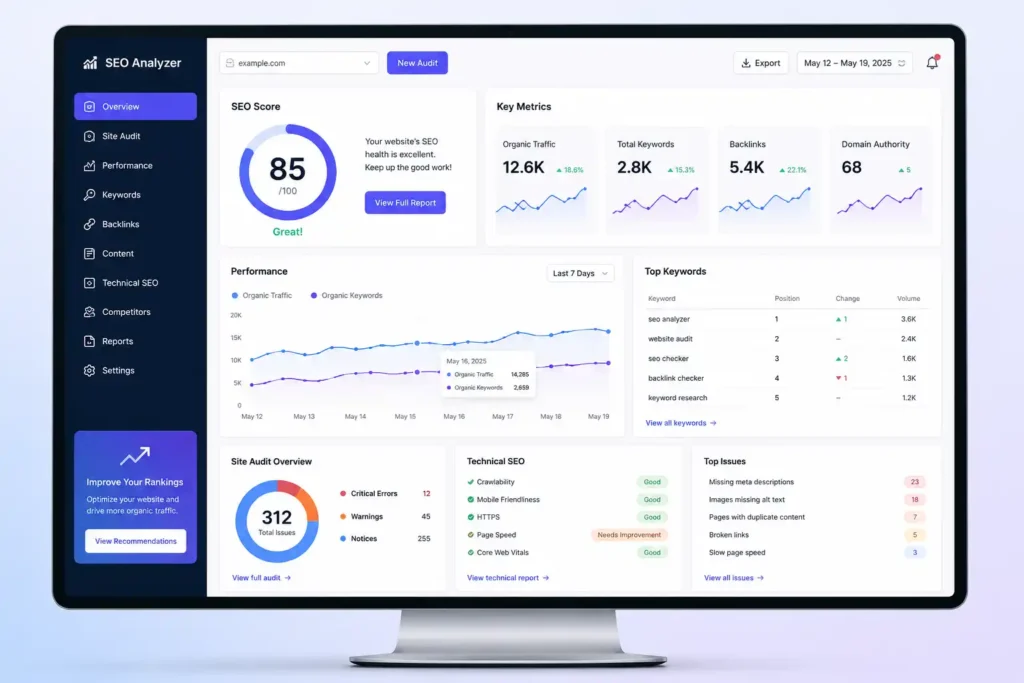
The Website SEO Score Checker reviews important on-page and technical SEO elements that can affect your website’s overall optimization. This may include page titles, meta descriptions, heading structure, content, links, and other essential website factors.
Once you understand your website’s SEO score, you can focus on improving the areas that need attention. Fixing common SEO issues can help create a better-optimized website for both search engines and visitors.
Regular SEO checks also make it easier to monitor your website’s optimization over time and ensure that important SEO elements are not being overlooked.

A Website SEO Score Checker provides a simple way to understand your website’s current optimization and discover areas that may need improvement. Regular checks can help you stay aware of potential SEO issues and maintain a healthier website.
Enter your website URL, check your SEO score, and use the insights to take the next steps toward improving your website’s search engine optimization.
A website SEO score is an aggregated metric (usually 0 to 100) that measures how well your site adheres to search engine optimization best practices across technical, content, and performance categories.
The score is calculated by auditing your site against key ranking factors, including page speed, mobile friendliness, meta tag structure, crawl errors, security, and internal linking depth.
A score of 80 or above indicates a strong, well-optimized website. Scores below 60 signal critical technical or structural issues that are likely suppressing your organic search rankings.
While a perfect score is technically possible, SEO is relative to your competition. Focusing on resolving high-priority errors is more impactful than chasing a perfect numerical score.
On-page issues like missing meta tags can be resolved in minutes, while technical fixes like server speed optimization or structural redirects may take a developer a few days.
No single score guarantees top rankings, as off-page factors like backlinks and domain authority also play a vital role. However, a high score ensures your site is fully eligible to rank.
Different tools use unique scoring algorithms and weigh specific metrics (like speed vs. content depth) differently, leading to slight variations in final grades.
We recommend running an SEO score check monthly, or immediately after pushing major design updates, new code deployments, or content additions to your site.
Yes. Search engines prioritize fast user experiences, so sluggish loading times and poor Core Web Vitals heavily weigh down your overall score.
Resolving critical red-flag issues (like accidental noindex tags or broken sitemaps) often results in fast indexation recoveries and notable traffic bumps once bots re-crawl your site.
Indirectly, yes. Technical issues like slow landing page speeds and poor mobile usability lower your Quality Score in Google Ads, raising your cost-per-click.
The checker simulates mobile user agents to inspect viewport configuration, font legibility, touch target spacing, and mobile asset render speeds.